





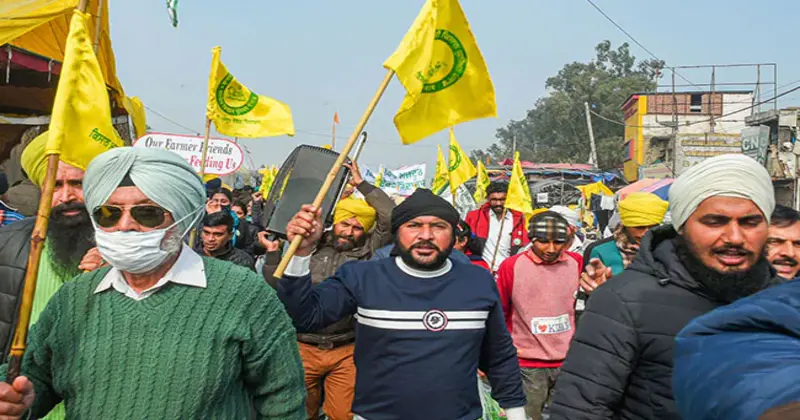
The Khalistani faction protesting against India and being a threat to the country’s sovereignty, territorial integrity and national security, especially from the foreign soil is a big strategic concern to the country. The anti-India rhetoric raised by the Khalistani groups from the United Kingdom, Canada, the United States, Australia not just espouses security threats to India, but also acts as a prickle in the pah of cordial bilateral relations with respective countries. However, India through its diplomatic channels consistently strives to build bilateral ties with world-nations beyond the challenges posed by the Khalistani factions. India has also warned Canada and other nations that supporting Khalistani protestors can be a harm in the strategic ties and can derail the momentum or mutual benefit of the bilateral partnership. For example, India and Canada relations are returning to a mutually beneficial track, post a deep fissure and diplomatic stalemate in the relations as an impact of the intense and extreme pro-Khalistan voices heard in Canada.
The latest crow from the Khalistan faction in Canada, not just reflects the said agenda of the separatist group, but exposes the deeper truth, hidden agenda and the true motives of the Khalistan faction. Lately, pro-Khalistani protestors in Canada have raised slogans in favour of Pakistan and criticized India over the row encircling the Sindh territory. The Khalistan protestors have threatened India regarding the Sindh issue and have hailed Pakistan and Khalistan. This latest episode, not just has posed a strategic and national security concern for India, but also has exposed a deeper nexus between Khalistan faction and Pakistan.
The Khalistan issue is a project sponsored by Pakistan to accelerate a threat and security crisis in India. In a major escalation, the Khalistani groups from Canada have threatened Defence Minister Rajnath Singh. They have illicitly called out the Defence Minister as the “Indian Hindu terrorist”, a clear infringement of national security and an example of defamation. They have crowed that If India seeks to capture the Sindh province, then Khalistan will support Pakistan, thus stimulating a serious question that whether Khalistani project is state-sponsored by Pakistan similar to its state-sponsored terrorism policy which is running in its blood for decades now.
Recently, Defence Minister Rajnath Singh had asserted that “Today, the land of Sindh may not be a part of India, but civilisationally, Sindh will always be a part of India. And as far as land is concerned, borders can change. Who knows, tomorrow Sindh may return to India again. Our people of Sindh, who hold the Indus River sacred, will always be our own. No matter where they are, they will always be ours”. Thus, Rajnath Singh had exclaimed that borders can alter if circumstances arise and the map of the region can change. “Who knows Sindh may return to India again”, the Defence Minister further added.
The province of Sindh on the banks of the Indus River, became a part of Pakistan in 1947, following the partition. Rajnath Singh had asserted the remarks about the Sindh province, while addressing the Sindhi community in India. He reiterated that Sindh may not be a part of India currently under political circumstances, but will always be a part of India in terms of familial and civilizational links. So, one day in all probability Sindh can be a part of India, thus reclaiming its civilizational connection and heritage.
In this backdrop, Khalistani protestors in Canada have raised slogans in favour of Pakistan and have threatened India over the Sindh territory. But, it raises apprehension regarding the link between the Khalistani group and the Pakistani authorities and does Project Khalistan is another state-sponsored policy of Pakistan against India, because, Islamabad is known for waging battles from behind the screen with illicit deeds and doesn’t dare to face a rule-based and legitimate face-off.










Comments