





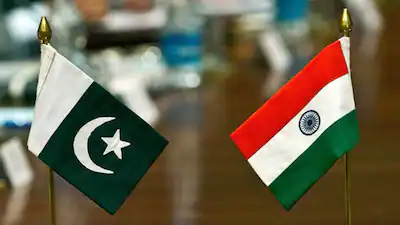
India on Monday dismissed as “baseless and misleading” a wave of reports circulating across Pakistani media claiming that New Delhi had refused airspace clearance for a Pakistani humanitarian assistance flight to Sri Lanka. The allegations triggered a fresh diplomatic controversy late in the evening, prompting Indian authorities to issue a strong rebuttal backed by a clear timeline and procedural details. According to senior government sources, the claims made by multiple Pakistani media outlets, including Geo News and Pakistan Telegraph, were nothing more than another attempt by Islamabad’s ecosystem to peddle fake news and mislead its own citizens.
Notably, Pakistan formally submitted an airspace usage request at around 1 pm (IST) on December 1, 2025. The request sought permission for a Pakistani aircraft to transit Indian airspace the same day to deliver humanitarian aid to Sri Lanka, which has been grappling with widespread flooding. Contrary to the allegations, India processed this request “at the shortest possible notice,” completing all security, operational and procedural assessments within just four hours. Approval was conveyed to Pakistan by 5.30 pm (IST), well within the timeframe for same-day clearance.
Despite this action, Pakistani media outlets began reporting that India had denied the request, thereby causing delays in the delivery of humanitarian aid to flood-hit Sri Lanka. One widely circulated claim came from Pakistan Telegraph, which tweeted: “India has refused to grant airspace to Pakistan for humanitarian aid flights headed to Sri Lanka to help people affected by the ongoing flood disaster. Pakistan will now send the aid by ship.” Geo News also echoed similar allegations, asserting that India had created an “unexpected obstacle” that hampered Pakistan’s relief mission.
Indian officials strongly refuted these claims, calling them fabricated and politically motivated. According to reports, India’s decision to grant clearance was made “purely on humanitarian grounds,” despite the fact that Pakistan continues to deny its own airspace to Indian airlines—a restriction that has remained in place since bilateral tensions escalated in recent years. Officials said that India does not let political considerations interfere with emergency aid missions, and all overflight permissions are examined through internationally accepted norms.
India further stated that its approach to airspace management is “professional, rule-based, and aligned with global aviation standards,” emphasising that every request undergoes procedure-driven checks irrespective of the country involved. Officials added that the approval for Pakistan’s humanitarian flight was given after completing mandatory assessments related to safety, routing, and regional security, processes that typically take longer but were expedited in this case to support Sri Lanka.
A closer look at the timeline highlights the discrepancies. Pakistan requested airspace clearance around 1 pm. India reviewed and approved the request by 5.30 pm. Yet, Pakistani media reports claiming “denial” surfaced before and after the approval was communicated. Officials in New Delhi said this suggested an orchestrated attempt to shape a false narrative domestically before facts could be verified or officially acknowledged.
The Ministry of External Affairs did not issue an official statement, but sources made it clear that India had honoured the request promptly. They also noted that Pakistan’s own restrictions on Indian airlines—preventing them from using Pakistani airspace for commercial passenger flights, have continued unabated. Despite this, New Delhi processed the humanitarian request in line with international practice, ensuring people of Sri Lanka did not suffer due to political hostilities in the region.
The circulation of misleading reports by Pakistani media has now sparked conversations about credibility and accountability within its information ecosystem.
This is not the first time that Pakistani media has attempted to frame India as obstructive in regional humanitarian matters, but Monday’s incident stands out because of the unusually quick clearance that India granted, well within the same working day. Experts say such speed is rare in international aviation procedures and typically reserved for emergency operations.















Comments