





This year marked the centenary of the Rashtriya Swayamsevak Sangh (RSS) which is being celebrated across the country. During this centenary year, a grand ceremony marking the fulfilment of the national resolve to reconstruct the Ram Mandir at Shri Ram Janmabhoomi in Ayodhya took place on November 25, 2025, in the august presence of Prime Minister Narendra Modi and RSS Sarsanghchalak Dr Mohan Bhagwat.
It is well known that the Pran Pratishtha (consecration) ceremony of the Murti (idol) of Maryada Purushottam Prabhu Sri Ram at Shri Ram Janmabhoomi, Ayodhya, was held on Paush Shukla Dwadashi, January 22, 2024. More than a year has passed since that historic event. Crores of devotees from the Hindu community across the nation, with the RSS and its lakhs of Swayamsevaks playing a central role, were instrumental in making this dream a reality.
THE CEREMONY AND PREPARATIONS
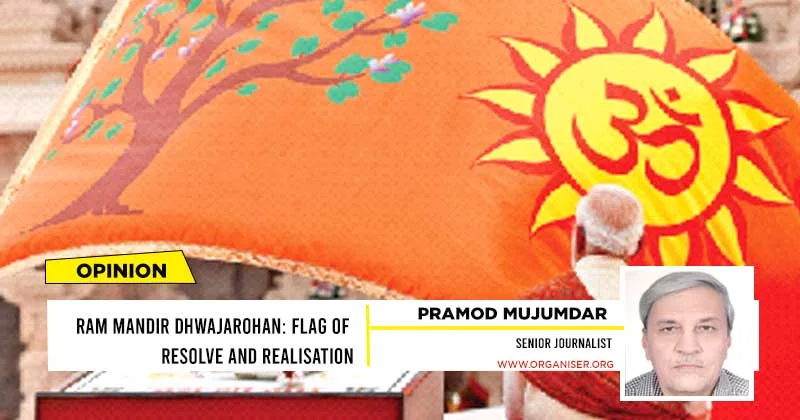
As the RSS celebrates its centenary, it is a matter of divine coincidence that the grand ceremony marking the completion of the national resolve to reconstruct the Ram Mandir was held in Ayodhya on November 25, 2025, in the presence of the Prime Minister and the Sarsanghchalak. On this day, Prime Minister Modi and Sarsanghchalak Dr Mohan Bhagwat hoistd the Bhagwa Dhwaj (saffron flag) atop the Mandir, symbolising the message of mandir’s completion to the entire world.
Earlier, UP Chief Minister Yogi Adityanath had met Prime Minister Modi in Delhi to formally invite him for the ceremony. Champat Rai, General Secretary of the Shri Ram Janmabhoomi Teerth Kshetra Trust, also met the Prime Minister and handed over the official invitation on behalf of the trust, which he had graciously accepted.
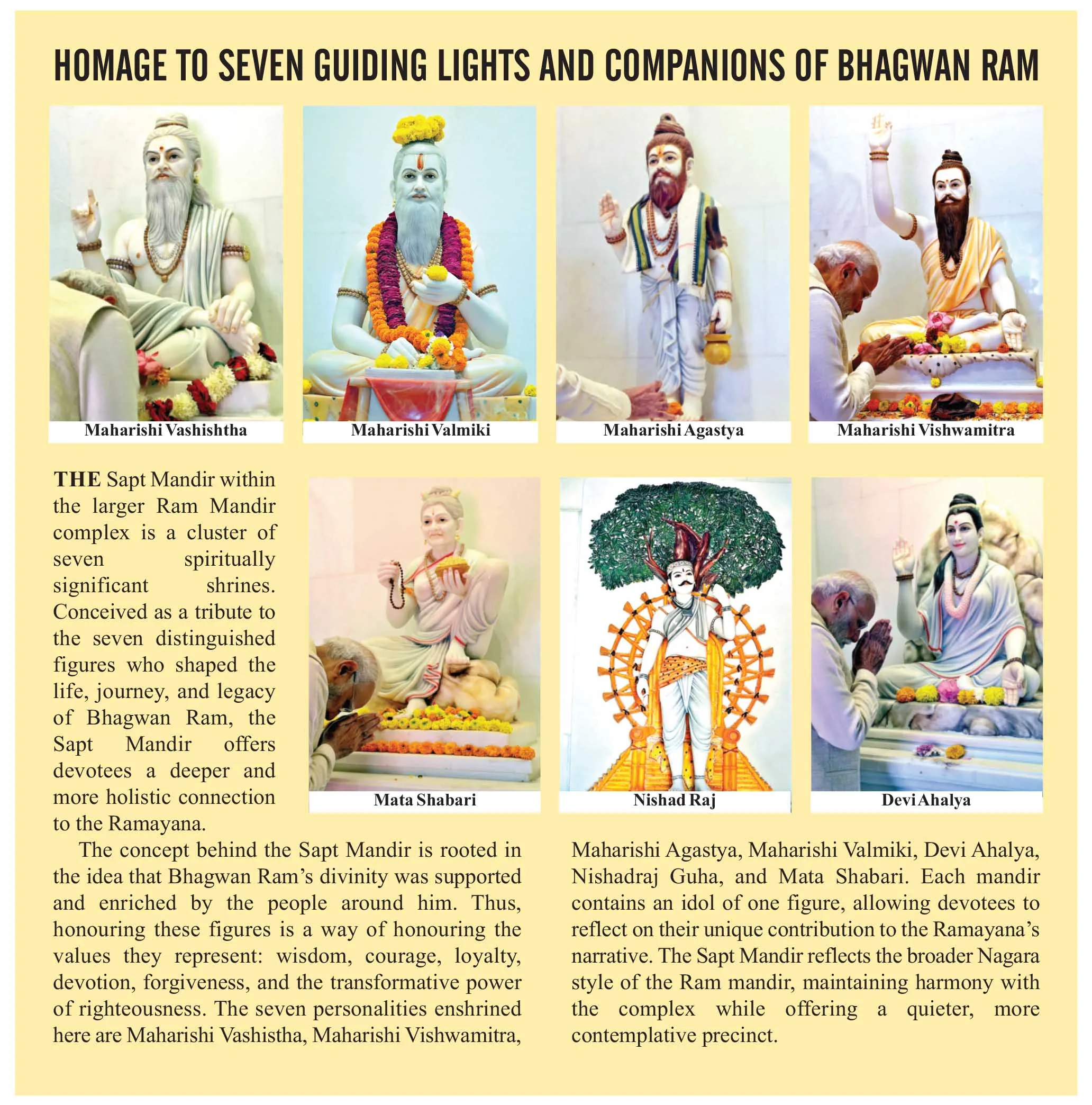
Apart from invitation extended to RSS Sarsanghchalak Dr Mohan Bhagwat, leading Dharmacharyas (religious heads), sants, mahants, and representatives of various sects and traditions were also invited. Over 15,000 devotees from Ayodhya and nearby districts and villages gathered for the grand occasion.
Before the flag-hoisting ceremony, five days of religious rituals were performed. Revered Swami Govind Dev Giri, Treasurer of the Trust, stated that the saffron flag was 22 feet long and 11 feet wide. It was hoisted on a 42-foot mast atop the 161-foot-high Mandir spire. The flag featured sacred symbols from the Valmiki Ramayan — the Sun, the Om, and the Kovidar tree.
THE HISTORICAL MILESTONES
Importantly, the Mandir stands as a result of the relentless struggle of crores of Hindu devotees from across the country. The prolonged struggle and persistent Hindu awakening and unity expressed through various programmes ultimately made the construction of the grand Mandir possible. This moment could not have been possible without leaders such as the late Ashok Singhal of Vishva Hindu Parishad (VHP), along with countless known and unknown karyakartas who devoted their lives to this cause. The demand for the reconstruction of the grand Mandir at Shri Ram Janmabhoomi was pursued through long legal battles and raising awareness through mass movements. In 1989, the Shilapujan programmes were held across the country, despite opposition from the then Congress Government and its allies, who even went to the court. However, the Supreme Court dismissed the petition filed by Tarkunde, allowing the consecrated stones to reach Ayodhya.
AWAKENING OF HINDU CONSCIOUSNESS
Later, in September 1990, senior Bharatiya Janata Party (BJP) leader Lal Krishna Advani led the Ram Rath Yatra from Somnath in Gujarat to Ayodhya, which also made the nation devotional and Ram-centric.
Before that, during 1982–83, the Ekatmata Yatra had been organised from three corners of the country, covering about 50,000 kms. The first yatra began from Haridwar to Kanyakumari, the second from Pashupatinath Mandir in Kathmandu to Rameshwar Dham, and the third from Gangasagar in Bengal to Somnath. All three were planned to converge in Nagpur on the same day. Senior RSS pracharak late Moropant Pingale had made an elaborate plan, and reached Nagpur before these three yatras entered the city. These historic events are worth recalling as they exemplify the awakening of Hindu consciousness, awareness about the Hindu identity, and devotion to Shri Ram among the masses. The Hindus, with their participation, have reaffirmed their faith in such programmes.
Later, during the court proceedings, Kapil Sibal, representing the Congress, strongly opposed the case. The Supreme Court held hearings for nearly 40 days (around 170 hours) and on November 9, 2019, delivered its verdict in favour of Shri Ram Lalla, recognising the site as Shri Ram Janmabhoomi.
Inspired and guided by the RSS, the Vishva Hindu Parishad took the initiative to lead the Ram Janmabhoomi Mukti movement, uniting sants, mahants, and heads of various sects across Bharat. The movement saw active participation from all sections of Hindu society — across languages, castes, regions, and traditions — transforming the Mandir reconstruction effort into a truly national mission. Hence, it is entirely appropriate to describe the completion of the Ram Mandir as the fulfillment of a national resolve. The joy and devotion experienced during the Pran Pratishtha will once again be felt on November 25, 2025, as the Hindu society — after 500 years of struggle — will witness the realisation of its age-old dream and a moment of profound national pride.








Comments