





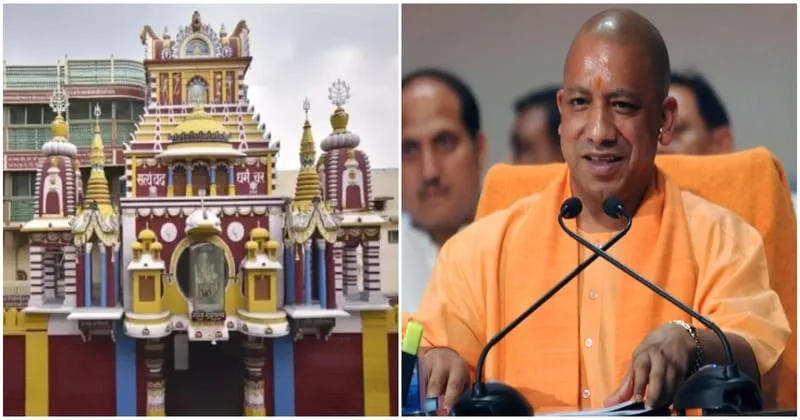
Gita Press, the globally acclaimed publisher of Hindu religious texts, is marking a milestone with the allocation of 10 acres of land in Sector-27 of the Gorakhpur Industrial Development Authority (GIDA). Announced on GIDA’s Foundation Day, this long-awaited allotment is expected to enhance the production and distribution of religious literature, helping to overcome existing logistical challenges.
Gorakhpur
Gita Press has been allotted 10 acres land in Sector-28, GIDA
World’s largest publisher of religious books, Gita Press will invest ₹81 crores here for a new printing facility creating 300+ new jobs. pic.twitter.com/FEYK84ev9V
— The Uttar Pradesh Index (@theupindex) November 29, 2025
Lal Mani Tiwari, Manager of Gita Press, highlighted that the press has long faced space constraints. “We are overjoyed by the 10-acre land allotment in GIDA,” he said. “At present, we have around 1.45 lakh square feet of land, which is fully occupied. The lack of space has limited our ability to expand resources, preventing us from meeting production demands.”
Tiwari expressed optimism that the newly allotted land would enable the press to significantly increase its production. Despite operating beyond capacity, Gita Press has struggled to keep up with the overwhelming demand for its publications.
The expansion of Gita Press goes beyond increasing book production, it is set to provide a significant economic boost to the region. The press plans to invest Rs 81 crore in the new facility, which is expected to create around 300 new jobs. This development directly addresses the long-standing challenge of meeting the growing demand for religious literature. The demand for sacred texts such as the Gita and Ramcharitmanas is so high that Gita Press often struggles to supply even its 20 branches across India.
“We currently publish about 3 crore books annually, but demand far exceeds this,” said Dr Lal Mani Tiwari. “The high demand places immense pressure on our operations. With this new land, we will be able to increase production and distribute books according to actual demand, relieving this pressure.”
Although the press has four years to commence operations at the new site, plans are underway to start production much sooner. Initial steps include registering the land, constructing a boundary wall, and planning for new machinery installation.
Tiwari emphasised that the expansion is about long-term preparedness: “We aim to meet the growing demand over the next 100 years, ensuring supply keeps pace with increasing readership.”
Gorakhpur is synonymous with two institutions: the Gorakhnath Mandir and Gita Press. Located about 5 km from the railway station, the press campus is often described as a Mandir-like workplace, where daily activities are performed with a sense of devotion. Employees remove their footwear during the final binding process, honouring the sacred texts and the faith of readers. The campus also houses a notable Art Gallery, inaugurated by India’s first President, Dr Rajendra Prasad.
Currently, Gita Press publishes 1,848 different titles in 15 languages, producing approximately 70,000 books daily, while market demand is closer to 1 lakh per day. Production Manager Ashutosh Upadhyay explained that the press uses around 500 tons of paper each month, employing offset printing technology with machinery imported from Japan, Germany, and Italy. In a unique practice reflecting their commitment to faith, workers manually attach book covers, avoiding automated machines because the glue used often contains animal fat, a substance Gita Press strictly excludes to maintain the sanctity of the texts.
To date, Gita Press has published over 100 crore books, including about 18.75 crore copies of the Gita and over 13.25 crore copies of Ramcharitmanas and other works by Tulsidas. To increase accessibility, the Gita Press website currently offers around 500 books for free, with plans to make all publications freely available eventually. Additionally, the ‘Gita Seva’ app provides free access to several books and religious scriptures in multiple languages.















Comments