





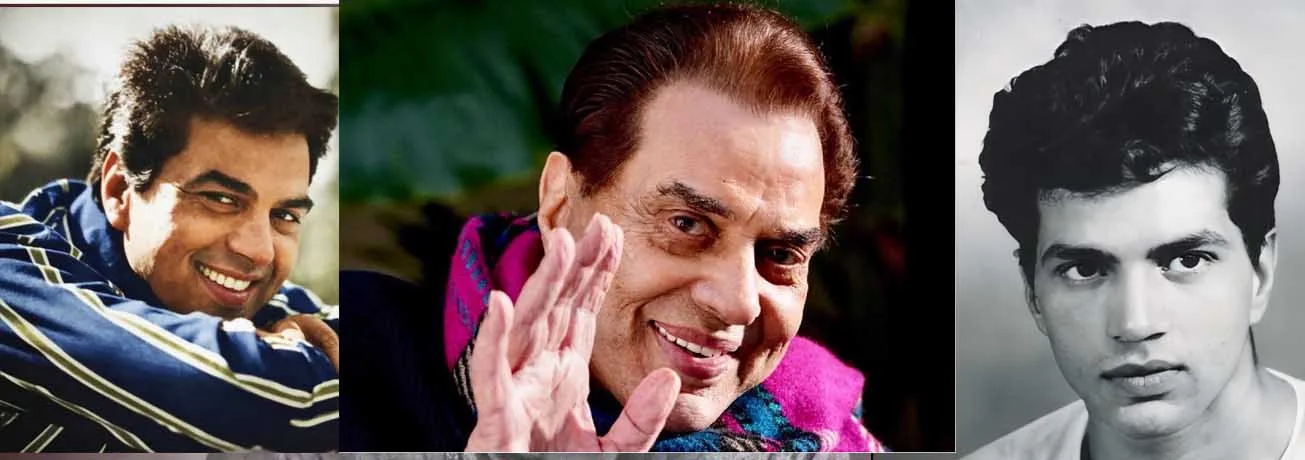
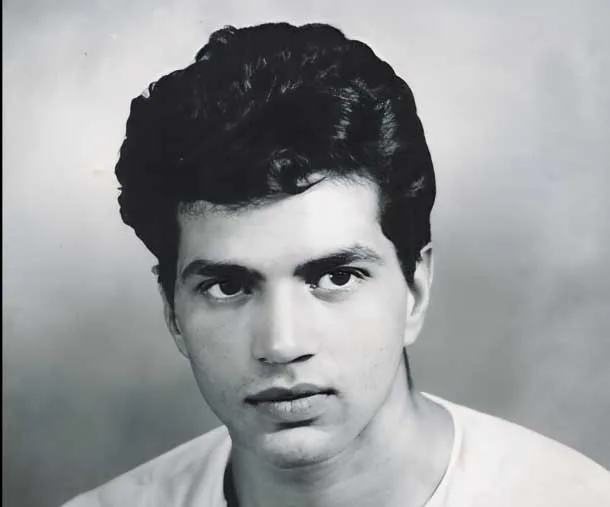
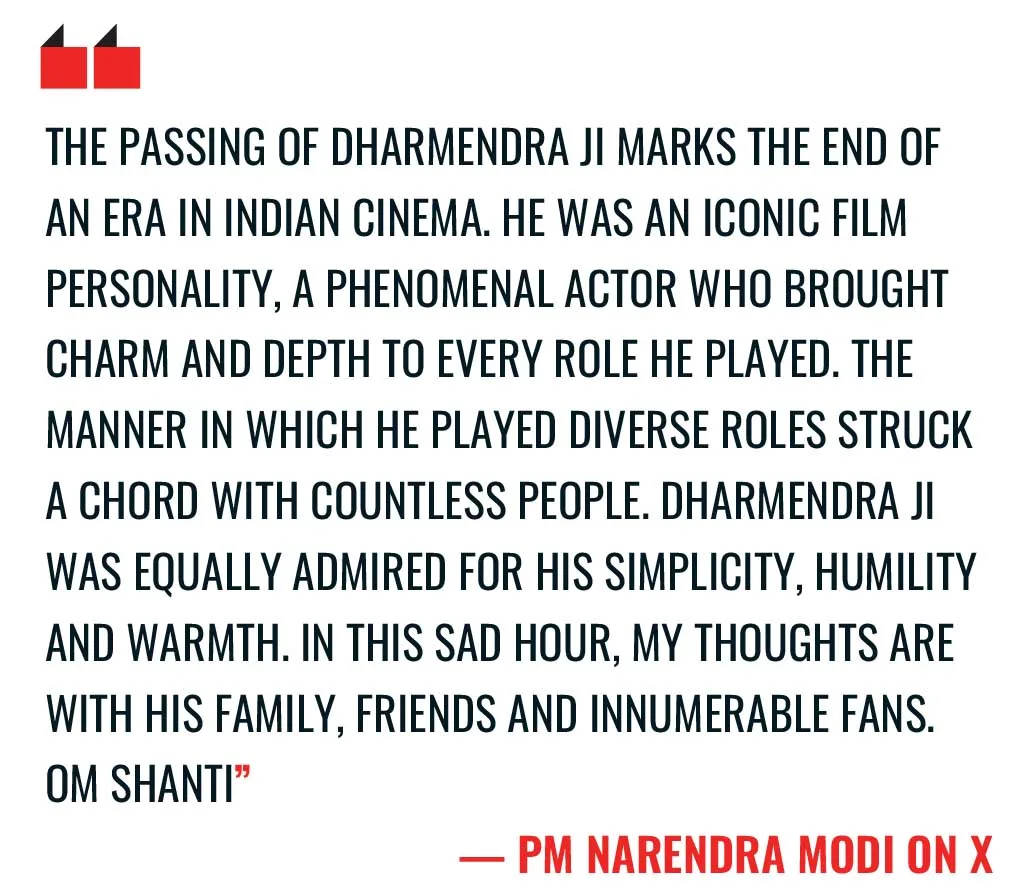
Veteran actor and the undisputed He-Man of Bollywood Dharmendra, who passed away at his Mumbai house on November 24 just two weeks before his 90th birthday, lives on. When he entered the film firmament, Dharmendra, a young untrained actor from Sahnewal in Punjab, was described by critics as a romantic hero whose charming looks and large expressive eyes made him the most handsome man of Hindi cinema.
Even when he became a senior citizen he still got compliments from his much younger actors. Even Madhuri Dixit was in awe of his looks and Jaya Bachchan even described him as Greek God. But the actor, in his long innings of more than five decades, demonstrated his versatility. After showing his romantic side in successive films like Seeta Aur Geeta, Dillagi, Razia Sultan, he effortlessly showed his brawnier side in multiple films like Dharam Veer, where he enacted the role of rugged warrior to Sholay, a crook on a mission to capture dacoit Gabbar Singh alive. And then he demonstrated rare machismo in Apne. In this sports drama film, Dharmendra motivates his reel and real sons- Sunny Deol and Bobby Deol – to knock out the world heavyweight champion.In real life, Dharmendra’s extra large palms, which he claimed were even bigger than those of wrestler Dara Singh, were pretty intimidating. The actor admitted that his hands were pretty heavy and nobody in the film industry could beat him in a panja (duel).The actor continues to live in hearts and minds of every Bharatiya, who has watched him play from a newcomer in Arjun Hingorani’s Dil Bhi Tera Hum Bhi Tere in which his signing amount was a mere Rs 51 to his endearing character in Chupke Chupke.
In this Hrishikesh Mukherjee’s classic, the actor played a Botany Professor masquerading as a driver, who speaks Sanskritised Hindi that even his language-loving brother-in-law, (Om Prakash) is unable to comprehend the meaning of bombastic words. Even though Chupke Chupke was directed half a Century ago, this film continues to be watched not only by cinema lovers in their 40s and 50s but also today’s generation. It was Dharmendra’s most loved performance and his character of Prof Parimal Tripathi, who impersonifies as Pyare Mohan, was a hilarious act and will remain etched in the memory of cinemagoers. It highlighted the actor’s versatility demonstrating the fact that he could perform meaningful roles and was not just an action-hero.Unlike his character of Pyare Mohan, who spoke such fluent Hindi that he became a household name not only in the Hindi belt but also in non-Hindi speaking States, Dharmendra had a fondness for reciting shayari in a mix of Hindi and Urdu. Dharmendra would recite poetry, penned by himself, while giving bytes to journos. Not surprisingly, this made him a favourite of not only journalists but also cameramen and technicians. While speaking, he would at times crack a joke, remember his co-actors and speak in a colloquial way without any pretence. This made him an endearing personality for virtually everyone. He also narrated his gift for reciting poetry in one of the episodes of Kaun Banega Crorepati.
Meeting the Nation’s Heartthrob
Having grown up watching most of his flicks with my father UN Tankha, a film critic of The Motherland & Organiser Weekly and a few other publications, it was a dream come true when I got an opportunity to interview him on a Sunday morning more than a decade ago. Before our interaction, Dharmendra, dressed in all white kurta pajamas, came to his secretary’s room and greeted me. He said the interview will take place after 10 minutes.
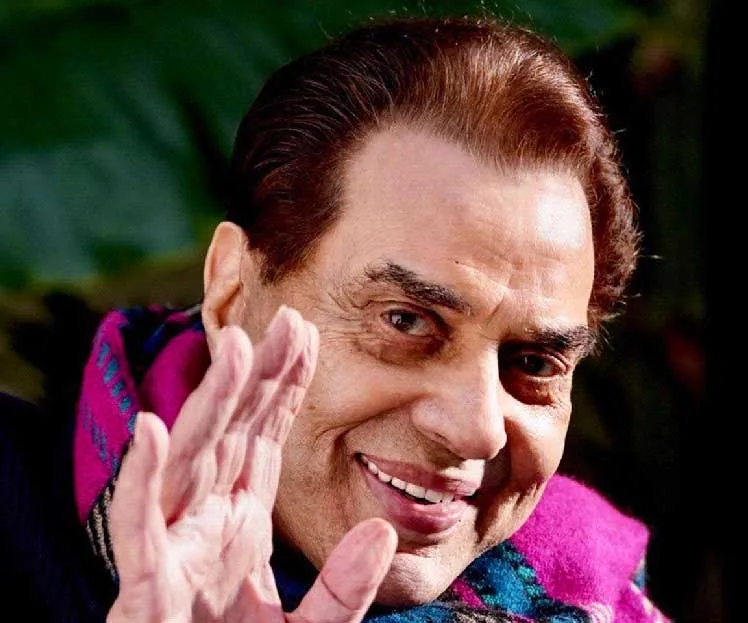
A couple of days before my interaction with the revered actor at his MP residence, opposite Shastri Bhawan, Dharmendra had a press conference for a brand at Hotel Le Meridien, where almost the entire media from Delhi/NCR had gathered to interact with the charismatic actor. After nearly an hour, the actor demonstrated his penchant for adventure and theatrics by rushing out of the five star hotel and grabbing an auto rickshaw (three wheeler) to escape to his residence that was a stone’s throw away from the hotel. This same trait for adventure he had demonstrated during the making of Sholay, when he along with his lanky co-actor Amitabh Bachchan took an auto from a nondescript region of Karnataka to Bangalore, where the film’s shooting was going on.
After waiting patiently for approximately 10 minutes, I was escorted into his drawing room, where Dharmendra hugged me. He asked me which refreshment I would like to have. Sensing my slight hesitation, he quickly instructed his over 6 ft tall flunkey to treat me to a glass of lassi. “Inko lassi piloy,” he ordered. The lassi never came. But as a journo hungry for a long interesting interview with my favourite hero, I was grateful that it never came.
What I got in return was nearly an hour long interview in which the robust actor opened up about his life, aspirations, challenges and working for rural Bharat as an MP and his long innings in Hindi film firmament. He virtually gave a demo of his large heartedness by giving me an insight into how he treats his colleagues from films and people from rural Bharat.
Tryst with Politics
Like a thorough professional, Dharmendra, who was then a BJP MP from Bikaner, said mingling with the locals, listening to their woes and addressing their issues were foremost in his mind. It was his warm interaction with the praja (subject or people) that had made him strike an emotional bond with the cultural treasure trove of Rajasthan.
Emotional Bond with Bikaner
When I inquired about his political innings as an MP, the actor showed me on his computer, with graphics and other details, what all he had done in terms of development in Bikaner. “Maine vikas par bahut kam kiya hai Madhurji, lekin press wale nahi likhte isske bare mein,” he bemoaned, with seriousness in his eyes. His sincerity to work at grassroots level was evident as he talked about vikas he had undertaken in terms of developing the Sursagar project, a long-pending lake restoration initiative, readying roads with potholes so that not only elderly but also working women, especially housewives could walk uninterruptedly and making water and shiksha (education) accessible to all. He wondered why some TRP grabbing journalists only wanted to talk about his larger than life characters, ask queries on his romantic capers. Indeed, the rugged actor, who grew up in rural Punjab, was repeatedly asked to recite his favourite dialogues by TV anchors.
Dharmendra did not want mediapersons to project him as a modern day Robinhood because he believed it was the Almighty who had the authority to decide that. “Please refrain from mentioning the philanthropic work I had done,” he told me sternly. Before we could commence the interview, Dharmendra made a frank admission that he could detect a fan in me. Perhaps, he had done it deliberately to assure that I was at ease while speaking to him. I knew that I was about to undertake one of my most important interviews.
Recounting his blissful village life, the actor described himself as a shy, reticent villager from Sahnewal in Punjab, who was highly enamoured of actors of tinsel town. “Main jab unke (filmstars) ko parde par dekhtha to puchtha kya yeh log is duniya ke hai?”.
Before my interaction, I had a pre-conceived notion that the sturdy actor would touch upon his famed Jat identity and I would quiz him about the work he had done for his community. Dharmendra, who had a penchant for hosting villagers from Punjab at his Mumbai house, refrained from touching upon that subject. He played down this fact by merely saying with all humility, “Main ek jasbati insaan hoon.”
Emotional Chord with Sahnewal
When I dug into the emotional chord that he had with people from his village, the thespian admitted that his village Sahnewal lives in his heart. And his fond memories of that place were apparent whenever he talked about his childhood.
Son of a school teacher, the actor came from a lower middle class family that had to struggle to make ends meet. Life was tough as Dharmendra pedalled 50 kms on a cycle to study in a school and jumped umpteen times into a well to fetch water for the family.
“I was a simple lad from Sahnewal and …,” he explained how he embarked upon his career in films. He was thankful to his parents for giving him sanskar and these family values he had passed to his children. He also disclosed how he was detected by a film magazine and later how he looked after the family of the Editor, when he passed away. But he requested me not to mention his philanthropic act.
A Humane Politician
Dharmendra’s raw emotions were visible when he conceded how his entry into Bharatiya Janata Party (BJP) turned his career from the dream factories of Bollywood to the rough and tumble of politics. He was thankful to be guided by Atal Bihari Vajpayeeji and Lal Kishan Advaniji for giving him an opportunity to work with “his people”. He also recognised their “outstanding work” in the formation and ascendancy of BJP. Finally, when the interview was about to conclude, Dharmendra casually said he was aghast with today’s generation of actors whose greed for filthy lucre appalled him. “Mai kabhi paise ke liye nahi bhaga. However, today’s generation is completely the opposition,” he said in a slow drawl, with honesty and integrity. His parting gift was an affectionate kiss that he planted on my head. I found it a bit unusual but his genuine affection rubbed off on me. Later, I learnt from a couple of other journalists that this was “Dharam paaji’s” unique style of saying goodbye to his guests.
As I watch his co-actors like Big B, entire tinsel town and actress and wife Hema Malini paying heartfelt condolences to the deceased actor, I am reminded of his real life dialogue that even when he is no more, he would still explore the vast agricultural fields of Sahnewal. His village and the entire nation will remember him.









Comments