





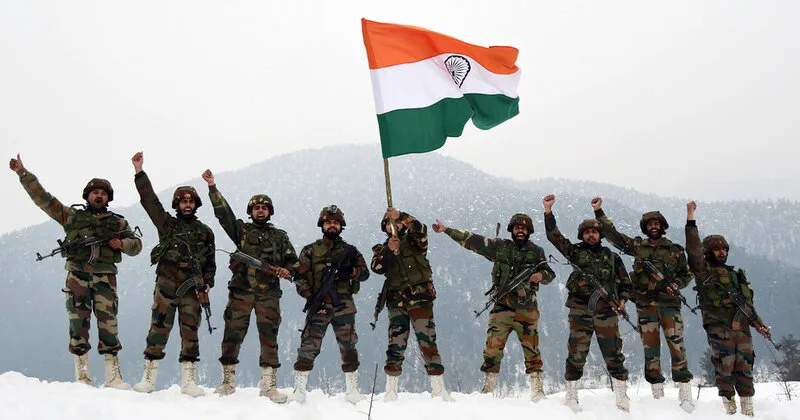
Our Sanatan scriptural text Manusmriti declares that traitors and treasonous elements existing in the population of a nation should be swiftly identified and the appropriate punishment for them is death sentence and confiscation of their assets by the state. Bharat presently faces serious threats to its security by anti-national elements—agents of foreign enemy countries and moles engaged in subversive activities—overt and covert.
Bharat’s internal security landscape is a complex matrix of challenges, including cross-border terrorism, Left-Wing Extremism (LWE) or Naxalism, insurgencies in the Northeast, and threats posed by cyber warfare and radicalization. The most effective strategy for dealing with this internal enemy or the third front, as is popularly called, is a comprehensive, multi-pronged approach that combines robust security measures with inclusive socio-economic development and cultural and ideological outreach with an approach which is dynamic and holistic.
The spectrum of internal threats
The primary internal threats Bharat faces are multidimensional and often interlinked with external factors:
Terrorism: Terrorism is the prime threat to our social fabric and territorial integrity. This includes externally sponsored terrorism, particularly in Jammu and Kashmir and the rise of “white-collar” or urban terrorism using technology and professional expertise. The urban terrorism which has recently manifested itself in the blasts at Red Fort in Delhi took a massive death toll and leaving dozens severely injured. Terrorism is now a global problem, more or less. But in Bharat, episodes of terrorist violence are instigated by our enemy states –Pakistan in particular.
Illegal migration: It is estimated that Bharat is home to more than 20 million illegal migrants from Bangladesh and Myanmar who have infiltrated over the last 40 years. It is only in recent years that the government has taken some pragmatic steps like the preparation of SIR by the ECI that has enabled speedy identification of illegal migrants and this is showing results.
Left-wing extremism (Naxalism): Rooted in deep socio-economic inequalities and lack of development in remote, tribal areas, naxalism involves armed rebellion by maoist groups, primarily across the so called “Red Corridor”. This phenomenon is also instigated by inimical foreign elements who fan and fuel it through arms and funds by way of insidious, covert operations.
Northeast insurgencies: This region has been facing diverse ethnic conflicts, more instigated and engineered than natural, for demands of greater autonomy or socio-economic privileges from the government. These are purportedly triggered by historical grievances and challenging terrains but are in reality incited by external enemies of Bharat who have their own axe to grind in the region. The intrigues of these foreign forces are aimed at religious conversions or other ideological distortions that strengthen the currents of secessionism.
The new-age threats include cyber-terrorism, the use of the dark web and cryptocurrency for terror financing, operations of transnational drug peddlers, human trafficking, online radicalization via social media and the functionaries that form the nexus between organized crime and terror networks.
Bharat’s counter-insurgency and counter-terrorism approach over the decades has evolved, towards a multi-pronged strategy, focusing on an integrated action rather than fragmented responses. The approach that has come to be in the last 11 years is sound, proactive and also holistic and this has shown far better results than in the past decades, as figures tell. A zero-tolerance policy towards terrorism and insurgent violence is a cornerstone of the current approach.
Let us have an overview of the salient points of this strategy
Laws like the Unlawful Activities Prevention Act(UAPA) and the National Investigation Agency(NIA) Act provide a strong legal basis for prosecuting terror-related offenses and allow for the designation of individuals and organizations as terrorists. These laws with strong teeth have enabled much better identification and apprehension of terrorist elements than hitherto. Summary trials and prompt award of punishment should form the crux of the legal framework for dealing with the internal security threating elements.
The Multi-Agency Centre (MAC) and the National Intelligence Grid (NATGRID) facilitate seamless, 24/7 information sharing among various intelligence and law enforcement agencies (IB, RAW, NIA, state police) to enable swift identification and neutralisation of threats.
Equipping state police and Central Armed Police Forces (CAPFs) like the CRPF and NSG with modern surveillance tools, AI-driven analytics and specialized training in counter-insurgency and jungle warfare has been critical.
Bharat has, in recent years, adopted a proactive, decisive retaliation policy, including surgical strikes on terror hubs, to raise the cost for state sponsors of terrorism and assert its right to self-defence. The adage ‘Offence is the best defence’ applies to terrorism as much as to other crimes. In fact, terrorism is the greater crime as it involves security threat and danger to the entire national fabric.
Bharat will do well to develop a national strategy for information warfare to combat terrorist propaganda and counteract radical ideologies spread via social media and extremist websites. Also, it needs to develop a nationwide Counter-Radicalisation Framework based on global models as in Singapore and UK.
Being proactive means building up a sound deterrence strategy. It would greatly pay to institutionalise the post–Operation Sindoor security doctrine with an optimal mix of precision strikes, cyber capabilities and information warfare tools. Inclusive development and governance security operations must be coupled with welfare and governance initiatives to address the secondary causes of alienation and extremism.
In LWE and Northeast affected areas, a focus on infrastructure development, education, healthcare and economic opportunities is crucial to win the trust of local communities. The government’s National Strategy and Action Plan to address LWE approved in 2015 emphasises this multidimensional approach, and this has, over the years, led to a significant decline in LWE-related violence.
Building trust with local populations through community policing and targeted counter-radicalization programs helps to prevent the spread of extremist ideologies and divert vulnerable youth away from violence. Choking the financial backbone of insurgent and terrorist groups through strict anti-money laundering laws (PMLA) and NIA investigations has significantly crippled their operational capabilities.
Securing Bharat’s vast and challenging borders is essential to prevent infiltration, smuggling and cross-border terrorism. The use of advanced technologies like smart fencing, drones and satellite imaging for real-time monitoring of borders has enhanced security. Establishing a specialized cybersecurity division and leveraging public-private partnerships helps defend against digital terrorism and protect critical infrastructure.
Bharat’s success in dealing with internal enemies lies in its evolving, integrated strategy. The significant decline in violence across LWE-affected regions and parts of the Northeast during the last decade demonstrates the efficacy of a comprehensive approach that blends the necessary use of force and intelligence with a genuine commitment to development and inclusive governance apart from a frontal attack on anti-national elements. By focusing on a holistic approach and addressing both symptoms and root causes, Bharat has achieved tangible results and this good work may continue with greater gusto towards a more secure and resilient future. The need for peace on the domestic front is paramount for realisation of Bharat’s ambitious socio-economic development plans.














Comments