





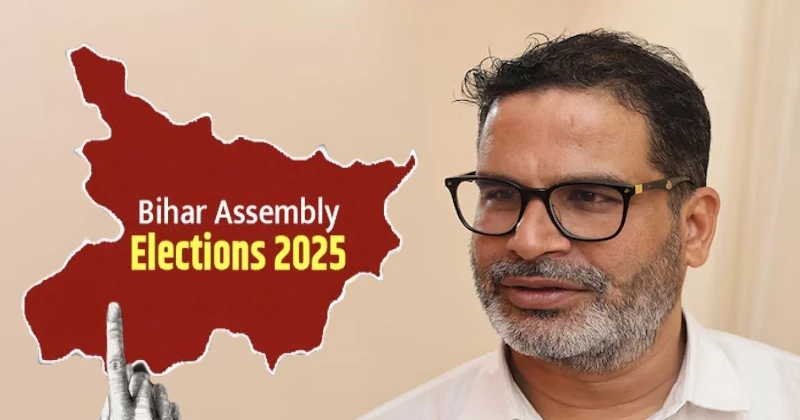
The 2025 Bihar Assembly elections have concluded, and the formation of the government is now complete. With this, Nitish Kumar has become Bihar’s longest-serving chief minister. Among the innumerable political developments that characterised this electoral cycle, the initiative that captured the most sustained attention was the emergence of Prashant Kishor’s Jan Suraj Party. Observers within Bihar and across India were intrigued by the proposition that a political movement foregrounding critical socio-economic concerns, particularly education, employment and migratory distress, could recalibrate the entrenched political equilibrium of the state. This curiosity was far from superficial; the issues invoked by Kishor’s campaign did not merely illuminate the developmental deficits specific to Bihar but also highlighted systemic vulnerabilities in India’s broader democratic architecture. Consequently, the salient question arises: why did a political project, ostensibly anchored in such pressing and resonant issues, fail to convert societal traction into electoral success?
Prashant Kishor, colloquially known as PK, hails from the Buxar district of Bihar and has profoundly influenced the operational and strategic dimensions of Indian electoral politics over the past decade. His professional trajectory began in public health and international development. Still, after 2011, he transitioned into political consultancy, where he pioneered the systematic integration of data analytics, micro-level campaign management and booth-level intelligence into political strategy. His advisory engagements with leaders such as Narendra Modi, Nitish Kumar, Mamata Banerjee, Jagan Mohan Reddy and Amarinder Singh established him as a preeminent architect of electoral strategy. Yet, these successes cultivated an intrinsic belief that Indian politics should transcend mere instrumental objectives of electoral victory; genuine political transformation, he posited, necessitated structural interventions in the political-administrative culture. Guided by this conviction, Kishor undertook a protracted grassroots march in 2022, culminating in the formal establishment of the Jan Suraj Party on October 2, 2024, signalling an ambitious foray into direct political engagement.
The critical challenge confronting Jan Suraj stemmed from the complex, historically sedimented nature of Bihar’s political ecosystem. While issue-based mobilisation retains intrinsic significance, its efficacy is constrained in a context where political authority is intimately entwined with social hierarchies, caste configurations, localised organisational networks and historical electoral memory. A comprehensive analysis of PK’s electoral failure must therefore adopt a multidimensional perspective encompassing structural, socio-cultural, and organisational determinants.
Firstly, the politico-institutional architecture of Bihar exhibits pronounced tendencies toward bipolarity. Consistent with Duverger’s Law, even within ostensibly multiparty democracies, electoral dynamics tend to consolidate around two dominant poles. In contemporary Indian politics, this structural duality has intensified post-2014, manifesting across both national and subnational arenas. Bihar’s polity has long oscillated between the social-justice-oriented Mahagathbandhan and the governance and administrative-stability-oriented NDA. Jan Suraj’s ambition to constitute a third political alternative was structurally constrained; it lacked both a sufficiently cohesive social base and the requisite spatial and organisational embeddedness to disrupt the entrenched bipolarity. In essence, the party’s challenge was not merely electoral but fundamentally structural, requiring a realignment of social and political cleavages that had historically proven resistant to rapid transformation.
Secondly, the party’s programmatic agenda occasionally clashed with prevailing socio-cultural realities. The advocacy for the repeal of alcohol prohibition, while analytically defensible from a libertarian or economic efficiency perspective, encountered substantial resistance among female constituents who had experienced tangible benefits and enhanced social security due to the policy over the preceding decade. Given the increasingly determinative role of women voters in Bihar’s electoral calculus, this position constrained Jan Suraj’s mobilizational potential. Similarly, proposals for comprehensive police reform, while normatively progressive, engendered apprehension among certain voter segments, thereby attenuating support. These examples illustrate the structural tension between reformist policy propositions and the electorate’s experiential realities, highlighting the limits of issue-based politics when confronted with socially embedded normative frameworks.
A third determinant pertains to the social composition of the party’s leadership. Post-Mandal politics in Bihar have rendered social heterogeneity in leadership not merely symbolic but foundational to political legitimacy. Jan Suraj’s leadership structure, dominated by upper-caste actors, inadvertently signalled a deficit in the party’s capacity to negotiate the delicate caste arithmetic that defines Bihar’s political landscape. Unlike the BJP or JDU, which have historically navigated these alignments with strategic dexterity or the RJD, which anchors its legitimacy in social justice discourse, Jan Suraj was unable to cultivate durable ties with backward, extremely backward and Dalit constituencies. This structural deficiency in representational inclusivity significantly circumscribed the party’s electoral reach.
A fourth critical factor involved candidate selection and organizational consolidation. PK’s vision of ‘New Politics’ emphasized local, inexperienced and ostensibly non-traditional candidates. While such a strategy is laudable in terms of normative political renewal, it proved strategically untenable within Bihar’s entrenched electoral ecosystem. Caste allegiances, localised patronage networks, and resource-based political infrastructure profoundly mediate the state’s politics. Consequently, many Jan Suraj candidates struggled to compete effectively against entrenched actors. Internal dissent regarding ticket allocation, coupled with allegations of transactional practices, further eroded the party’s institutional credibility, compounding the electoral disadvantage.
And the fifth complicating factor was the inadvertent ideological friction with the established discourse of social justice. The Lalu-Nitish political paradigm of the past three decades had deeply institutionalised mechanisms for the political inclusion of marginalised groups, particularly backwards and Dalit communities. Kishor’s recurrent framing of the 1990s as a period of Bihar’s decline was perceived by some sections of these electorates as undermining the Mandal legacy that had facilitated their political ascendancy. Consequently, a significant segment of the Dalit and Backwards electorate maintained distance from Jan Suraj, wary of its potential to disrupt entrenched social justice frameworks. The convergence of these structural, socio-cultural, and organizational factors elucidates why Jan Suraj remained electorally marginal. PK’s data-centric campaign methodology, personal credibility, and narrative innovation were compelling in their own right; however, they proved insufficient to overcome the deeply rooted structural and socio-political contingencies that characterise Bihar’s electoral arena. In effect, the party’s programmatic sophistication could not compensate for the lack of embedded social legitimacy, organisational depth, and a caste-sensitive leadership composition.
Sixth and last, Prashant Kishor’s public conduct was often perceived as marked by a certain aloofness and egoism. Many observers noted that he did not appear sufficiently humble in his interactions with voters, party cadres, opposition leaders, and even the media. In democratic politics, where personal outreach and symbolic humility carry substantial weight, such perceptions can be detrimental. By contrast, leaders like Narendra Modi have consistently cultivated an image of accessibility and modesty, which resonates with large sections of the electorate. Moreover, Kishor’s sharply critical remarks directed at figures such as Samrat Choudhary and Nitish Kumar were viewed by many as unnecessarily personal rather than issue-based. This perception of abrasive behaviour became an important factor contributing to Prashant Kishor’s electoral setbacks.
The failure of Prashant Kishor’s Jan Suraj Party is not attributable to any single miscalculation but rather arises from the interplay of Bihar’s multifaceted socio-political structures, entrenched electoral bipolarity, and organisational vulnerabilities. While the party introduced a novel political lexicon, foregrounded substantive developmental issues, and exemplified methodological innovation in campaign strategy, translating these attributes into sustained electoral success would have required prolonged engagement, nuanced social coalition-building, and the meticulous cultivation of organisational infrastructure. The electoral setback, therefore, should be interpreted not as a terminal repudiation of PK’s political vision but as a structural lesson in the exigencies of Indian state-level politics: the most formidable challenges in democratic mobilisation often reside not in issue articulation but in navigating entrenched institutional and socio-political architectures. In essence, the contest in Indian politics is as much about reconfiguring structural realities as it is about propagating normative agendas or implementing programmatic interventions.












Comments