





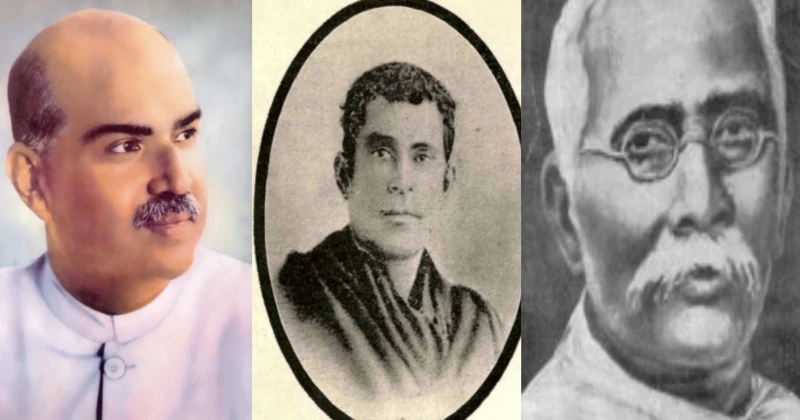
Long before the Bharatiya Janata Party (BJP) emerged as a major political force in West Bengal, a generation of ideologically driven leaders laid the groundwork for the party’s presence in a state historically dominated by the Congress, Left, and now the Trinamool Congress.
These pioneers scholars, lawyers, teachers, activists built the ideological, organisational, and electoral foundations of the Right in Bengal at a time when the state’s political landscape offered them little institutional support and even less public acceptance.
Shyama Prasad Mookerjee: The visionary who lit the first spark
Born on July 6, 1901 in Kolkata, Shyama Prasad Mookerjee remains the single most influential figure in Bengal’s early Right-wing political history. A towering intellectual, former Bengal Finance Minister, and national leader, Mukherjee founded the Bharatiya Jana Sangh in 1951 the organisation that would evolve into the BJP three decades later.
Elected as Lok Sabha MP from the South Kolkata constituency in 1952, Mukherjee articulated an assertive nationalist ideology rooted in cultural identity, federal integrity, and strong governance. Though his untimely death in 1953 halted his political journey, it cemented his position as the ideological father of the BJP. For Bengal, he remains an enduring symbol of resistance and a reminder that the party’s origins run through Kolkata’s heart.
Durga Charan Banerjee: The legal mind from Midnapore
Born in January 1898 in Midnapore, Durga Charan Banerjee combined his legal acumen with deep spiritual grounding through his association with the Ramakrishna Mission. In the first Lok Sabha elections of 1952, he became Jhargram’s representative in Parliament on a Jana Sangh ticket — a remarkable feat in a region dominated by Congress influence.
Durga Charan’s presence in Parliament signified that even in its infancy, Jan Sangh had pockets of ideological resonance in rural Bengal. His advocacy connected nationalism with grassroots social values, inspiring local organisational growth.
Acharya Debaprasad Ghosh: The scholar organiser who steered the Jan Sangh nationally
A mathematician by profession and a devoted Sangh volunteer from his youth, Acharya Debaprasad Ghosh was born in Gawa in Backerganj (now in Bangladesh’s Barisal district). His intellectual clarity and organisational skill propelled him to senior roles within both the RSS and Jan Sangh.
From 1956 to 1965, Ghosh served as the National President of the Jan Sangh one of the longest tenures in the party’s early history. His leadership not only strengthened the party nationally but also ensured Bengal retained a strong ideological stake in the Right-wing movement at a time when the state was turning sharply Left.
Haripada Bharti (Master Mosai): The educator who built the BJP’s first state structure
Principal of Narsingh Dutta College in Howrah, Haripada Bharti fondly called Master Mosai blended academia with ideological activism. Born in Kolkata, he rose to political prominence when he won the Jorbagan Assembly seat in 1977 on a Jan Sangh platform.
When the BJP was formally established in 1980, Haripada Bharti became its first West Bengal state president, serving from 1980 to 1982. At a time when the CPI(M)-led Left Front was entrenched in power, he took on the daunting task of building the BJP’s organisation almost from scratch.
Tapan Sikdar: The dynamic organiser who carried the flame into the modern era
Born in 1944 in Jessore (then undivided Bengal), Tapan Sikdar represented the post-Emergency generation of Sangh-BJP leadership. Fierce, articulate, and organisationally sharp, he founded the Shyama Prasad Mukherjee Jan Jagran Manch to expand ideological outreach across Bengal.
Sikdar served two terms as West Bengal BJP president 1991–95 and 1997–99, periods that witnessed the BJP’s first real attempts to penetrate Bengal’s political mainstream. Elected as MP from Dum Dum in 1998 and 1999, he also served as a minister in the Vajpayee-led NDA government, giving Bengal representation at the Centre during a historic political transition.
Bijoy Kumar Mandal: The old guard who bridged the Mahasabha and Jan Sangh Traditions
Born on December 1, 1924, Bijoy Kumar Mandal was among Bengal’s earliest champions of nationalist politics through the Hindu Mahasabha and later the Jan Sangh. In the 1977 general elections held in the shadow of Emergency Mandal won the Bankura Lok Sabha seat on a Janata Party ticket from the Jan Sangh quota.
His victory symbolised a rare moment when Bengal briefly aligned with the national anti-Congress wave. For the Right, Mandal represented the ideological bridge between pre-Independence nationalism and the emerging Jan Sangh-BJP structure.
Today, as Bengal witnesses a renewed surge of political polarisation and a growing contest between the BJP and TMC, the legacy of these early stalwarts offers a vital reminder: the party’s roots in Bengal are far older and deeper than commonly understood.












Comments