





The Supreme Court on Wednesday (Nov 19) made it clear that it cannot issue “blanket orders” shielding protesting doctors from police action in the aftermath of last year’s gruesome rape and murder of a postgraduate trainee doctor at Kolkata’s RG Kar Medical College and Hospital. The bench of Justice MM Sundresh and Justice Satish Chandra Sharma noted that providing such overarching protection would amount to curtailing the lawful authority of the police, including their right to summon individuals for questioning.
The court’s remarks came during the hearing of a series of petitions, including those filed by junior and senior doctors, who alleged harassment by the police during ongoing protests. Representing the petitioners, senior advocate Karuna Nundy argued that doctors were repeatedly being called for interrogation despite cooperating with the authorities. She urged the bench to extend temporary protection to ensure that the protests continue without intimidation.
However, the bench firmly declined to entertain such a broad request. “How can we pass blanket orders protecting doctors? The police has a right to call you,” the court observed, as reported by PTI. The judges emphasised that any relief must be tailored to specific grievances rather than sweeping directives that interfere with investigative processes.
The Supreme Court also expressed clear discomfort with hearing the matter in a fragmented manner. Observing that the case had grown into a “bundle of issues” linked to protests, police action, safety of medical professionals, and pending petitions in the Calcutta High Court, the bench hinted at transferring the entire set of matters to the High Court.
“We are grappling with so many things and there is no end to this. It is easier for the Calcutta High Court to monitor protests. Is it possible for us to monitor the protests in Kolkata sitting in Delhi?” the bench questioned.
The judges asked the petitioners to provide a detailed table of the matters currently pending before the Calcutta High Court, so the Supreme Court could assess the feasibility of the transfer. The bench added that it would take up any specific complaints after the winter vacation but reiterated that generalised immunity from police action would not be granted.
Case that sparked a nationwide outcry
The Supreme Court’s involvement in the RG Kar case began in August 2024, when it took suo motu cognisance of the shocking death of a 31-year-old postgraduate trainee doctor. The doctor’s body was discovered on August 9 inside a seminar hall in the Chest Medicine Department of the hospital’s emergency building. The brutal nature of her injuries and the fact that the crime took place within a state-run tertiary hospital triggered massive protests on medical campuses across West Bengal and beyond.
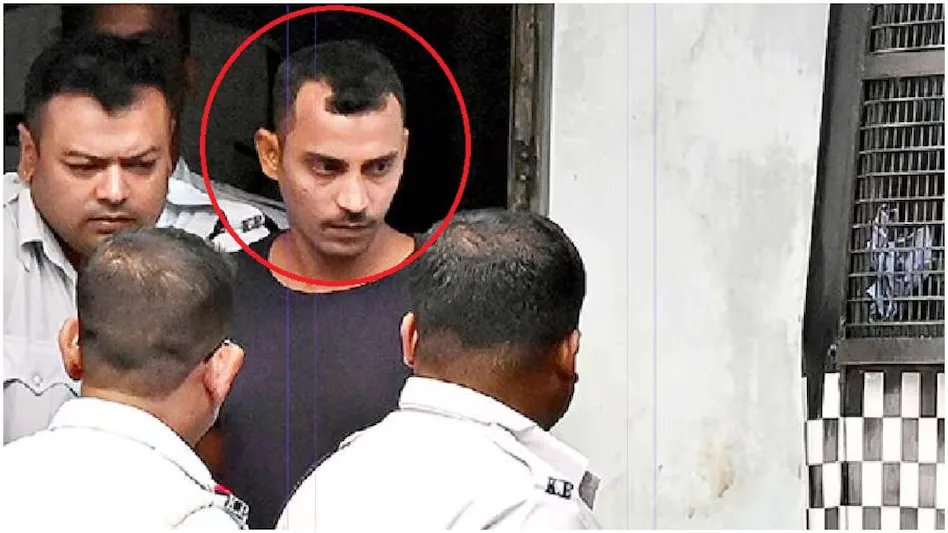
Initially investigated by the Kolkata Police, the case was transferred to the CBI by the Calcutta High Court amid allegations of delays and procedural lapses. In January 2025, a Kolkata court convicted civic volunteer Sanjoy Roy of rape and murder, sentencing him to life imprisonment. But the victim’s family and several civil society groups maintained that the investigation did not uncover the full extent of accountability.
Their suspicions were reinforced by two subsequent arrests, that of Sandip Ghosh, the then principal of RG Kar Medical College and Hospital, and Abhijit Mondal, former officer-in-charge of Tala police station. Both were accused of derailing or manipulating the probe. While Mondal was later released on bail due to the CBI’s failure to file a chargesheet within the statutory 90-day period, the case continued to raise questions about institutional lapses, state oversight and administrative complicity.
In August last year, after taking suo motu cognisance, the Supreme Court had constituted a National Task Force (NTF) to frame a protocol ensuring safety for medical professionals, acknowledging the recurring pattern of violence against doctors across India. The bench has been monitoring the implementation of these recommendations.
However, this hearing made it clear that the Court is seeking to balance two priorities: enabling peaceful, democratic protests by medical professionals, and not weakening the investigative prerogatives of the police. The judges stressed that while genuine grievances would be considered, judicial oversight cannot translate into obstructing lawful questioning or investigations.
With the matter now scheduled for a post-winter vacation hearing, the Supreme Court is expected to take a call on whether to transfer all connected petitions to the Calcutta High Court. If transferred, the High Court would monitor not only the CBI investigation and administrative accountability but also the ongoing protests and police response, allowing for a more grounded and continuous review.









Comments