





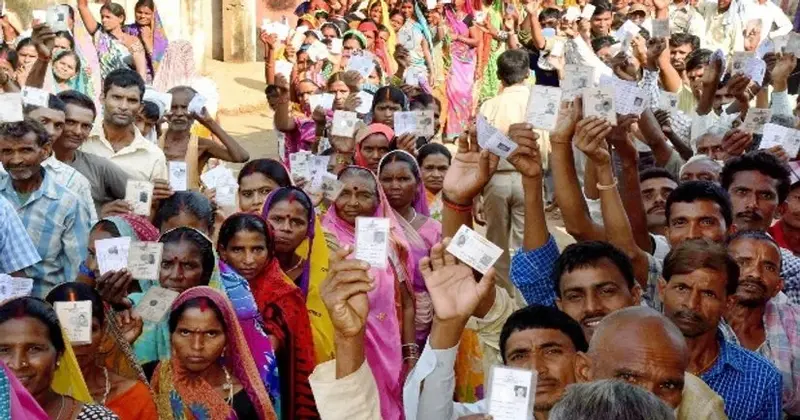
Politics in Bihar has always been more than the arithmetic of seats won or lost in the Vidhan Sabha. It is a lived reality woven into the aspirations of farmers who till their fields in scorching sun, the young graduates sitting at roadside tea stalls waiting for jobs and the women who line up for hours at government hospitals. Bihar’s politics cannot be understood merely through manifestos and alliances; it must be felt through the voices of its people, its historical baggage and its everyday struggles.
A state with a glorious past
Bihar was once the land of ancient universities like Nalanda and Vikramshila, the birthplace of Gautama Buddha and the site of India’s first peasant rebellions and freedom struggles. Yet in today’s India, Bihar often finds itself at the bottom of the development ladder, grappling with poverty, unemployment, migration and weak governance.
This contradiction between a glorious past and a troubled present deeply shapes the political imagination of its people. The poet Ramdhari Singh Dinkar, himself from Bihar, once wrote: “Samarthya ke bina satya asur hai, aur satya ke bina samarthya durbal.” (Power without truth is demonic, and truth without power is weak). Bihar embodies this dilemma; its moral strength has been high, but its material power has been weak.
When I visited Madhubani, an old farmer said with pride: “Hamare gaon se Vidyapati nikle the, lekin aaj hamare bachche mazdoori karne Surat jaate hain.” (Our village produced the great poet Vidyapati, but today our children migrate to Surat as labourers). This painful contrast captures the story of Bihar’s politics caught between dignity and deprivation.
The weight of caste in Bihar politics
No discussion of Bihar’s politics can begin without caste. While caste is a reality across India, in Bihar it has historically shaped political power more deeply. In a village in Sasaram, I once overheard a spirited discussion at a tea stall during the 2024 Lok Sabha elections. A young Dalit man said proudly: “Vote hamara izzat hai. Ab uparwale log hamesha raj nahi karenge.” (Our vote is our dignity. The upper castes cannot rule forever). His statement echoed the legacy of the Mandal movement, which made politics a tool of self-respect for millions.
But caste politics also has its downside. Sometimes it reduces elections to mere arithmetic, sidelining development issues. In Patna’s coaching hub, a frustrated UPSC aspirant told me: “Sir, vote toh caste pe hi padta hai, par rozgaar ka kya? Yeh koi nahi sochta.” (Votes are cast on caste lines, but what about employment? No one thinks about that). His words reveal the complex contradictions of Bihar’s democracy.
The novelist Phanishwar Nath Renu, in his masterpiece Maila Anchal, portrayed exactly this blend of caste, poverty, and hope that continues to dominate Bihar’s villages even today. His world of chaupals and dusty lanes still defines how politics is lived here.
The shadow of migration
Perhaps no issue defines Bihar’s political economy more starkly than migration. Every year, lakhs of young men leave for Delhi, Punjab, Gujarat or Maharashtra. They build the cities of others, while their own villages remain underdeveloped.
Migration is not just an economic reality; it is a political wound. Every election, migrants return home to vote, carrying a silent hope: that one day, Bihar will give them enough reasons to stay.
The writer Shiv Pujan Sahay once remarked: “Bihar ke gaon ke chabootaron pe rajniti ki sabse tez behas hoti hai.” (The sharpest political debates in Bihar happen on village platforms). These debates are often led by those who will soon migrate, but still dream of a better Bihar.
Women as emerging political voices
One of the most positive changes in Bihar’s politics is the rise of women’s participation. With reservations in Panchayati Raj institutions and schemes for girls’ education, women are no longer silent spectators.
In 2022, I visited a self-help group meeting in Sasaram where women discussed microcredit schemes and health facilities. One-woman sarpanch told me: “Pehle hamare ghar ke mard hi sab faisla karte the. Ab log humse bhi poochte hain.” (Earlier, only men in the family made decisions. Now people ask us too).
In the 2024 Lok Sabha elections, women’s turnout in Bihar was higher. Their votes, often cast independently of their husbands’, are quietly reshaping Bihar’s political landscape.
Coalition politics and endless realignments
Bihar’s politics is also infamous for its shifting alliances. Nitish Kumar’s repeated switches between BJP and RJD have become almost legendary.
When Nitish once again realigned with the RJD in 2022, a Patna rickshaw puller quipped: “Netaji palat gaye, jaise mausam badal jata hai.” (Our leader switched sides just like the weather changes). For ordinary citizens, such moves often feel like betrayal. They wonder whether leaders care more about power than about people. This culture of “palti” (flip-flopping) has made people deeply cynical, yet it also keeps Bihar’s politics unpredictable and vibrant.
The emergence of Jan Suraaj in Bihar marks a shift in the state’s socio-political landscape, where people’s participation and grassroots democracy are placed at the centre of discourse. The movement has risen as a response to issues such as corruption, unemployment and governance failures, mobilising youth, marginalised groups and civil society to demand change. Emphasising transparency, accountability and welfare-driven policies, Jansuraj challenges the dominance of traditional caste-based politics in Bihar. By engaging in campaigns, dialogues and public mobilisation, it seeks to create an alternative political culture that prioritises inclusive development and social justice. However, while its ideals and outreach appear promising, its real strength and impact will only be tested in the electoral arena. Let us see what happens after the elections, when promises face the realities of governance and political competition.
The larger national context
Bihar’s politics is never isolated from the national stage. The BJP’s growing presence, the Congress’s decline and the RJD’s attempts to remain the voice of social justice all reflect larger national patterns.
A human story of contradictions
To truly understand Bihar’s politics, one must see it as a human story. It is the story of a farmer in Darbhanga who votes based on caste loyalty but later complains about the lack of irrigation. It is the story of a migrant worker in Surat who dreams of a better Bihar but returns home only to cast his vote. It is the story of a young woman sarpanch who struggles against patriarchy but still dares to lead.
The novelist Renu once wrote: “Bihar ke gaon aise hi hai jaise Bharat ka hriday ho—dukhi, lekin dhadakta hua.” (Bihar’s villages are like India’s heart suffering, but still beating). This line captures Bihar’s politics too wounded, yet alive with hope.
Between despair and hope
Bihar’s politics is often mocked as dirty, caste-ridden and opportunistic. But one must also see its resilience. Despite poverty and migration, Bihar has some of the highest voter turnouts in the country. People here may complain about leaders, but they never give up on democracy.
The future of Bihar’s politics depends on whether leaders can rise above caste arithmetic and deliver jobs, education and dignity. The youth are restless, women are assertive and migrants are demanding recognition. Bihar is waiting for politics that reflects its potential rather than its problems.
In the end, Bihar’s politics is a mirror of its people, complex, struggling, wounded, yet hopeful. As Dinkar reminded us: “Jo apna kartavya nahi pehchanta, uske liye swatantrata bekaar hai.” (Freedom is meaningless for one who does not recognise his duty). Bihar’s voters know their duty; it is the leaders who must rise to theirs.















Comments