





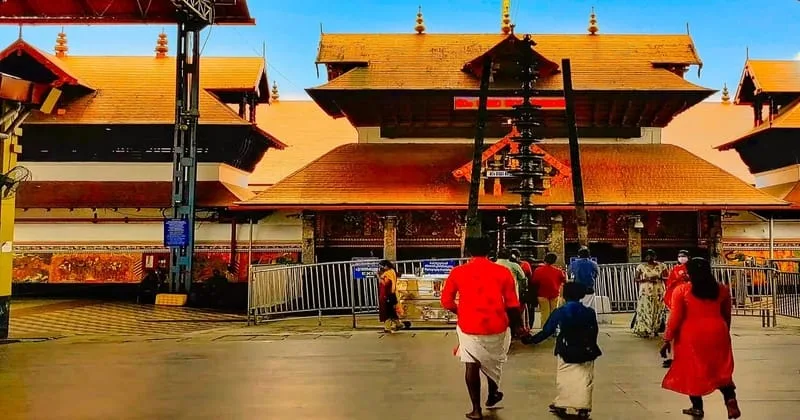
Amid the ongoing controversy surrounding gold looting at Sabarimala, a new audit report has triggered serious concerns about possible thefts from another major temple in Kerala, the revered Guruvayur Sree Krishna swamy Mandir in Thrissur district. According to media reports, the audit has raised doubts over whether valuable items, including gold, silver, ivory, and saffron, have gone missing from the Mandirs treasury. The findings expose widespread negligence and lapses in the handling, recording, and safeguarding of the temple’s offerings.
The Guruvayur Devaswom Board of Directors, which is responsible for maintaining and securing the wealth received at the Mandir through Nadavaravu (offerings at the sanctum) and Bhandaram (Mandir treasury) collections, has come under scrutiny. The audit report reveals that despite the immense value of the Mandirs assets, a comprehensive physical inspection of its valuables has never been conducted. Shockingly, even offerings worth as much as Rs 15 lakh do not receive proper receipts. The report highlights that the Mandir does not maintain an adequate stock register for elephant tusks, one of the most valuable and regulated items under its possession. Moreover, there are serious lapses in the process of handing over elephant tusks to the Forest Department, as mandated by law.
While the Mandir records show expenses related to the cutting of elephant tusks, the audit notes that there is no corresponding record of what happened to the tusks afterward. This gap in documentation raises suspicions about whether the tusks were misused, misplaced, or illegally traded. The report stresses that the Guruvayur Devaswom Board should pay special attention to ensuring compliance with existing regulations concerning the transfer of ivory to the Forest Department. It also points out that there is no evidence to suggest that the stock register of tusks has been physically verified by authorised officers. Furthermore, the governing body has failed to provide a certification confirming that the tusk inventory matches the records in the register.
The lapses extend beyond ivory. The audit reveals that high-value items like saffron, which costs around Rs 1,47,000 per kilogram, are received at the Mandir in large quantities daily. However, there are no clear or complete records of these deliveries. Registers documenting the arrival of materials for special offerings, including Udayasthamana Pooja and Chuttuvilakku, are incomplete and poorly maintained. Perhaps the most startling revelation in the report concerns the disappearance of Manchadi Kuru (red seeds), which are traditionally offered by devotees. The report states that the Manchadi Kuru received as offerings were stored in 17 sacks in the western gopuram (tower) of the temple. However, these sacks have been missing since December 2019. The temple authorities reportedly decided to auction the Manchadi Kuru at a rate of Rs 100 per kilogram. But the bidder failed to come forward to weigh the sacks, make the payment, and collect the goods. Consequently, the bags were left stored in the temple tower.
The audit report cites a statement from the Assistant Commissioner of Security Operations (ACSO), who noted that on the afternoon of December 28, 2019, health workers were seen loading the sacks onto a Devaswom tractor. When Mandir staff were questioned, the Junior Health Inspector (JHI) on duty stated that the sacks were moved to the Vaijayanthi godown to make space in the tower. However, the report highlights that there is no clarity about what happened to the sacks thereafter. The Mandir authorities have been unable to provide documentation or confirmation regarding the current location or status of the Manchadi Kuru. The audit’s findings point to a broader pattern of administrative negligence and weak internal controls at one of Kerala’s most important Mandirs. The absence of proper stock registers, receipts, and physical verifications has created conditions where large-scale mismanagement, or even theft, can go undetected.
The repetition of several irregularities across various departments of the Guruvayur Devaswom has amplified public concern. Despite the Mandirs enormous daily inflow of wealth, from gold ornaments and precious metals to high-value ritual materials, the systems of accountability appear alarmingly inadequate. The report emphasises that the governing body’s oversight mechanisms are deeply flawed. There is no systematic physical verification of valuables, no regular reconciliation of stock registers with physical inventories, and no signed certification from responsible officials confirming the accuracy of the Mandirs records. In the case of ivory, the report warns that the Devaswom’s failure to maintain a verified stock register and hand over tusks to the Forest Department could constitute a serious violation of wildlife protection laws. Similarly, the lack of receipts for high-value offerings and incomplete registers for daily rituals point to chronic administrative indifference.
The disappearance of Manchadi Kuru from the temple premises without trace is particularly troubling. It suggests either gross negligence or possible collusion among staff to cover up the loss. The fact that temple records mention the storage of the sacks and even their planned auction, but not their final disposition, underscores the absence of proper monitoring. The audit calls on the Guruvayur Devaswom Board to immediately initiate a comprehensive physical inspection of all Mandir valuables, including gold, silver, ivory, saffron, and other high-value offerings. It also urges the governing body to establish transparent accounting practices, digitise inventory records, and ensure that every item received or auctioned is properly documented.
The revelations come at a time when Kerala’s Mandir administration system is already under intense public and political scrutiny following the Sabarimala gold theft scandal. With Guruvayur Mandir now under the shadow of similar allegations, the audit report has raised fundamental questions about transparency, governance, and accountability in the management of sacred institutions in the state. If the irregularities cited are proven true, it could mark one of the most serious breaches of trust in recent history concerning temple assets in Kerala. For now, the faithful await answers, and action , from the Guruvayur Devaswom Board to restore confidence in the integrity of one of the state’s holiest shrines.










Comments