





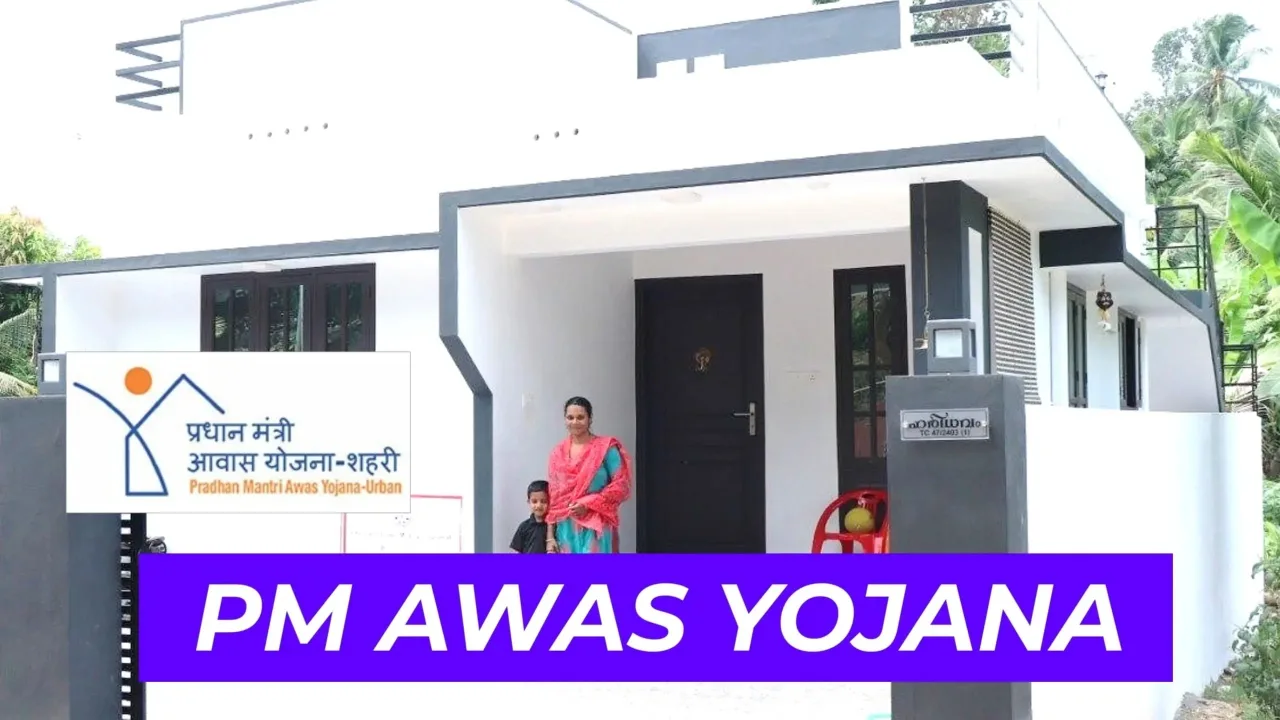
Achieving the government’s flagship Housing for All mission, the Union Ministry of Housing and Urban Affairs (MoHUA) has approved the construction of an additional 1.41 lakh houses under the Pradhan Mantri Awas Yojana, Urban 2.0 (PMAY-U 2.0). With this latest approval, the total number of sanctioned houses under the revamped urban housing scheme has now surpassed 10 lakh, marking a crucial milestone in India’s affordable housing journey.
The decision was taken during the 5th meeting of the Central Sanctioning and Monitoring Committee (CSMC) chaired by Housing and Urban Affairs Secretary Srinivas Katikithala at Sankalp Bhawan, New Delhi, on October 15, 2025. The meeting was attended by senior ministry officials, including Kuldip Narayan, Joint Secretary and Mission Director (HFA), and representatives from 14 states and Union Territories.
The newly sanctioned projects span Assam, Andhra Pradesh, Chhattisgarh, Gujarat, Jammu and Kashmir, Puducherry, Rajasthan, Tamil Nadu, Madhya Pradesh, Meghalaya, Haryana, Odisha, Uttarakhand, and Uttar Pradesh, covering a diverse demographic and geographical spread across the country.
Focus on inclusion, infrastructure, and occupancy
Chairing the meeting, Secretary Srinivas Katikithala highlighted the ministry’s emphasis on ensuring that housing projects are developed in areas with adequate infrastructure, connectivity, and public transportation to enhance the ease of living for beneficiaries.
“After completion of houses under the scheme, ensure that there is accelerated occupancy. Projects should be finalised in places where there is adequate infrastructure, roads, public transportation and connectivity to ensure ease of living for beneficiaries,” Katikithala advised the participating state representatives.
The Secretary also asked states and Union Territories to focus on increasing occupancy rates in completed housing units and strengthening the supporting ecosystem of roads, drainage, water, and electricity, turning housing projects into fully functional neighbourhoods rather than mere physical structures.
The CSMC also reviewed the implementation progress of PMAY-Urban 2.0, identifying bottlenecks and evolving strategies for faster project execution and timely completion of sanctioned homes.
Empowering women and vulnerable groups
A striking feature of the latest round of approvals is the government’s strong focus on inclusive housing, especially for women, senior citizens, and marginalised sections. Of the newly sanctioned 1.41 lakh houses, 76,976 units have been earmarked for women beneficiaries, including single women, widows, and separated females, reflecting the scheme’s role in driving women’s empowerment through home ownership.
Further, 13,509 houses have been sanctioned for senior citizens, ensuring safe and dignified living spaces for the elderly. The Ministry has also approved seven houses specifically for transgender beneficiaries, marking a symbolic yet significant gesture towards inclusive housing for all genders.
Among socially disadvantaged groups, 29,131 houses have been sanctioned for Scheduled Caste (SC) beneficiaries, 6,561 for Scheduled Tribe (ST) beneficiaries, and 74,291 for Other Backward Classes (OBC), showing a clear focus on social equity in urban housing policy.
Cumulatively, under PMAY-Urban 2.0, more than 6.31 lakh houses have been allotted to women beneficiaries so far, out of which over 70,000 belong to widows, unmarried women, or those separated. In addition, 163 houses have been allocated to transgender individuals and 1.04 lakh houses to senior citizens.
Encouraging financial support
Joint Secretary and Mission Director Kuldip Narayan briefed the Secretary on the current implementation status and suggested that states should prioritise the grounding of projects and fast-tracking construction to meet deadlines.
“To support the financial needs of beneficiaries, easy access to loans or loan melas should be organised which will help them complete their houses on time. States and UTs should also encourage beneficiaries to finish construction quickly and remove bottlenecks delaying the process,” Narayan said.
He further noted that regular monitoring campaigns, including initiatives like Angikaar 2025, have been instrumental in improving geo-tagging, beneficiary tracking, and ensuring completion accountability of PMAY-U 2.0 projects across India.
PMAY-Urban 2.0: The next phase of India’s affordable housing revolution
Originally launched in 2015, Pradhan Mantri Awas Yojana-Urban aimed to provide all-weather pucca houses with basic amenities to eligible urban families. As of now, 95.51 lakh houses have been completed and delivered under PMAY-U.
In September 2024, the scheme was revamped and relaunched as PMAY-Urban 2.0, with the ambitious target of providing financial assistance to an additional one crore urban poor and middle-class families for constructing or purchasing a home. So far, 1.22 crore houses have been sanctioned cumulatively under both phases, PMAY-U and PMAY-U 2.0.
Under the new framework, eligible families from the Economically Weaker Section (EWS), Low-Income Group (LIG), and Middle-Income Group (MIG) segments can receive financial support up to Rs 2.5 lakh to build or buy their own houses. The scheme is open to households with an annual income of up to Rs 9 lakh who do not own a pucca house anywhere in the country.
Four pillars of implementation
PMAY-U 2.0 continues to operate under four major verticals:
1. Beneficiary-Led Construction (BLC): Financial support for individual house construction or enhancement.
2. Affordable Housing in Partnership (AHP): Collaboration with private and public sector entities for large-scale housing projects.
3. Affordable Rental Housing (ARH): Providing rental housing options for migrants and urban poor.
4. Interest Subsidy Scheme (ISS): Offering credit-linked subsidies for home loans to eligible families.
Citizens can apply directly through the official PMAY-U portal (https://pmay-urban.gov.in/) or seek assistance from their local Urban Local Bodies (ULBs) to avail the scheme’s benefits.
‘Housing for All’: From vision to ground reality
The steady addition of new houses under PMAY-U 2.0 reaffirms the government’s commitment to transforming urban India through affordable, inclusive, and sustainable housing solutions. Beyond addressing shelter needs, the scheme represents a social transformation policy, enabling millions of low-income and middle-class urban families to own dignified living spaces equipped with basic amenities.
By prioritising women homeowners, senior citizens, and socially disadvantaged communities, the government aims to create a more equitable and resilient urban society.
As Secretary Srinivas Katikithala noted, the mission’s success lies not only in numbers but also in the quality of life it delivers: “The goal is not just to build houses, but to build communities, complete with connectivity, dignity, and opportunities for all.”















Comments