





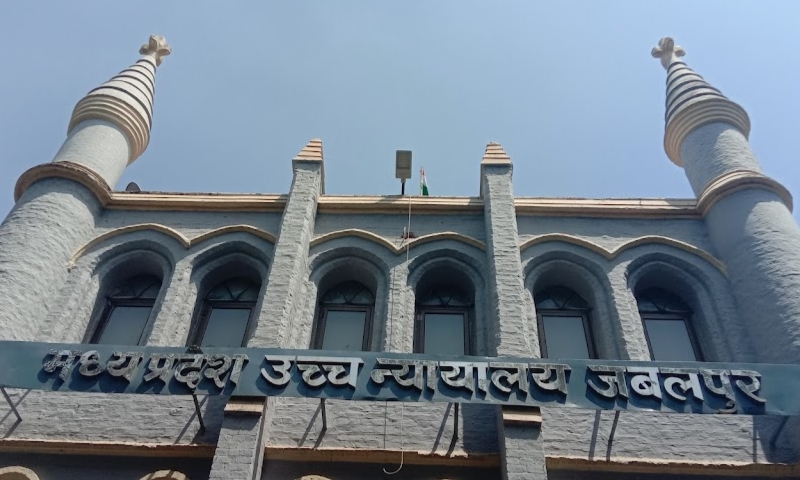
The Madhya Pradesh High Court has strongly condemned the growing caste-based divisions in Indian society, cautioning that if the current trend of caste assertion continues unchecked, it could one day lead to the “extinction of Hindu identity.”
The remarks were made by a Division Bench comprising Justices Atul Sreedharan and Pradeep Mittal on October 14, while hearing a suo motu case initiated after a viral video from Damoh district showed a man from the Other Backward Class (OBC) community being humiliated and forced to wash another man’s feet for sharing an AI-generated meme.
The incident, which sparked widespread outrage, prompted the court to intervene and issue stringent directions to the state administration to take immediate punitive action against the culprits.
Expressing serious concern over the increasing number of caste-related assaults and public humiliations in Madhya Pradesh, the Bench observed, “Repeated instances of caste-related violence and discriminative actions in the state are shocking.”
The court directed the police and district administration to invoke the National Security Act (NSA) against all individuals visible in the viral video, terming the act a threat to public order and communal harmony.
The judges recalled earlier caste atrocities, including the 2023 Sidhi urination case, where a man from the general category was caught on camera urinating on the head of a tribal man, an act that drew national condemnation and led the then chief minister to wash the victim’s feet as an apology gesture.
In a detailed observation, the court lamented that caste identity had increasingly overshadowed shared religious unity.
“Caste identities are on the rise. Every community, frequently and shamelessly, flaunts its caste identity to the detriment of the entire Hindu society,” the Bench said.
The judges further added, “Each caste has become vociferous and ultra-conscious of its caste identity and leaves no measure unturned to demonstrate its pride in belonging to a particular caste. The victims in such cases are often the least literate and most impoverished economically.”
Citing various recent examples, the Bench noted that caste consciousness was seeping into all levels of public life. The judges referred to the incident of a shoe being thrown at the Chief Justice of India, the suicide of a senior police officer in Haryana, and other caste-related controversies as signs of “a dangerous prominence” of caste discourse.
“Persons refer to themselves as Brahmins, Kshatriyas, Vaishyas, Shudras, each asserting their independent identity. At this stage, if things remain unchecked, within a century and a half, people who call themselves Hindus will cease to exist, fighting amongst themselves,” the court warned.
The court also highlighted the role of social media in amplifying caste identities and rivalries, observing that public discourse has shifted from a shared civilisational identity to fragmentary caste affiliations.
The Bench remarked that such unchecked online trends are deepening social fault lines and eroding collective faith-based consciousness that once bound communities together.
While acknowledging that the use of the National Security Act is a stringent measure, the court justified it as necessary given the growing threat to public peace.
“If action is not taken urgently and immediately, situations may lead to violence where police action thereafter would become ineffective, with public order being disturbed,” the Bench noted.
Following the court’s direction, Damoh Police invoked the NSA against the accused and intensified surveillance in caste-sensitive regions to prevent retaliatory tensions.










Comments