





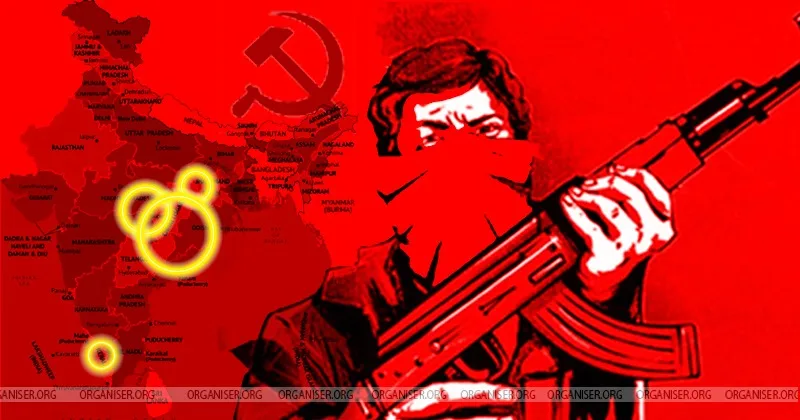
New Delhi: The Ministry of Home Affairs [MHA] on October 15 informed that Maoist-affected districts have reduced from 18 to 11, with only three districts featuring in the list of most affected districts as compare to 6 reported earlier.
“In a giant stride towards Modi government’s vision of building a Naxal-free Bharat, the number of districts most affected by Naxalism have been brought down to 3 from 6. Now only Bijapur, Sukma and Narayanpur in Chhattisgarh are the most affected districts by Left Wing Extremism (LWE),” said the ministry in a release issued on Wednesday.
“In the category of LWE affected districts the number has also been further brought down to just 11 from 18. Now only 11 districts are Left Wing Extremism affected. The Modi government is committed to completely eradicate the Naxal menace by the 31st of March 2026,” added the statement.
The statement further added that under the leadership of Prime Minister Narendra Modi and guidance of Union Home Minister Amit Shah, the operational successes have surpassed all previous records this year wherein 312 LWE cadres have been eliminated, including CPI (Maoist) General Secretary and 08 other Polit Bureau/ Central Committee Members.
It said that as many as 836 Naxal cadres have been arrested and 1639 have surrendered and joined the mainstream. The surrendered Naxalites include one Polit Bureau Member and a Central Committee Member.
The statement further noted that under Modi government, unprecedented success has been achieved in combating the Naxal menace through rigorous implementation of National Action Plan and Policy which envisages a multi-pronged approach.
The National Action Plan and Policy include precise intelligence – based and people friendly counter Left Wing Extremism (LWE) operations. These steps were accompanied by swift domination of areas with security vacuum, targeting of top leaders as well as over ground workers, countering the nefarious ideology, rapid development of infrastructure and saturation of welfare schemes, choking of finances, enhanced coordination between states and Union governments and accelerated investigation and prosecution of Maoist related cases, it stated.
The release added that “Once called India’s “biggest internal security challenge” by the then Prime Minister in 2010, Naxalism is now visibly retreating. Naxals had planned a Red Corridor – stretching from Pashupati in Nepal to Tirupati in Andhra Pradesh. In 2013, 126 districts from different states reported Naxal-related violence; by March 2025, this tally had fallen to just 18 districts, with only 06 classified as most affected districts.”
















Comments