





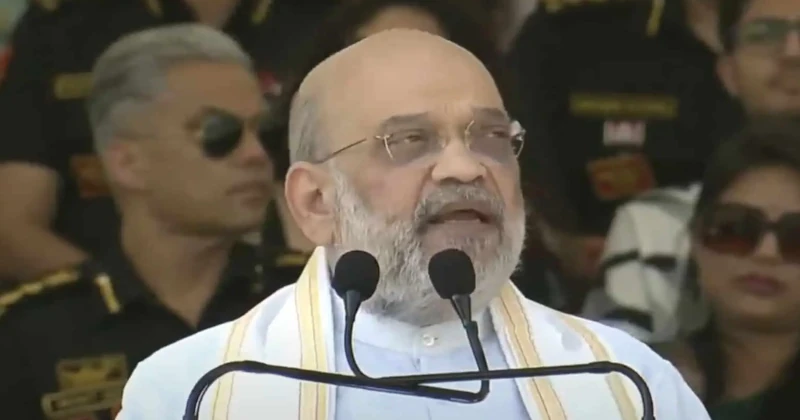
Union Home Minister Amit Shah announced the establishment of a seventh operational hub of the National Security Guard (NSG) in Ayodhya, Uttar Pradesh, stating the government’s unwavering commitment to preempt and neutralise terrorism across the country. The announcement was made during the 41st Raising Day celebrations of the NSG in Haryana’s Manesar.
The new hub in Ayodhya marks a major expansion of the elite “Black Cat” commando force, which has been at the forefront of India’s counter-terror operations since its inception in 1984. Already present in Mumbai, Chennai, Kolkata, Hyderabad, Ahmedabad (Gandhinagar), and Jammu, the addition of Ayodhya ensures that NSG commandos can be deployed round-the-clock to respond swiftly to any terror threat in the strategically sensitive region of eastern Uttar Pradesh.
Amit Shah highlighted that a special operational zone around the Ayodhya centre will allow the Special Composite Group to react instantly to sudden terrorist attacks, strengthening India’s rapid-response capabilities in the heartland. “Here, the NSG personnel will be deployed and available 24 hours a day, every day of the year,” the Home Minister said.
Alongside the new hub, Amit Shah laid the foundation stone for an eight-acre Special Operations Training Centre (SOTC), with an investment of Rs 141 crore. The facility is set to become a world-class training ground for NSG commandos and anti-terror squads from police forces nationwide.
“The SOTC aims to equip security personnel across India with advanced technology and skills necessary to counter terrorism effectively,” Amit Shah said. The Union government will integrate cutting-edge simulation technology, tactical training for urban and rural combat, and specialised counter-terror exercises, reinforcing India’s “zero-error” approach to elite security operations.
The NSG, raised in 1984 in the wake of rising terror threats, is widely regarded as a world-class counter-terror force, capable of handling hostage rescues, high-risk operations, and VIP security. Personnel are drawn from both the Indian Army and Central Armed Police Forces, trained to respond to terrorism and high-stakes threats with minimal delay and maximum precision.
Over the decades, the NSG has played a pivotal role in India’s security landscape, successfully managing crises such as:
- Operation Ashwamedh
- Operation Sarvashakti
- Operation Dhangu
- Akshardham Temple attack response
- 2008 Mumbai terror attacks
Each operational hub functions as a specialised backup force, capable of handling prolonged, high-risk counter-terror operations, while ensuring seamless coordination with state police forces.
Amit Shah emphasised that the expansion of the NSG reflects the Modi government’s zero-tolerance approach to terrorism, which has been systematically strengthened since 2019 through legislative and operational reforms. These measures include:
- Amendments to the Unlawful Activities (Prevention) Act (UAPA) and National Investigation Agency (NIA) Act
- Activation of the Prevention of Money Laundering Act (PMLA) and Enforcement Directorate (ED) to investigate terror funding
- Banning of the Popular Front of India (PFI) and other terror-linked organisations
- Strengthening the Multi-Agency Centre (MAC) for real-time intelligence sharing
Amit Shah highlighted that terrorism has been clearly defined in three new criminal laws, closing previous legal loopholes, and that more than 57 individuals and multiple organisations have been declared terrorist entities, reflecting India’s proactive legal and operational strategy against terror networks.
The selection of Ayodhya for the new hub is symbolically and strategically significant, positioning the NSG in a region that is both historically sensitive and logistically central. This ensures rapid deployment capabilities for high-risk counter-terror operations in the eastern and central corridors of India, while also strengthening security preparedness for major religious and public events.
Amit Shah stressed that the Ayodhya hub and the accompanying SOTC reflect the government’s broader goal of pre-emptive, technology-driven counter-terrorism, combining elite manpower with advanced tactical training to address evolving terror threats.
With the new Ayodhya hub and the Special Operations Training Centre, the NSG’s footprint now spans the breadth of India, ensuring 24/7 operational readiness, rapid response capability, and enhanced tactical coordination with state and central agencies. “The NSG’s expansion and modernisation underscore India’s continued efforts to stay ahead in the fight against terrorism, ensuring national security for our citizens,” Amit Shah said.
















Comments