





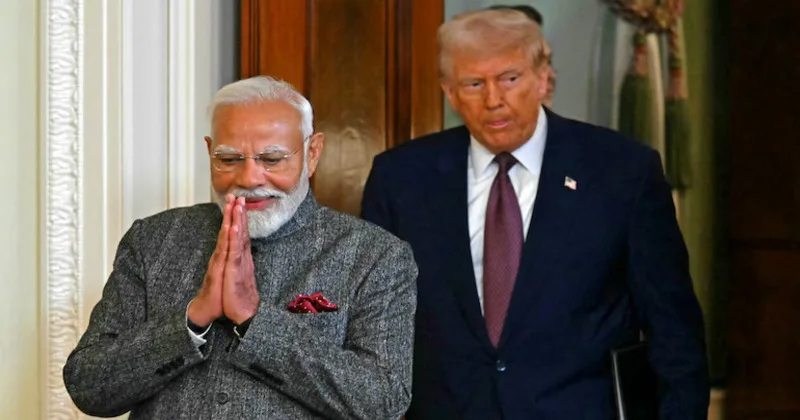
As diplomatic efforts grow for a potential ceasefire in Gaza, a new phase in West Asian diplomacy seems to commence, with India in the spotlight as U.S. President Donald Trump and Egyptian President Abdel Fattah al-Sisi have invited Prime Minister Narendra Modi to attend the upcoming Sharm el-Sheikh Peace Summit. This meeting aims to turn a shaky truce between Israel and Hamas into a lasting plan for peace and rebuilding, showing how global attention is shifting from conflict management to addressing its aftermath. For India, this invitation is significant; it acknowledges New Delhi’s rising influence in a region once focused on superpower rivalries. It also shows a growing agreement that achieves stability in Gaza and West Asia by involving countries like India, which have connections that cross ideological and geopolitical lines.
Prime Minister Narendra Modi had received the invitation from Trump and Sisi for the high-stakes peace summit set for October 13 in Sharm el-Sheikh. This summit, co-chaired by Trump and Sisi, gathers over 20 world leaders aiming to solidify a ceasefire, negotiate a prisoner exchange and create a plan for lasting stability in Gaza and the broader West Asia. The invitation holds significant symbolism and geopolitical importance beyond the immediate situation. As per the latest reports, Minister of State for External Affairs, Kirti Vardhan Singh will represent India at the summit.
This summit occurs at a time of fragile progress: ceasefire talks between Israel and Hamas have moved closer to agreement, with mediation from Egypt, Qatar, Turkey and the U.S. Hamas has stated it will not attend the formal signing ceremony. But the first phase of the deal including hostage releases and Israeli troop withdrawal is set to advance. Thus, the summit seeks to turn a shaky ceasefire into a structured peace initiative focused on rebuilding, governance reform and international oversight, rather than just another temporary pause.
The summit’s importance goes beyond managing the immediate crisis. The Israel–Hamas conflict has devastated Gaza, with tens of thousands dead, millions displaced and daily life infrastructure destroyed. Global and regional powers understand that without a clear post-conflict plan, Gaza could descend into ongoing violence. Egypt hopes to reclaim its historical role as the central player in Arab diplomacy. The U.S., under Trump, seeks to regain its influence in a region where it has swayed between overreach and withdrawal. Arab states are trying to balance public support for Palestine with their growing strategic ties to Israel.
In this changing landscape, India’s potential participation holds significant weight. New Delhi has historically maintained a careful balance in its West Asia policy by supporting a two-state solution, condemning terrorism and building strong ties with both Israel and Arab nations. Recently, India welcomed the initial progress of the U.S.-led Gaza peace plan and expressed its readiness to assist in reconstruction if peace prevails. Israel has even invited India to help rebuild areas in the region, acknowledging its developmental skills and soft power.
India’s involvement in Sharm el-Sheikh would be important in many ways. It would bolster New Delhi’s position as a responsible global player who balanced between empathy and strategic caution. It would also create direct communication channels with Washington, Cairo and other regional powers when India’s economic and security interests in West Asia are increasingly crucial. Additionally, it would allow India to influence post-war reconstruction by providing technical expertise, humanitarian aid and infrastructure supporting areas where Indian assistance could significantly improve civilian life in Gaza. Beyond symbolism, such a role fits with India’s broader foreign policy aim of being a “Vishwaguru” that builds rather than divides and stabilizes instead of dominating.
The dynamics of this summit highlight a changing regional order. Trump’s renewed focus on West Asia involves not just peace-making but also reclaiming geopolitical presence. By hosting the talks, Sisi aims to restore Egypt’s vital role in Arab diplomacy after years of diminished influence. Gulf states including Saudi Arabia, the UAE and Qatar are adjusting their relationships in light of shifting U.S. commitments and Iran’s rising influence. Amid these changes, a multipolar setup is emerging, where countries like India, with their balanced diplomacy and development-driven approaches, can play a meaningful role.
If a credible truce emerges from the Sharm el-Sheikh summit, India could contribute both humanitarian and strategic support. In the short term, New Delhi might provide aid, set up medical missions and help rebuild critical services like water supply and healthcare. Over the longer term, India’s expertise in affordable technology, renewable energy and governance reforms could assist Gaza’s reconstruction in a manner that fosters local empowerment instead of dependency. India’s presence would also reassure both Israel and the Arab world, showing that peace can be pursued without undermining sovereignty or regional pride.
Ultimately, PM Modi receiving the invitation is not just a diplomatic gesture; it is a recognition of India’s evolving global role. The Sharm el-Sheikh summit presents New Delhi with an opportunity to position itself as a practical, peace-oriented power that can bridge divides between the West, the Islamic world and the Global South. The message is clear: in the quest for a stable Gaza and a recalibrated West Asia, India is no longer a peripheral observer. It is now viewed as an essential player, one whose decisions at this critical moment could influence not only the Gaza peace process but also the landscape of twenty-first-century geopolitics.












Comments