Munshi Premchand Death Anniversary: Honoring the literary legend
December 6, 2025
  • Read Ecopy
  • Circulation
  • Advertise
  • Careers
  • About Us
  • Contact Us
Android AppiPhone AppArattai
Organiser
  • ‌
  • Bharat
    • Assam
    • Bihar
    • Chhattisgarh
    • Jharkhand
    • Maharashtra
    • View All States
  • World
    • Asia
    • Europe
    • North America
    • South America
    • Africa
    • Australia
  • Editorial
  • International
  • Opinion
  • RSS @ 100
  • More
    • Op Sindoor
    • Analysis
    • Sports
    • Defence
    • Politics
    • Business
    • Economy
    • Culture
    • Special Report
    • Sci & Tech
    • Entertainment
    • G20
    • Azadi Ka Amrit Mahotsav
    • Vocal4Local
    • Web Stories
    • Education
    • Employment
    • Books
    • Interviews
    • Travel
    • Law
    • Health
    • Obituary
  • Subscribe
    • Subscribe Print Edition
    • Subscribe Ecopy
    • Read Ecopy
  • ‌
  • Bharat
    • Assam
    • Bihar
    • Chhattisgarh
    • Jharkhand
    • Maharashtra
    • View All States
  • World
    • Asia
    • Europe
    • North America
    • South America
    • Africa
    • Australia
  • Editorial
  • International
  • Opinion
  • RSS @ 100
  • More
    • Op Sindoor
    • Analysis
    • Sports
    • Defence
    • Politics
    • Business
    • Economy
    • Culture
    • Special Report
    • Sci & Tech
    • Entertainment
    • G20
    • Azadi Ka Amrit Mahotsav
    • Vocal4Local
    • Web Stories
    • Education
    • Employment
    • Books
    • Interviews
    • Travel
    • Law
    • Health
    • Obituary
  • Subscribe
    • Subscribe Print Edition
    • Subscribe Ecopy
    • Read Ecopy
Organiser
  • Home
  • Bharat
  • World
  • Operation Sindoor
  • Editorial
  • Analysis
  • Opinion
  • Culture
  • Defence
  • International Edition
  • RSS @ 100
  • Magazine
  • Read Ecopy
Home Bharat

Munshi Premchand Death Anniversary: Remembering the pioneer who gave Indian literature its social conscience

On Munshi Premchand’s death anniversary, the nation remembers the literary giant who transformed Hindi-Urdu fiction into a mirror of India’s social realities, championing the struggles of peasants, women, and the marginalised

WEBDESKWEBDESK
Oct 8, 2025, 11:00 am IST
in Bharat
Follow on Google News
FacebookTwitterWhatsAppTelegramEmail

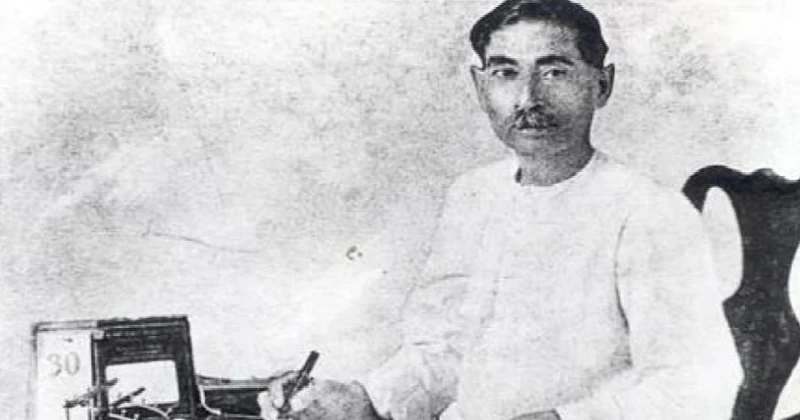
On October 8 1936, India lost one of its greatest literary visionaries Munshi Premchand, born Dhanpat Rai Srivastava, whose pen became a mirror reflecting the moral, social, and economic fabric of a changing nation. Revered as the “Upanyas Samrat” (Emperor of Novels), Premchand transformed Indian fiction by bringing to life the struggles of the common man, the injustice of caste, and the silent endurance of women and peasants under a feudal system.

Born on July 31, 1880 in Lamhi, a small village near Banaras (Varanasi), Premchand emerged from humble beginnings. His father, Ajaib Lal, was a postal clerk, and his mother, Anandi Devi, came from a nearby village, Karauni. Early orphaned and emotionally deprived, the young Dhanpat Rai found solace in books and observation of society’s harsh realities both of which would later shape his deeply empathetic writings.

Premchand began writing in Urdu under the pen name Nawab Rai. His earliest known work, Asrar-e-Maabid (Devasthan Rahasya in Hindi), was published serially in Awaz-e-Khalq between 1903 and 1905. His debut short story collection, Soz-e-Watan (1908), which carried a strong patriotic fervour, was banned by the British Raj, who saw it as a threat to colonial authority. This forced him to adopt a new pen name Premchand suggested by his friend Dayanarayan Nigam.

From that moment, Premchand was not merely a writer’s pseudonym it became a symbol of literary defiance and moral realism.

Premchand’s literary world was peopled not by kings and courtiers, but by farmers, widows, labourers, and social outcasts. He gave them not only language but dignity turning their pain into literature that moved millions.

His first Hindi novel, Sevasadan (1918), originally written in Urdu as Bazaar-e-Husn, addressed the grim realities of dowry, prostitution, and women’s subjugation. Dr. Ram Vilas Sharma, a noted critic, described it as “a landmark in Hindi fiction that exposed the moral corrosion of a society trapped in hypocrisy.”

Following his resignation from government service in 1921 during Mahatma Gandhi’s Non-Cooperation Movement, Premchand devoted his life entirely to writing. He edited the literary magazines Maryada, Madhuri, Hans, and Jagran each becoming a platform for reformist thought.

In the following years, he penned masterpieces like Premashram (1922), focusing on peasant exploitation; Rangbhoomi (1925), with a blind beggar as the revolutionary protagonist; Nirmala (1925), which exposed the tragedy of child marriage; Gaban (1928), a story of middle-class moral collapse; Karmabhoomi (1932), a novel confronting caste and land revenue injustices; and his magnum opus, Godaan (1936), which remains one of the greatest works on peasant life in Indian literature.

Premchand’s writings tore apart the veils of pretense from early 20th-century Indian society. His stories often explored:

  • The caste system’s cruelty (Karmabhoomi, Sadgati).
  • The economic exploitation of farmers (Godaan).
  • The plight of women under patriarchal norms (Nirmala, Sevasadan).
  • The disillusionment of modernity (Gaban, Kayakalp).
  • The moral contradictions of urban middle classes, often torn between ideals and greed.

His short stories, compiled in the celebrated Mansarovar series, exceeded 300 in number, and were written with such psychological insight and empathy that they remain timeless. Works like Idgah, Panch Parmeshwar, and Kafan continue to be staples in school curricula, embodying the ethical realism of Indian life.

Dr Kamal Kishore Goenka, who compiled Premchand’s complete Hindi-Urdu short stories under Premchand Kahani Rachanavali, estimates his total output to be over 300 stories and 18 novels. His transition from Urdu to Hindi marked not just a linguistic shift, but also a cultural movement one that fused literary art with nationalist consciousness.

Also Read: Solar ambition of Bharat shines: PM Surya Ghar Muft Bijli scheme powers 5 lakh homes with Rs 10,907 crore loan support

In 1934, Premchand entered cinema, writing for Mohan Dayaram Bhavani’s Ajanta Cinetone Company. He scripted Mazdoor (The Worker), one of the first films to address industrial labour struggles. Despite his short life he passed away on October 8 1936 at the age of 56 Premchand’s pen never ceased to fight for truth and justice.

In his final years, as President of the All India Progressive Writers’ Association (Lucknow, 1936), Premchand urged young writers to turn literature into a tool of social reform. His call that “sahitya jeevan ka darpan hai” (literature is the mirror of life) continues to guide generations of writers, thinkers, and educators.

His unfinished novel Mangalsutra, later completed by his son Amrit Rai and published in 1948, closed the circle of a literary journey that began with Soz-e-Watan both rooted in India’s moral and social awakening.
Topics: indian literatureMunshi PremchandMunshi Premchand Death AnniversaryDhanpat Rai
ShareTweetSendShareSend
✮ Subscribe Organiser YouTube Channel. ✮
✮ Join Organiser's WhatsApp channel for Nationalist views beyond the news. ✮
Previous News

Indian army honours Mohanlal for Dadasaheb Phalke award, actor vows to inspire youth to join territorial army

Next News

Conversion ‘Toolkit’ exposed: Arrest of US citizen James Watson in Bhiwandi sparks national security alarm

Related News

Sant Kabirdas Birth Anniversary: Celebrating the life of the revolutionary Sant who broke religious and social barriers

Love Jihad is a grim and disconcerting reality the play 'Shyama ka Jihad' awaring Hindus from Love Jihad

“Shyama ka Jihad” – A play that reflects the past, present, and future of Hindus

Role of Literature in Independence of India

Load More

Comments

The comments posted here/below/in the given space are not on behalf of Organiser. The person posting the comment will be in sole ownership of its responsibility. According to the central government's IT rules, obscene or offensive statement made against a person, religion, community or nation is a punishable offense, and legal action would be taken against people who indulge in such activities.

Latest News

PM Modi presents Putin with Bhagavad Gita, chess set, and silver horse

Cultural ties strengthened: PM Modi presents Putin with Bhagavad Gita, chess set, and silver horse

Image for representational purpose only, Courtesy Vocal Media

Bihar to get ‘Special Economic Zones’ in Buxar and West Champaran

Thirupparankundram Karthigai Deepam utsav

Andhra Pradesh: AP Dy CM Pawan Kalyan reacts to Thirupparankundram row, flags concern over religious rights of Hindus

23rd India-Russia Annual Summit

India-Russia Summit heralds new chapter in time-tested ties: Inks MoUs in economic, defence, tourism & education

DGCA orders probe into IndiGo flight disruptions; Committee to report in 15 days

BJYM leader Shyamraj with Janaki

Kerala: Widow of BJP worker murdered in 1995 steps into electoral battle after three decades at Valancherry

Russian Sber bank has unveiled access to its retail investors to the Indian stock market by etching its mutual fund to Nifty50

Scripting economic bonhomie: Russian investors gain access to Indian stocks, Sber unveils Nifty50 pegged mutual funds

Petitioner S Vignesh Shishir speaking to the reporters about the Rahul Gandhi UK citizenship case outside the Raebareli court

Rahul Gandhi UK Citizenship Case: Congress supporters create ruckus in court; Foreign visit details shared with judge

(L) Kerala High Court (R) Bouncers in Trippoonithura temple

Kerala: HC slams CPM-controlled Kochi Devaswom Board for deploying bouncers for crowd management during festival

Fact Check: Rahul Gandhi false claim about govt blocking his meet with Russian President Putin exposed; MEA clears air

Load More
  • Privacy
  • Terms
  • Cookie Policy
  • Refund and Cancellation
  • Delivery and Shipping

© Bharat Prakashan (Delhi) Limited.
Tech-enabled by Ananthapuri Technologies

  • Home
  • Search Organiser
  • Bharat
    • Assam
    • Bihar
    • Chhattisgarh
    • Jharkhand
    • Maharashtra
    • View All States
  • World
    • Asia
    • Africa
    • North America
    • South America
    • Europe
    • Australia
  • Editorial
  • Operation Sindoor
  • Opinion
  • Analysis
  • Defence
  • Culture
  • Sports
  • Business
  • RSS @ 100
  • Entertainment
  • More ..
    • Sci & Tech
    • Vocal4Local
    • Special Report
    • Education
    • Employment
    • Books
    • Interviews
    • Travel
    • Health
    • Politics
    • Law
    • Economy
    • Obituary
  • Subscribe Magazine
  • Read Ecopy
  • Advertise
  • Circulation
  • Careers
  • About Us
  • Contact Us
  • Policies & Terms
    • Privacy Policy
    • Cookie Policy
    • Refund and Cancellation
    • Terms of Use

© Bharat Prakashan (Delhi) Limited.
Tech-enabled by Ananthapuri Technologies