





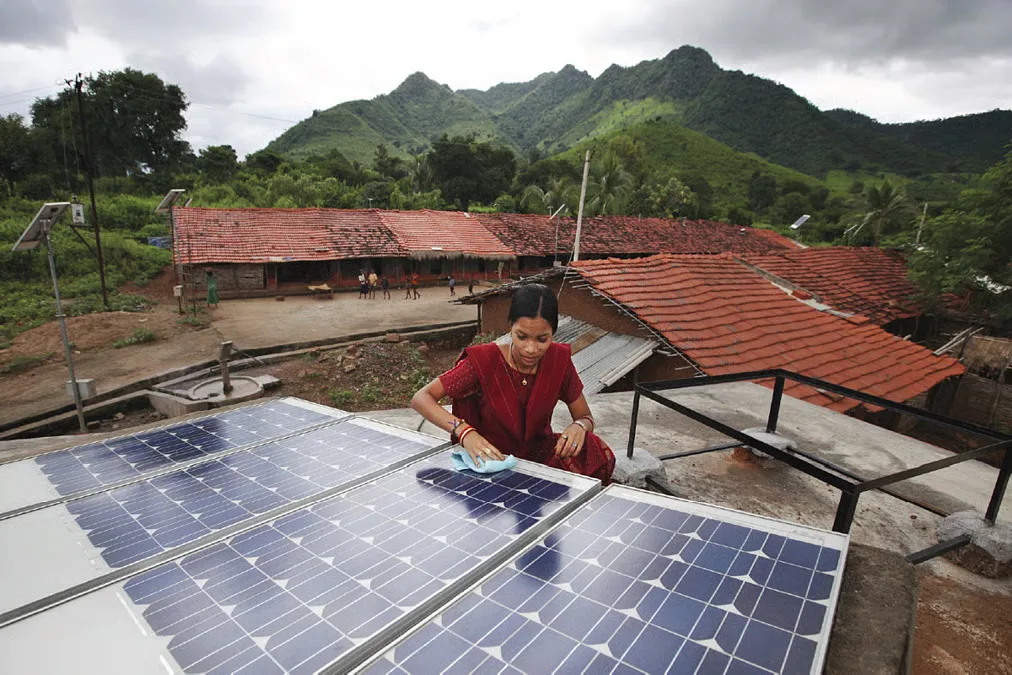
The PM Surya Ghar Muft Bijli Yojana (PMSGMBY) has reached a significant milestone in its mission to make India a global leader in renewable energy adoption. According to the latest data from the Department of Financial Services (DFS) and the Ministry of New and Renewable Energy (MNRE), over 5.79 lakh loan applications amounting to Rs 10,907 crore have been sanctioned under the scheme as of September 2025.
This achievement reflects the government’s consistent efforts to democratise access to clean and affordable electricity, particularly through the promotion of rooftop solar installations for individual households. It also demonstrates the growing public confidence in India’s renewable energy framework, as both urban and rural families increasingly shift toward sustainable power solutions.
How the scheme works?
Launched by Prime Minister Narendra Modi on February 13, 2024, during the Union Budget 2024-25, the PM Surya Ghar Muft Bijli Yojana is a flagship initiative designed to make solar power accessible to the common man. Backed by an enormous government investment of Rs 75,000 crore, the scheme aims to empower one crore households by installing rooftop solar panels and providing up to 300 units of free electricity every month.
Under the program, beneficiaries receive a fixed, one-time subsidy directly credited to their bank accounts, ensuring transparency and preventing any middlemen involvement. The financial component of the scheme allows families to avail of collateral-free loans at concessional interest rates, making it easier for middle and lower-income households to embrace solar energy without financial strain.
This model of direct benefit transfer and affordable financing has positioned the PMSGMBY as one of the most citizen-friendly renewable energy programs ever launched in India.
Digital integration and ease of access
To ensure accessibility and simplify the entire process, the government has digitally integrated the JanSamarth Portal with the National Portal for PM Surya Ghar Muft Bijli Yojana (pmsuryaghar.gov.in). This digital linkage has streamlined the experience for applicants, right from registration to loan approval and enables them to track their applications in real time.
Applicants can easily verify their eligibility, upload required documents, and access credit facilities digitally without having to visit multiple offices. The initiative also includes several key financial features that make it particularly attractive:
Collateral-free loans up to Rs 2 lakh
A six-month moratorium period before repayment begins
Simplified documentation and self-declaration process
Longer repayment tenures aligned with expected energy cost savings
These reforms have improved both transparency and efficiency, cutting down delays and instilling greater confidence in citizens opting for government-backed solar energy systems.
Enhancements based on beneficiary feedback
Recognising the importance of inclusivity and responsiveness, the DFS and MNRE have implemented a series of modifications based on feedback received from banks and beneficiaries. Among the most impactful changes are the introduction of co-applicants, allowing joint applications from family members to expand eligibility, and the removal of capacity-based caps, which gives households the flexibility to install solar systems as per their energy needs.
Additionally, the simplification of documentation has made the scheme more accessible to people in rural and semi-urban areas, where cumbersome paperwork often discourages participation. These enhancements have transformed the PMSGMBY into a citizen-centric, transparent, and flexible model, ensuring that the benefits of solar adoption reach the last mile.
Monitoring and review mechanism
To ensure effective and timely implementation, the scheme is being closely monitored by the Department of Financial Services in coordination with the Ministry of New and Renewable Energy. Regular reviews are conducted through State-Level Bankers’ Committees (SLBCs) and Lead District Managers (LDMs), with continuous consultations with Public Sector Banks (PSBs).
This robust multi-tier monitoring structure helps identify bottlenecks, streamline fund disbursals, and ensure that the scheme maintains consistent progress across states. Additionally, the government has launched awareness campaigns, district-level workshops, and training programs for local stakeholders to encourage participation, particularly among rural households.
Such institutional coordination between banks, administrative bodies, and local communities has been crucial to ensuring that the scheme’s benefits reach those who need them most.
Financial impact and solar adoption
The PM Surya Ghar Muft Bijli Yojana’s financial model has been designed to make solar adoption economically viable from the very start. For most beneficiaries, the monthly loan repayment is less than or equal to their average electricity bill, enabling them to save money immediately after installation.
By September 2025, more than five lakh families had already benefited from the program, significantly reducing their dependence on conventional power grids. The total loan value of Rs 10,907 crore indicates robust financial participation and reflects the increasing willingness of Indian households to invest in renewable energy.
This large-scale adoption not only strengthens India’s clean energy infrastructure but also supports the nation’s transition toward a green economy, reducing carbon emissions and promoting sustainable lifestyles.
Eligibility and subsidy support
The eligibility criteria under the scheme are simple and citizen-friendly. Applicants must be Indian citizens who own a legally recognised residential property with adequate rooftop space and possess a valid electricity connection. Additionally, applicants must not have availed of any previous solar subsidy under other government programs.
The subsidy structure is tiered according to household energy consumption, ensuring fair and targeted financial assistance. Families consuming 0-150 units per month receive subsidies between Rs 30,000 and Rs 60,000, while those using 150-300 units qualify for Rs 60,000 to Rs 78,000. Households consuming above 300 units are eligible for a maximum subsidy of Rs 78,000.
This tiered system ensures that the subsidy amount remains proportional to a family’s energy requirements, benefiting both small and large consumers alike.
Step toward energy Atmanirbharta
Beyond its financial incentives, the PM Surya Ghar Muft Bijli Yojana represents a transformative step toward India’s energy self-reliance. By enabling families to generate their own electricity, the scheme not only lowers household expenses but also reduces national dependence on fossil fuels.
It aligns with India’s Panchamrit commitments announced at COP26, which include achieving 500 GW of renewable energy capacity by 2030. The program has also created new employment opportunities in the solar energy value chain, from manufacturing panels to installation and maintenance services, thereby contributing to local economies.
Grassroots impact
The government has actively partnered with urban local bodies, panchayats, and Self-Help Groups (SHGs) to expand awareness about the scheme. Information campaigns across schools, community centers, and gram sabhas have played a major role in educating citizens about the long-term financial and environmental benefits of rooftop solar power.
In rural areas, the scheme has inspired a wave of micro-entrepreneurship, as trained youth take up solar installation and maintenance as sustainable careers. As the solar sector continues to expand, it is estimated that the PMSGMBY could generate over one lakh new jobs in the coming years, particularly across Tier-II and Tier-III cities.
The initiative is also expected to boost local manufacturing of solar equipment and accessories, reinforcing the government’s Make in India and Atmanirbhar Bharat missions.














Comments