





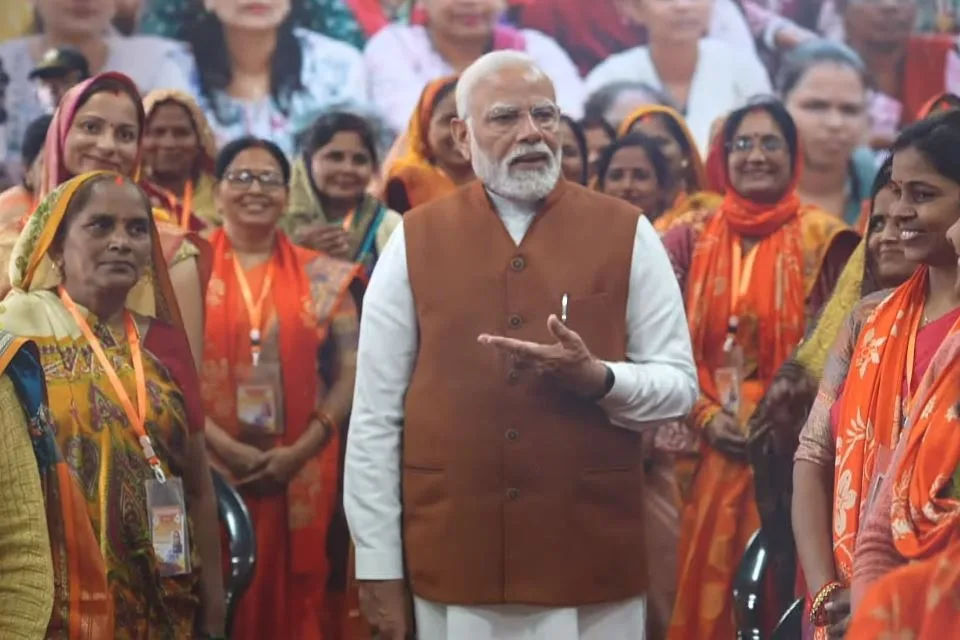
The Swasth Nari Sashakt Parivar Abhiyaan, launched by Prime Minister Narendra Modi on September 17, 2025, was a big nationwide health campaign focusing on women’s health, children’s well-being, proper nutrition, and family empowerment. The campaign ran for two weeks, ending on October 2, and was planned to coincide with Poshan Maah 2025 (National Nutrition Month) so that health and nutrition awareness could be promoted together under one movement.
The campaign was led jointly by the Ministry of Health and Family Welfare (MoHFW) and the Ministry of Women and Child Development (MoWCD). It also saw active support from state governments, district officials, community health workers, Anganwadi centres, and top medical institutes like AIIMS. With such wide participation, the Abhiyaan became the largest health outreach programme in India’s history for women and children.
Scale of the Abhiyaan: Unprecedented outreach
The campaign unfolded on a scale that few public health movements in India have ever matched. According to official figures, 18.08 lakh health camps were organised across the nation, spread across Ayushman Arogya Mandirs, Community Health Centres (CHCs), district hospitals, AIIMS branches, and medical colleges. A staggering 9.85 crore citizens participated in various health activities, while more than 6.5 crore women received direct health benefits.
Health officials pointed out that the campaign’s intent was not limited to conducting medical screenings. It was equally focused on creating sustainable health awareness. Communities were encouraged to adopt preventive care measures, nutrition-rich diets, and healthier lifestyles, laying the foundation for long-term improvements in public health.
Comprehensive health services
The two-week Abhiyaan covered an extensive range of health services, integrating preventive, promotive, and curative care into one campaign.
Screenings for non-communicable diseases (NCDs) such as hypertension and diabetes formed a major component. Nearly 1.78 crore citizens were screened for hypertension and 1.72 crore underwent diabetes checks, addressing India’s growing challenge of lifestyle-related illnesses. Similarly, the campaign put a strong emphasis on cancer detection, with 37 lakh women screened for breast cancer, 19 lakh for cervical cancer, and 69 lakh citizens for oral cancer. Officials said this unprecedented push for early detection will help reduce mortality rates and improve cancer treatment outcomes in the long run.
Maternal and child health also received significant attention. During the campaign, 62.6 lakh antenatal check-ups were conducted to safeguard maternal health, while 1.43 crore children were immunised to strengthen child healthcare coverage.
Anaemia and nutrition were equally prioritised. With 1.51 crore citizens screened for anaemia and 1.16 crore individuals receiving nutrition counselling, the drive directly supported India’s ongoing battle against malnutrition under the Anaemia Mukt Bharat (AMB) programme.
Tuberculosis and genetic disorders were also brought into focus. The campaign facilitated 85 lakh TB screenings and 10.23 lakh tests for sickle cell disease, while also registering 10.69 lakh Ni-kshay Mitras to ensure continued community involvement in the fight against TB.
Community participation was further strengthened through voluntary blood donation drives that enrolled 4.3 lakh donors, while nearly 10.69 lakh citizens received Ayushman Bharat / PM-JAY health cards, ensuring broader access to affordable healthcare.
Integration with Poshan Maah
One of the standout features of the Swasth Nari Sashakt Parivar Abhiyaan was its integration with Poshan Maah 2025, observed every September to promote nutrition awareness across India. By aligning the campaign with Poshan Maah, the government created a holistic approach that linked medical services with nutrition education.
Throughout the campaign, Anganwadi centres and community kitchens across states promoted healthier eating habits. Citizens were encouraged to adopt millet-based diets, a practice reinforced by India’s celebration of the International Year of Millets. Communities were also urged to reduce their consumption of oil, sugar, and processed foods, while programmes raised awareness on menstrual hygiene, adolescent health, and obesity prevention.
This combination of health services and nutrition awareness ensured that the campaign’s benefits extended beyond medical treatment to lifestyle transformation, particularly in rural and tribal areas where access to healthcare and balanced diets remains a challenge.
Role of institutions and community workers
The campaign’s success rested on a multi-layered delivery system that connected India’s leading health institutions with grassroots workers. At the tertiary level, AIIMS and other major hospitals organised specialised health camps that offered advanced diagnostics and treatment. At the community level, state governments and district administrations ensured decentralised outreach through health melas and local camps.
The role of ASHA and Anganwadi workers proved indispensable. They were the ones who mobilised women and adolescent girls to attend screenings, counselling sessions, and nutrition workshops. Their community presence helped build trust and ensure participation even in remote villages. Panchayati Raj institutions and local NGOs also played a crucial role, spreading awareness and supporting logistics.
Officials highlighted that this bottom-up model was key to the campaign’s reach, making sure that health services were accessible not just in cities and towns but also in India’s farthest corners.
Vision: Healthy women, empowered families
At the heart of the campaign lay the vision encapsulated in its motto: “Healthy Women, Empowered Families.” Speaking at the inauguration, Prime Minister Narendra Modi underlined the link between women’s health and national strength, declaring that “a healthy mother leads to a healthy family, and empowered families build a stronger nation.”
The Abhiyaan, therefore, was not only a short-term campaign but also a symbolic and practical step towards Viksit Bharat @2047, the government’s vision of transforming India into a developed nation by its centenary of independence. Health experts have also noted that the initiative reinforced the National Health Policy’s emphasis on preventive care, moving India’s health approach from curative responses to screenings, early diagnosis, and awareness generation.
Impact on India’s public health system
Swasth Nari Sashakt Parivar Abhiyaan is a landmark in India’s public health journey. The campaign showcased the capacity of the public health system to mobilise at a nationwide scale, while also strengthening disease surveillance systems through mass screenings for NCDs, cancers, TB, and sickle cell disease.
It built community engagement by encouraging voluntary participation in blood donation and TB elimination initiatives. More importantly, it integrated medical services with broader issues such as nutrition, lifestyle, and awareness, making it a holistic programme rather than a narrow health intervention.
Above all, it reaffirmed the government’s commitment to women-centric health policies, placing women and children at the centre of national health planning.
Towards a healthier India
As the campaign concludes, experts believe that its real outcomes will unfold in the coming years. The vast data generated through screenings will help in designing targeted interventions at state and district levels. Increased community awareness is expected to translate into improved lifestyle practices, reduced disease burden, and stronger preventive healthcare adoption. Expanded immunisation coverage and maternal check-ups are likely to result in better maternal and child health outcomes, while nutrition counselling may influence long-term dietary behaviours among households.
Thus, the Swasth Nari Sashakt Parivar Abhiyaan is not just a two-week exercise but a catalyst for systemic change in India’s public health framework.
As India marches towards its goal of Viksit Bharat @2047, this campaign reinforces the belief that when women are healthy, families are stronger, and when families are stronger, the nation prospers.











Comments