





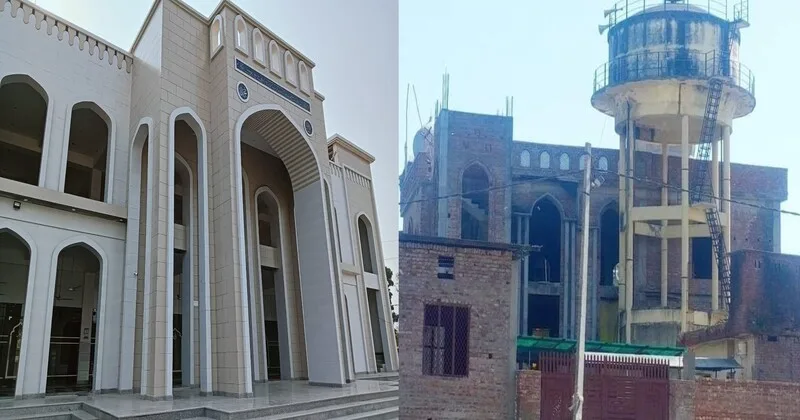
DEHRADOON: The state of Uttarakhand, often referred to as ‘Devbhumi’ (Land of the Gods), is reportedly witnessing an aggressive and widespread construction drive involving the development of grand mosques with towering minarets, raising significant questions about adherence to building regulations and the silent compliance of government agencies.
This apparent “competition” to erect the tallest minarets and largest mosque complexes is occurring despite clear Supreme Court directives from 2009 and 2016, which mandate that no religious structure can be built without explicit permission from the District Collector.
The issue gained prominence recently in Haridwar’s Sultanpur Nagar Panchayat area, where construction on what was slated to be Uttarakhand’s largest mosque—with a disputed minaret height—was temporarily halted by the district administration and a notice was issued. However, reports suggest the notice went unanswered, confirming suspicions that the mosque was being built without the necessary governmental approvals.
This pattern of unauthorised construction is not isolated. In Nainital, a previously small mosque was gradually expanded into an opulent complex featuring tall minarets during the tenures of various state governments, particularly between 2004-2005 and later under the Harish Rawat administration. Similarly, questions surround the majestic mosque in Rampur Mandi, Selaqui (Pachhuwa Doon), regarding the sources of funding for its lavish scale and whether any administrative permits were obtained for its construction.
In Sahaspur, a controversy erupted over the Jamiyat Ulum Madrasa and Mosque when a towering water tank was constructed and fitted with loudspeakers. The district administration was forced to seal one entire floor of the madrasa after confirming it was built without proper authorisation. Several madrasas and mosques in the Haridwar district exhibit similar compliance issues.
Numbers and Motives Under Scrutiny
Official figures indicate that Uttarakhand is home to over 722 mosques, a number the state government is aware of. The distribution reveals a heavy concentration in the plains districts:
- Haridwar (the Ganga heartland): 322 mosques.
- Dehradun: 155 mosques.
- Udham Singh Nagar: 144 mosques.
- Nainital: 48 mosques.
The report notes a recurring theme: almost all of these religious sites are currently undergoing or planning grand construction works.
The motivation behind this surge in unauthorized, opulent construction is highly suspect. Many mosque managing committees are reportedly avoiding the official permit process because obtaining approval requires submitting essential documentation, including land ownership records, organizational registration, and detailed income/expenditure statements—documents many committees apparently lack.
Adding complexity to the matter, some of these large minarets and mosques are alleged to have been built through illegal encroachment on government land and subsequently registered under the Waqf Board. This move often discourages the administration from taking decisive action against the illegal construction. Such complications have recently come to light during the process of registering Waqf properties onto the government’s Umeed portal.















Comments