





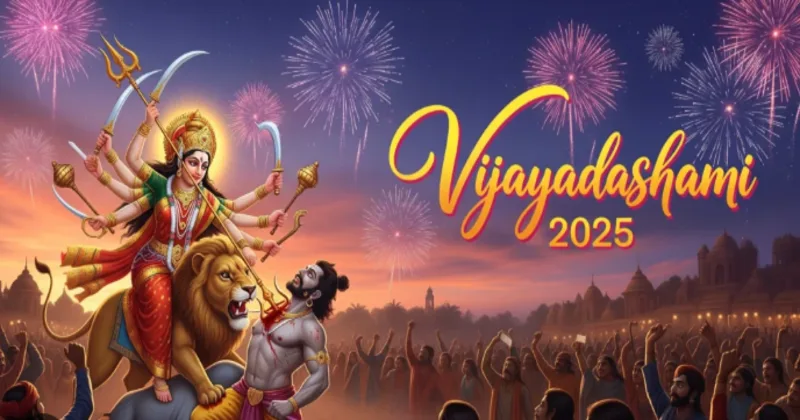
The festival of Navratri 2025, celebrated with devotion and joy across India, is not just about rituals and traditions but about a spiritual journey that purifies the mind and strengthens the heart. Navratri ends, followed by Vijayadashami (Dussehra) on October 2. This transition from nine nights of worship to the tenth day of victory is deeply symbolic, marking not just an end but a perfect culmination of faith, courage, and renewal.
In Navratri 2025, devotees worshiped different forms of Devi Ma each day reflecting a unique aspect of her divine energy. From Shailputri, who represents grounding and strength, to Siddhidatri, who grants divine wisdom and fulfillment, the journey of Navratri is like climbing spiritual steps. It begins with discipline, courage, and devotion, and ends with purity, forgiveness, and blessings. Fasting, prayers, and meditation during these days are not just rituals but acts of cleansing removing negativity and preparing oneself for fresh beginnings. By the end of the ninth day, the heart and mind of the devotee are renewed, ready for the celebration of victory on Vijayadashami.
Vijayadashami, also called Dussehra, is derived from the words “Vijaya” meaning victory and “Dashami” meaning the tenth day. Vijayadashami is connected with two famous stories in Hindu tradition. The first is from the Ramayana, where Bhagwan Ram defeats Ravana. His victory shows that truth and righteousness always win over arrogance and evil. The burning of Ravana’s effigies on this day is not just for celebration but a reminder that qualities like ego, greed, and hatred should be removed from our lives. The second story comes from the Devi Mahatmya, where Devi Ma kills the demon Mahishasura after fighting for nine days and nights. This story is directly linked with Navratri, as each day of the festival represents one stage of her battle. Vijayadashami, therefore, becomes the natural ending of Navratri, marking the goddess’s final victory over evil.
This is why Vijayadashami is seen as the perfect conclusion to Navratri. The nine days of worship teach lessons of patience, faith, and discipline, and the tenth day turns that devotion into action. It reminds us that prayer alone is not enough, we must also stand for truth and righteousness, just as Bhagwan Ram and Devi Ma did. The day also brings the spirit of new beginnings. It is considered highly auspicious to start fresh ventures, begin studies, or take on new responsibilities on Vijayadashami. In South India, many children are formally introduced to learning through the Vidyarambham ritual on this day, while across the country people believe that anything started on Vijayadashami will bring growth, success, and prosperity.
The end of Navratri and the arrival of Vijayadashami also represent a cycle; faith leading to victory, and victory inspiring fresh faith. Navratri strengthens the inner spirit through devotion, and Vijayadashami celebrates the outer expression of that strength through victory. Together, they remind us that life is a continuous rhythm of prayer, struggle, triumph, and renewal.
The festival is celebrated differently across regions but carries the same essence. In North India, people enjoy Ramlila performances, retelling the story of Bhagwan Ram, which ends with the burning of Ravana’s effigies amidst fireworks. In West Bengal and eastern India, Vijayadashami is the day of farewell for Goddess Durga, as her idols are immersed in rivers and lakes. The chants of “Asche bochor abar hobe” (She will return next year) reflect both sadness and hope. In South India, people perform Ayudha Puja, worshipping tools, instruments, and books, acknowledging the divine presence in their daily work. In Maharashtra, families exchange Aapta leaves, symbolizing gold, as a gesture of prosperity and goodwill. The grandeur of Mysuru Dasara in Karnataka, with decorated elephants, cultural parades, and royal celebrations, adds a majestic charm to the day. Despite these cultural variations, the core meaning remains the same, the triumph of good over evil and the beginning of new opportunities.
Even in today’s fast-changing world, the lessons of Vijayadashami remain deeply relevant. The burning of Ravana’s effigy reminds us to destroy the evils within ourselves, anger, ego, dishonesty, and hatred. The goddess’s battle against Mahishasura symbolizes the inner struggles we face, teaching us that with patience, devotion, and courage, we can overcome our difficulties. Vijayadashami also highlights the value of renewal, encouraging us to embrace fresh beginnings in education, career, or personal life. Most importantly, the festival unites people, showing that while customs differ, the universal message of righteousness binds everyone together.
As Navratri ends, and Vijayadashami dawns on October 2, millions across India will step into a new cycle of faith and hope.















Comments