





In June 2000, during my first visit to Leh, electricity was a luxury that was provided an hour a day from 7 pm to 8 pm. Yes, this was how things were in the capital city, which was most developed, as compared to other places within Ladakh. By the way, this electricity supply was courtesy Diesel Generator (DG) sets as there were no hydropower projects then producing electricity in Leh or around.
It needs to be stated upfront that Ladakhis have been very patriotic Indians with never an incident reported from anywhere in Leh or Kargil suggesting betrayal of national interest/s. In 1999 Kargil war, the men of Ladakh Scouts fought hard against the Pakistani aggressors. Adept in mountain climbing, surviving and thriving on bare minimum, the Ladakhis proved themselves formidable adversaries. They suffered heavily, fatal casualties as also injured were reported among them.
Over years, and decades, things changed. One can say unhesitatingly that the change was for the better as electricity is available there in most of Ladakh villages for most part of the day. Just as it is in any other part of India, load shedding and other attendant problems notwithstanding. There is better road connectivity with the outside world as also within Ladakh. Of course, some of it has happened as neglect of the connectivity can prove too costly. With China and Pakistan, two neighbours who share borders with Ladakh not favourably disposed to peace and tranquillity.
The investment in infrastructure of schools, hospitals, dispensaries as also other public utilities has been phenomenal. As a winter is sneaking on us silently with every passing day, including in Ladakh where it is extraordinarily harsh, these facilities have changed the way ordinary Ladakhis lived earlier. It may seem ironical at one level but Kargil war of 1999 with Pakistan and 2020 Galwan clashes both helped bring sharper focus on Ladakh. The result both times was that the Central governments of the day hastened development projects as also those which served strategic interests.
Shining Jewel
Ladakh, the northernmost jewel that adorns India, has always been a region of special focus because of its peculiar geographical location, strategic importance and cultural diversity. The unique challenges of this region, difficult mountain terrain, long and harsh winters, and a scattered population, easily set it apart from the rest of the country. Recognising this distinctiveness, and the inherent challenges, the Government of India established the Ladakh Autonomous Hill Development Council (LAHDC) three decades ago in 1995.
The objective of this council was to empower the people of Ladakh to determine their own development priorities and plan accordingly. The council was first formed in Leh district, followed by a separate council for Kargil district. Over the years, these councils have played an important role in sectors such as education, health, road construction, drinking water, irrigation, tourism, agriculture, and employment generation.
For nearly three decades, the Hill Development Council has accelerated Ladakh’s development journey. The construction of new roads, expansion of hospitals, establishment of schools, development of tourism infrastructure, and creation of job opportunities — all have been shaped by the decisive role of this council. But its importance goes beyond development projects alone.
Temple of Democracy
The LAHDC (Ladakh Autonomous Hill Development Council) is not just an administrative body. It is the very heart of Ladakh’s democratic life. This is where elected representatives listen to the people, frame policies, and implement plans on the ground. The 30-member Council building is the heart and soul of Leh district, not a mere building of mud walls or concrete.
This building is not a mere structure made of bricks and stones; it is the temple of the people’s aspirations. It is rightly called by many as a “Temple of Democracy” because this is the place where the people’s voices are transformed into policy and then executed on ground. This building is a citadel where elected representatives sit together, confabulating what would best help the masses.
This is where solutions to local problems are sought and where the roadmap for Ladakh’s future is drawn.
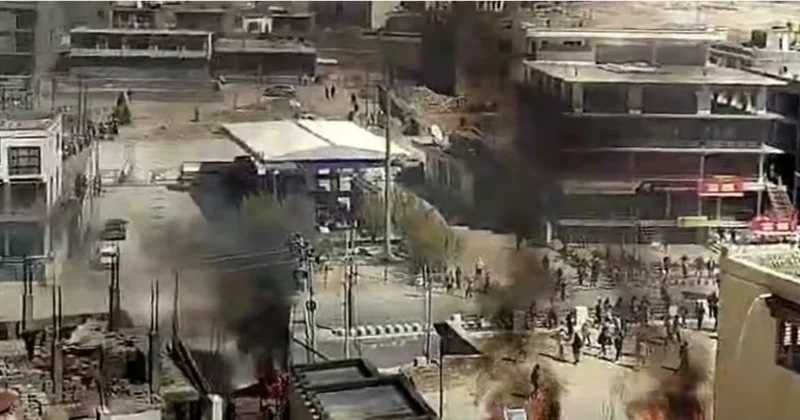
During recent protests in Ladakh, some anti-social elements targeted the LAHDC-Leh building and set it on fire. This was not merely an incident of government property being destroyed — it was an attack on the entire democratic framework. When the temple of democracy is burned, it is not just walls and roofs that are destroyed — it is the very trust of the people in the system that goes up in flames.
Acts like these can only be the result of anarchists. They send a dangerous message — that disagreements lead to violence, rather than seeking resolution through dialogue. This runs completely against the core principles of democracy.
Solution in Dialogue
Indian democracy is known for its diversity and tolerance. Dissent, protest, and disagreement are healthy signs of a functioning democracy, provided they are peaceful. Violence and arson solve nothing. In fact, the ones who suffer the most are ordinary citizens anywhere, in any part of the country.
When the LAHDC building burns, that is a problem. It is the very place where solutions to public problems need to be resolved. This is not merely a loss of property — it is an erosion of the democratic rights of the people.
Democratic institutions do not belong to a single political party, individual, or government. They belong to society as a whole. To attack them is to attack society itself. Protecting the Hill Development Council building is not just the government’s responsibility but the duty of every citizen.
As long as this building stands, it reminds us that we have the power to shape our own future. If it falls to violence and anarchy, the very foundation of democracy that we have trusted for years is shaken.
The Way Forward
The development of Ladakh, its peace, and the aspirations of its people are all rooted in this democratic framework. The burning of the LAHDC building is not just a casual incident — it is a warning for democracy itself.
We must realize that the most powerful way to express disagreement is through dialogue, debate, and peaceful protest. Violence, arson, and destruction only give birth to chaos and weaken democracy. The time has come for all of us to take a pledge to protect democratic institutions, promote dialogue, and move Ladakh forward on the path of development and peace.
This temple of democracy must remain safe for future generations so that they too can draw inspiration from it and build a better tomorrow.
The LAHDC Leh term is coming to an end very soon as the last elections were held in October 2020. The ordinary Ladakhis have a powerful tool in their hands, in their person, the right to vote. They can vote out those who, they believe, have failed to protect their rights, or further them. The beauty of democracy lies in a peaceful change through vote. The most powerful weapon is there for all to use.












Comments