





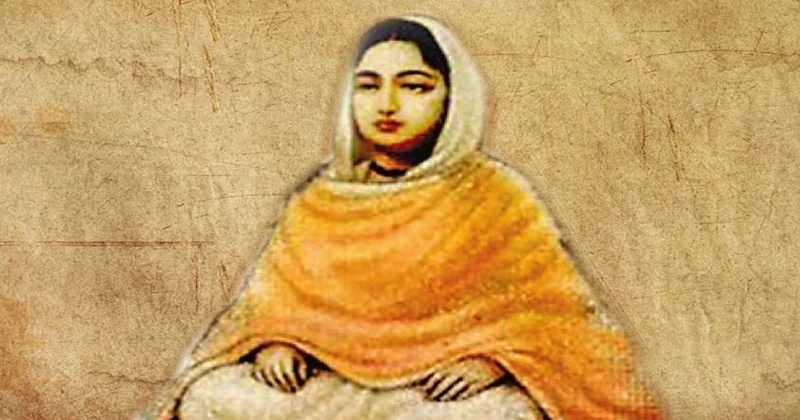
For centuries, Indian women have carried forward the torch of social reform, resistance, and compassion. Yet, their names are too often relegated to footnotes in our history books. Among these forgotten heroines stands Rani Rashmoni (1793–1861), a woman who, despite being neither a queen by birth nor by title, commanded such love and respect from her people that they crowned her “Rani” in spirit.
Rashmoni was more than a philanthropist, more than a mandir builder, more than a zamindar’s widow. She was a woman who challenged patriarchy, defied orthodoxy, and outsmarted the most powerful trading empire in the world the East India Company. Her life is a story of quiet resilience and explosive defiance, a story that modern India can no longer afford to forget.
Rani Rashmoni’s story is not just one of philanthropy but of resistance, reform, and relentless compassion. She challenged both patriarchy and colonial exploitation with the same fearlessness. From building public ghats like Babughat and reservoirs for the poor, to establishing soup kitchens and fighting for women’s rights, she redefined leadership in a way that continues to inspire.
On her birth anniversary on September 28, Prime Minister Narendra Modi paid glowing tribute:
Rani Rashmoni was a towering figure of courage, compassion and conviction. She is fondly remembered as a visionary leader and philanthropist. She built lasting institutions and had unwavering commitment to spirituality as well as for the upliftment of the poor. Tributes to her on…
— Narendra Modi (@narendramodi) September 28, 2025
“Rani Rashmoni was a towering figure of courage, compassion and conviction. She is fondly remembered as a visionary leader and philanthropist. She built lasting institutions and had unwavering commitment to spirituality as well as for the upliftment of the poor.”
Born on September 28 1793, in Halisahar, Bengal, Rashmoni came from the Kaivarta (fisherfolk) community. Her father, a poor labourer, married her off at a young age to Raj Chandra Das, heir to the prosperous zamindar family of Jaan Bazaar, Calcutta.
Unlike most marriages of the time, theirs was a true partnership. Raj Chandra recognised her sharp intellect and courage, granting her full access to his thriving trade. Together, they expanded their wealth and channelled much of it into public welfare projects — from soup kitchens for the hungry to public drinking water reservoirs for the poor. The couple also built two of Calcutta’s most enduring landmarks: Ahiritola Ghat and Babu Rajchandra Das Ghat (Babughat).
But Rashmoni’s true test began after tragedy struck. In 1830, Raj Chandra died, leaving her a widow with four daughters. In a society where widows were expected to disappear into obscurity, Rashmoni did the unthinkable: she took over the vast zamindari herself.
Her husband’s adversaries expected to swallow her estate whole. After all, what resistance could a “mere widow” offer? But they miscalculated. Rashmoni not only fought back, but thrived — with the help of her trusted son-in-law, Mathura Nath Biswas. She ran the zamindari with ruthless efficiency, and at the same time used her position to battle social evils.
She lent her voice and wealth to progressive reformers like Ishwar Chandra Vidyasagar, supporting efforts against polygamy, child marriage, and sati. She even submitted a draft bill against polygamy to the East India Company a remarkable act of resistance for a woman in the early 19th century.
One of Rashmoni’s greatest legacies is the Dakshineswar Kali mandir, commissioned in the 1850s. Orthodox Brahmins ridiculed her for daring to build a mandir as a woman from a “lower Shudra caste.” Many refused to serve as pandits. But she pressed on regardless, creating what would become one of Bengal’s most iconic spiritual centres.
History proved her right. It was in this mandir that Ramakrishna Paramhansa rose as chief pandit, turning Dakshineswar into a crucible of India’s spiritual renaissance. What the Brahmins of her time scorned as illegitimate became one of Bengal’s most enduring sanctums.
If philanthropy and mandir-building earned Rashmoni respect, it was her legendary confrontation with the East India Company that immortalised her as a warrior for the oppressed. In the 1840s, the Company, ever hungry for profit, imposed a crippling tax on fisherfolk along the Ganga (Hooghly), claiming their small boats obstructed ferries.
For thousands of poor families, this meant starvation. Abandoned by elite landlords, the desperate fishermen turned to Rashmoni. What followed was a masterstroke of political and economic defiance. Rashmoni:
- Paid Rs 10,000 to lease a 10-km stretch of the Hooghly from the Company.
- Stretched huge iron chains across the river, barricading her section.
- Declared the zone exclusive for fisherfolk, allowing them to cast their nets freely.
When British officials demanded an explanation, Rashmoni coolly cited their own laws: she was entitled to protect her leased property from commercial steamships damaging fishing rights. If they disagreed, she challenged them to take her to court.
The East India Company, notorious for breaking Indian rulers, had met its match in a Bengali widow. Cornered by their own legal system and desperate to resume trade, they were forced to abolish the unjust fishing tax.
The people remembered this defiance forever. For Bengal’s fisherfolk, the river became “Rani Rashmonir Jal” the waters of Rani Rashmoni. A century later, in 1960, writer Gauranga Prasad Ghosh photographed the last surviving remnant of that defiance — a giant iron peg used to fasten Rashmoni’s chains across the Hooghly. Like her story, the peg lay uncelebrated, gathering dust. Yet, for the poor whose lives she saved, her memory never died.
Even Bengali author Samaresh Basu captured her defiance in his work Ganga (1957), reminding readers that the river bore her name in the hearts of the people.















Comments