





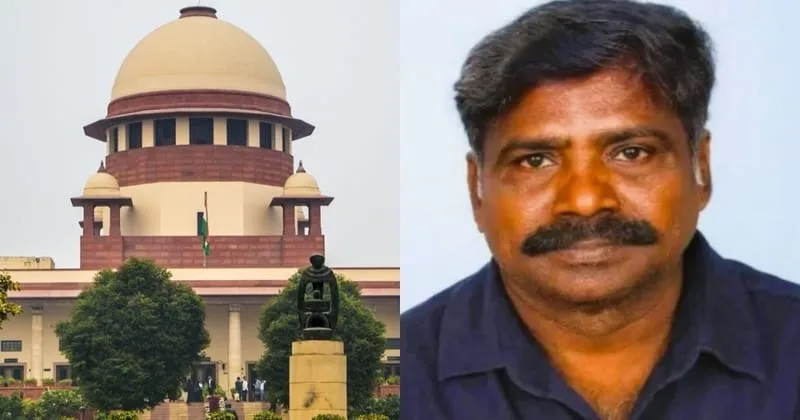
The decades-old Dharmasthala skull case has taken yet another dramatic twist, raising questions about the credibility of the complainants and the motivations behind their persistence. Fresh revelations show that the team supporting “Mask Man” Chinnaiah deliberately hid crucial facts from the government while pressing for a Special Investigation Team (SIT) probe.
It has now come to light that the Public Interest Litigation (PIL) filed in the Supreme Court seeking a probe into incidents between 1995 and 2004 was dismissed outright on May 5, 2025. The apex court, in scathing remarks, held that the petition was not public interest litigation at all, but instead “publicity interest litigation, paisa interest litigation, private interest litigation, and political interest litigation.”
A division bench of Justices B.V. Nagaratna and Satish Chandra Sharma had made it clear that such petitions serve no purpose and have no merit whatsoever. The dismissal should have been the end of the road. Yet, those backing Chinnaiah allegedly suppressed this fact and continued lobbying the Karnataka government for a fresh probe.
Burude gang’s hidden hand
The so-called “Burude gang”, known for pushing this narrative, is accused of misleading the government and the judiciary. Despite facing a stinging rejection in the Supreme Court, the group never disclosed the dismissal order. Instead, they pressed the state government to constitute an SIT, giving the impression that their plea still had legal standing.
On their insistence, the government formed an SIT, assuming there could be merit in Chinnaiah’s claims. But crucially, the Belthang
ady court too was allegedly mistaken, as the original Supreme Court order was never disclosed. Legal experts now argue that filing a fresh complaint despite the apex court’s ruling could amount to cheating the judiciary itself.
Chinnaiah’s statement raises more doubts
In a further twist, Chinnaiah, currently lodged in Shivamogga jail, was produced before the Belthangady court, where his statement was recorded under BNSS Section 183. He claimed that a body was buried in a religious place, a charge that has shaken devotees. However, reports suggest that in his voluntary statement, he admitted that much of what he said earlier was false.
This contradiction is now the basis for renewed suspicion that the entire complaint is fabricated, politically motivated, and aimed at maligning Dharmasthala’s spiritual and social institutions.
SIT asked to expedite probe
Despite the revelations, the state government is not ready to close the matter abruptly. Officials confirmed that SIT chief Pranav Mohanty has been instructed to fast-track the investigation and ensure no stone is left unturned. The government has also directed investigators to identify those who may be part of a larger conspiracy to defame Dharmasthala.
Sources indicate that the SIT has been given verbal instructions to go beyond the skull case itself and look into whether groups and individuals deliberately orchestrated the allegations for personal or political gains.
Devotees demand action against conspirators.
The controversy has angered thousands of devotees. Shashiraj Shetty, a resident of Dharmasthala constituency, submitted a petition to the SIT demanding that those who came forward as witnesses in the Burude gang’s version of events should themselves be treated as accused.
“Shetty argued that Chinnaiah has already admitted much of his account was false, yet witnesses continue to appear, possibly enticed to lie,” sources said. Devotees fear that false testimonies could not only prolong the legal drama but also damage the reputation of a revered religious institution.
A conspiracy decades in the making?
For many in Dakshina Kannada, this controversy feels like utter fake. Locals recall that similar conspiracies were hatched nearly 40 years ago to malign Dharmasthala and its leadership. Those attempts, too, were politically colored and ultimately collapsed under judicial scrutiny.
Today, however, the atmosphere has turned more hostile. Street-side protests, allegedly backed by vested interests, have put pressure on the authorities and harassed devotees without waiting for judicial outcomes.
The biggest question haunting both investigators and the public remains: Why did the complainants file a case while deliberately hiding the Supreme Court’s dismissal order?
If the highest court has already ruled there is “no merit” in the matter, does the SIT’s continuing probe serve any real purpose, or is it merely wasting state resources? These are now pressing issues the Karnataka government will be forced to grapple with in the coming weeks.
For now, the SIT investigation continues, but the latest revelations have undermined the credibility of the complainants and put the spotlight on what many now call a fake complaint aimed at creating political and social turbulence in Dharmasthala.














Comments