





A fresh political storm has erupted over India’s stance on the Israel-Palestine conflict, after Congress Parliamentary Party chairperson Sonia Gandhi accused the Modi government of “abandoning India’s principled role” in global diplomacy by remaining silent on the humanitarian crisis in Gaza.
In her op-ed, “India’s muted voice, its detachment with Palestine” published in The Hindu, Sonia Gandhi alleged that New Delhi’s foreign policy had shifted dramatically since the October 7, 2023 Hamas terror attacks on Israel, claiming Prime Minister Narendra Modi was “guided more by personal friendship with Benjamin Netanyahu” than by India’s constitutional values.
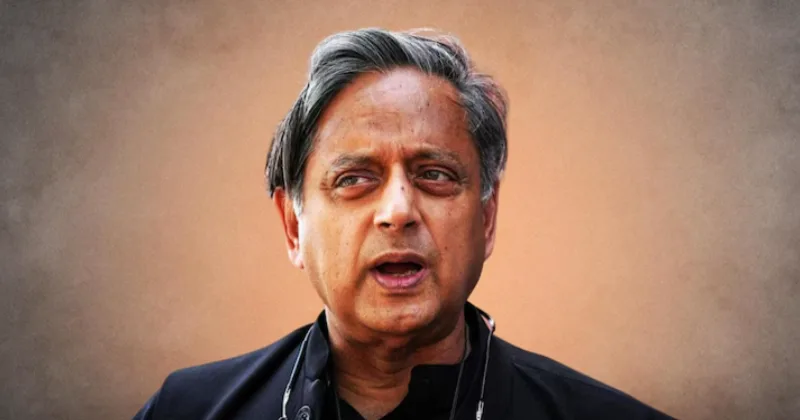
Her criticism found strong support within the party when senior Congress MP Shashi Tharoor publicly endorsed her views, saying Gandhi had “rightly voiced concerns” about India’s detachment from its long-held role as a neutral mediator and peace-broker in West Asia.
“As a well-wisher of Israel myself, and one who strongly defends its right to live in security & to repel terrorists, I agree with her view that India’s ethical and civilisational heritage demands that we stand up for justice for the innocent victims of the unfolding horror in Gaza,” Tharoor said.
He further urged Tel Aviv to show restraint, declaring: “Israel is a proven friend of India. But as a friend, we must tell them the truth: this carnage has already gone too far for too long. Israel must stop its merciless campaign.”
India’s Neutral Stand vs. Congress’s Political Spin
While Sonia Gandhi and Tharoor accuse the Modi government of being “silent”, the Ministry of External Affairs (MEA) has repeatedly reaffirmed India’s traditional position:
1. India supports a two-state solution, ensuring a sovereign, independent Palestine co-existing peacefully with Israel.
2. India recognises Israel’s right to self-defence against terrorism, particularly after the October 7 Hamas massacre.
3. India has consistently sent humanitarian aid to Gaza while condemning the killing of innocent civilians.
Diplomats argue that this measured neutrality has helped India maintain strong ties with both Israel and Palestine, a balance Congress governments also upheld for decades. However, Sonia Gandhi’s op-ed is an attempt to politicise foreign policy and weaken India’s carefully calibrated diplomacy.
In her article, Gandhi alleged that India’s foreign policy was being wrapped around the “personal glory-seeking ways of one individual” a direct reference to Prime Minister Modi. She claimed India had abandoned its civilisational duty by inviting Israeli far-right minister Bezalel Smotrich, known for his incendiary anti-Palestinian remarks.
Gandhi praised European countries that recognised Palestine while questioning why India had not taken similar steps. Her daughter, Priyanka Gandhi Vadra, also echoed these views, calling on India to “show principled leadership.”
While countries like the UK, Ireland, and Spain have recognised Palestine in recent months, the United States remains firmly behind Israel, urging only “measured restraint.” India, meanwhile, has chosen to stick to its historic neutrality, condemning terror, supporting aid.
India’s stand, supporting a two-state solution while maintaining deep strategic ties with Israel, is rooted in decades of diplomacy, not “personal friendships,” as Sonia Gandhi claims. The Congress, which once navigated the same balance quietly, now appears intent on portraying neutrality as betrayal.










Comments