





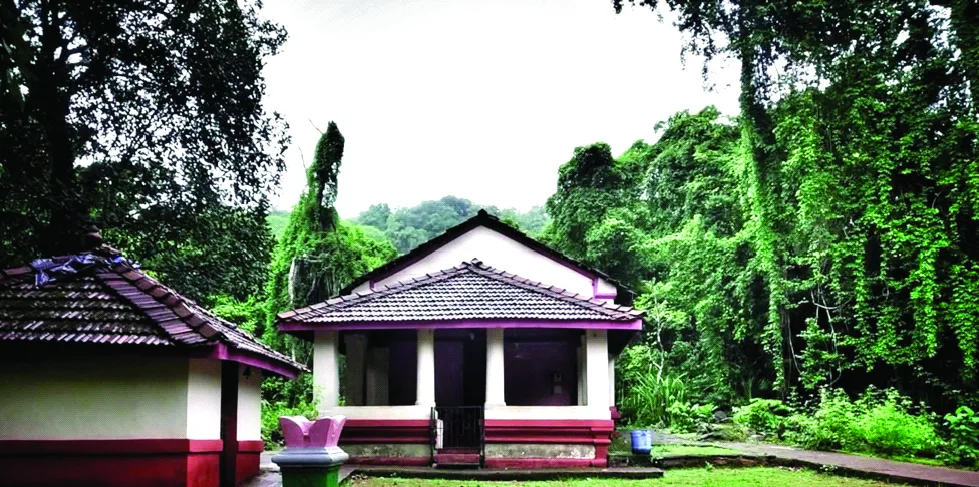
Placed just three kilometers away from Valpoi in Goa’s Sattari taluka, the village of Kopardem is home to a timeless tradition—Devachi Rai, or sacred grove—and the revered Shree Brahmani Mahamaya Temple. Together, they form a spiritual and ecological sanctuary that has protected both the people and the forest for generations.
At the heart of the village stands the Shree Brahmani Mahamaya Temple, a beacon of divine energy and local faith. The deity here is believed to be the powerful protector of the village, warding off evil and safeguarding its residents. What makes this temple even more unique is its proximity to a sacred water body or tirth, which locals believe holds the power to cure snakebites—highlighting the deep connection between nature, healing, and divinity.
Beside the temple lies the Devrai, a sacred grove preserved in the name of the local deity. Traditionally, no one dared to cut trees, hunt, or disturb life within this protected patch of forest, as it was considered the abode of Gods. These groves served not only spiritual purposes but also played a crucial ecological role, conserving biodiversity and maintaining microclimates.
However, times are changing. Urbanisation, changing lifestyles and waning traditional beliefs have led to the neglect of such spaces. The once-vibrant grove, protected purely out of reverence, now faces threats from encroachment and apathy.
Yet, all is not lost. The presence of the Shree Brahmani Mahamaya Temple continues to draw devotees and can serve as a rallying point for conservation. If faith once protected this grove, it can again become the foundation for its revival. By combining cultural heritage with modern awareness, Kopardem’s Devrai can be preserved—not just as a forest, but as a living symbol of spiritual and ecological harmony.
















Comments