





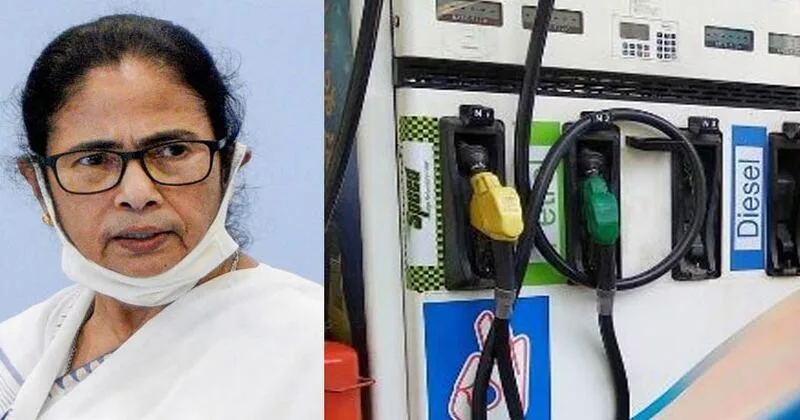
West Bengal currently finds itself in an unenviable position, having the highest petrol and diesel prices in the country. This is not just a statistic; it’s a reality that is affecting every citizen, from farmers and transporters to small business owners and daily wage workers. At the heart of this crisis lies an urgent and unavoidable truth: Chief Minister Mamata Banerjee must immediately reduce the Value Added Tax (VAT) on fuel to bring much-needed relief to the people of Bengal.
The very first step West Bengal CM Mamata Banerjee must take is to reduce VAT on petrol and diesel.
Fuel prices in Bengal are the highest in the country, burdening people in every walk of life. Twice the Central government has reduced taxes, but Mamata Banerjee refused to cut… https://t.co/PvzaoPfb7x
— Amit Malviya (@amitmalviya) September 22, 2025
Fuel prices are at record highs in West Bengal
Across India, fuel prices have always been a matter of concern, often fluctuating due to global crude oil rates and domestic taxation. However, what sets West Bengal apart is the persistent refusal of the state government to reduce its share of taxes, even when the union government has slashed excise duties on multiple occasions.
In 2022 and again in 2023, the union government took the step of reducing central excise on petrol and diesel to cushion citizens from global price hikes. States across the country responded by lowering VAT to pass on the benefits to consumers. Yet, Mamata Banerjee’s government refused to follow suit. While other states witnessed some relief at the pump, Bengal’s citizens continued to pay inflated rates, with petrol in Kolkata costing Rs 4 to Rs 6 more per litre than in neighbouring states like Jharkhand and Bihar.
Impact on the common man
Fuel prices are not just about what one pays at the petrol pump, they ripple through the entire economy. Higher transport costs lead to increased prices of essential goods, from vegetables and fruits to medicines and construction materials. Auto fares, bus tickets, and taxi charges have also gone up, making commuting expensive for the average citizen.
For farmers, diesel is a critical input in running pumps and tractors. With sky-high diesel rates, agricultural costs have soared, pushing many small farmers to the brink. In urban areas, delivery services, logistics companies, and small shopkeepers are all feeling the pinch.
Mamata Banerjee’s refusal to cut VAT on fuel appears to stem less from economic reasoning and more from political obstinacy. Her government has repeatedly blamed the centre for rising fuel prices, conveniently ignoring the fact that a large chunk of the retail price is determined by state-level VAT.
According to available data, West Bengal imposes a VAT of around 25 per cent on petrol and over 17 per cent on diesel, among the highest in the country. The Trinamool Congress government has indulged in expansive populist spending without creating sustainable revenue streams. Instead of rationalising expenditures or improving tax compliance, the government has chosen the easy route, squeezing more revenue from fuel taxes, regardless of the impact on the people.
In a state that prides itself on progressive governance, continuing to tax fuel at such exorbitant rates is both regressive and unfair. It undermines economic growth, hurts the poorest the most, and signals a disconnect between the government and ground realities.
The first and most critical step Mamata Banerjee must take is to reduce VAT on petrol and diesel. It is not just a policy adjustment, it is a moral and economic necessity. The people of Bengal should not have to pay the price for the political decisions of their leaders.















Comments