





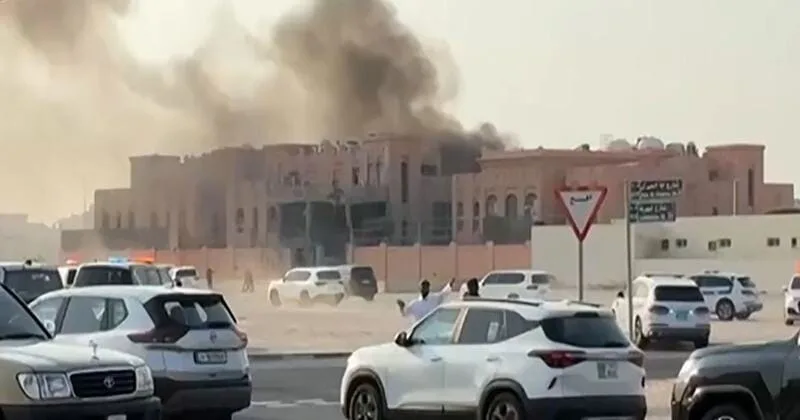
In a surprising turn of events, Israel has carried out an unexpected and independent air strike on Doha aimed at eliminating top Hamas leaders, but what seemed like an audacious attempt to combat terror might instead be creating an impression of desperation and provoking strategic responses that could lead to counterproductive outcomes both strategically and politically.
Operation Atzeret HaDin
On September 9, 2025, Israel conducted air strikes with 15 IDF fighter jets firing 10 munitions on a residential compound in Doha, targeting a top political leader of Hamas. There are three notable aspects of the attack. First, it was a direct attack on an Arab state and on a member of the Gulf Cooperation Council (GCC), sending a strong message not only to the US but to the region about its seriousness and resolve against Hamas. Second: risk of regional diplomatic fallout. Third: the US factor, with Qatar being an ally and hosting US troops, a strategically important base for counterterror operations.
Show of audacity and surprise
While this operation can be seen as Israel’s message of surpassing operational formalities and negotiations, it demonstrates a capability to show strategic audacity and surprise that was previously conveyed through measured responses, keeping the US in the loop and discussing formalities. However, in this strike, as Israel’s Prime Minister states—”Israel initiated it, Israel conducted it, and Israel takes full responsibility”, such a statement signals a larger strategic message to the Middle East: Israel will not be deterred by any means from the goal of eliminating Hamas. Nonetheless, the broader context raises some reasonable questions about Israel’s show of surprise and audacity.
The tripwire
There is a thin tripwire in Israel’s strategic response, which perhaps can reveal the real costs of this operation. Consider two aspects of tripwire that drive Israel towards it first: Strategic Frustration and Desperation. With the long, dragging negotiations with Hamas and warnings from Israel and the US running in the background, and Netanyahu facing pressure at home, there was strategic frustration and desperation among Israelis to either negotiate or eliminate Hamas; the former case remained weak, but the latter case always remained active on the table. Second: Deception to revive the Arab world against Israel and re-ignite tensions and initiate escalation.
The first tripwire was Hamas carrying out a terror strike in Jerusalem targeting a bus stand that killed six people after two gunmen carried out a shooting. This was a limited terror attack, but it is significant because it reminded people of the Dizengoff Street bus bombing of 1994, which was Israel’s deadliest suicide bombing by Hamas at that time, killing 22 civilians and injuring 50. This act served as an intense trigger to provoke Israelis into going beyond operational boundaries and rules of engagement. As a result, Israel made a surprise and daring move to strike a US ally in Qatar, with last-minute intelligence sharing that caught both the US and Qatar off guard.
Second tripwire: Israel’s iron hand show against the Arab states would trigger regional unity against Israel, especially giving a chance to Islamist hardliners in the region and terror outfits to unite and complicate the scenario further- these attacks have put the US’s credibility in the region in question, which would affect operational coordination between the two countries. Trump’s statements on the Doha strike have given the first impression of US uneasiness: “Unilaterally bombing inside Qatar, a Sovereign Nation and close Ally of the United States, that is working very hard and bravely taking risks with us to broker Peace, does not advance Israel or America’s goals.”
The tripwire ghost
This is not the first time that Israel has stepped on Tripwires laid down by its adversaries, which have overshadowed its tactical success by imposing heavy costs. In 2010, Israel raided a small fleet of ships by the Free Gaza Movement and the Turkish Human Rights Foundation, which aimed to break the blockade of Gaza. The raid led to the killing of around 9 Turkish activists. Israeli security establishments argue that it was well planned provocation to provoke Israelis. As a result, it led to the derailment of Israel-Turkey normalisation efforts and escalated regional tensions. It also gave momentum to the boycott, divestment and sanctions movement against Israel(BDS movement). The most notable tripwire moment came in 2014 during Israel’s decision to launch an offensive operation in Gaza codenamed Protective Edge. In this case, the trigger was the Kidnapping and murder of three Israeli teenagers in the West Bank, which led to a 50-day conflict with significant civilian casualties and failure to achieve strategic objectives. On the contrary, it helped Palestinians and radicals to unite and strengthen themselves. lives.
This Tripwire strategy of terror groups focuses on two things: first, a small attack triggers a large response—inviting attacks to guarantee escalation, which can isolate and pressure Israel from all fronts. The current case exhibits these aspects—calling for regional unity against Israel, and affecting the credibility of the US in threat-straining relations with Israel at the operational level. These permutations and combinations will escalate the situation and risk regional isolation or diplomatic coercion of Israel. The notable effect of this diplomatic circus would be on Iran, to some extent, where Iran can strengthen its narrative of labelling Israel as a regional threat and push reconciliation efforts with Arab states. In a broader sense, despite Israel’s tactical wins of sending a strong message of targeting Hamas across the Middle East and utilising a small room to derail efforts of the ceasefire to pressure terror groups, these come with heavy costs and risks, which have now spiralled post Doha Strikes. Israel cannot rely on tactical wins as strategic losses are of such high intensity that they could damage Israel’s operational and diplomatic front in the future. Israel needs to reconsider its counterterror responses, which should be guided not only by intent and surprise but also by strategic thinking.














Comments