





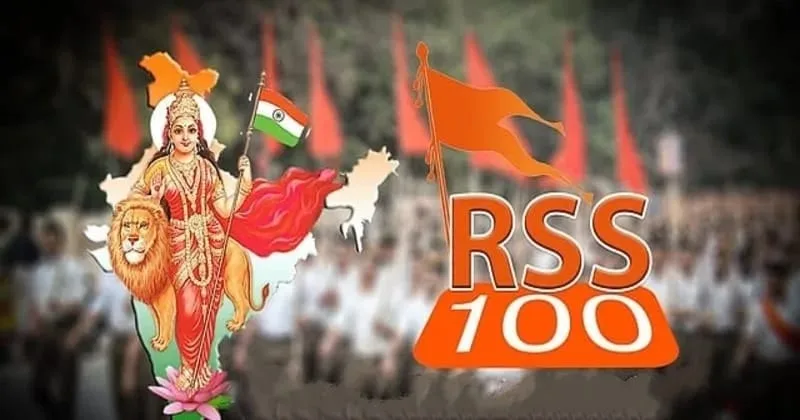
As the Rashtriya Swayamsevak Sangh (RSS) steps into its centenary year in 2025, Bharat must pause and reflect. The story of the Sangh is not that of a mere organisation; it is the saga of a civilisational movement. Born in 1925 in Nagpur under the visionary guidance of Dr. Keshav Baliram Hedgewar, the RSS began as a small band of dedicated swayamsevaks. A hundred years later, it has grown into the world’s largest socio-cultural force, shaping thought, inspiring service, and influencing governance.
The centenary is both a celebration and a moment of remembrance. Along with discipline, seva, and vision, the Sangh’s journey is also written in blood—the balidan of thousands of swayamsevaks who gave their lives for the cause of Bharat Mata.
The sacred soil of martyrdom
Kerala tells this story in the starkest way. The Sangh in the State has faced relentless hostility and brutal political violence. The roll call of martyrs is long and heart-wrenching: Vadikkal Ramakrishnan (the first swayamsevak martyr of Kerala, Kannur, 1969), K.T. Jayakrishnan Master (1999, hacked to death before his students in Kannur), and scores of young men like Sujith, Santhosh, Remith, and Biju who paid with their lives.
Alappuzha too has offered its blood. The name of Adv. Renjith Sreenivas (2021)—a lawyer and committed swayamsevak who was butchered in his own home—will forever remind us that being part of this movement is not just about social service; it is also about courage, sacrifice, and readiness to embrace death for Dharma.
And Kerala is not alone. From Punjab, where Lala Jagat Narain and others stood against Khalistani terror, to Jammu and Kashmir, where swayamsevaks and pracharaks fell to jihadi bullets, from the North-East where Sangh workers resisted separatism, to West Bengal and Tamil Nadu, where political violence continues—the Sangh has paid in blood. Every martyrdom adds a sacred thread to the fabric of this movement.
Seva as dharma
The Sangh has always believed that nationalism is not merely an emotion but a responsibility. Its swayamsevaks are trained not just to salute the saffron flag but to serve society in its hour of need. Be it in the floods of Kerala, the earthquake in Gujarat, or the long months of the COVID-19 pandemic, swayamsevaks were among the first to reach the affected with food, medicine, and comfort.
This commitment is why Seva Bharati today is a trusted name even in places hostile to the Sangh’s ideology. In practice, the Sangh has proved its old motto true: Seva hi Paramo Dharmah.
Shaping minds, building futures
If service touches the heart, education moulds the mind. The Sangh has always seen character-building as its foremost task. Through Vidya Bharati schools and forums like the Bharatiya Shikshan Mandal, lakhs of children receive an education rooted in Bharatiya values.
This vision has, in recent years, found reflection at the policy level. The National Education Policy (NEP) 2020, with its emphasis on mother-tongue instruction, holistic learning, and Indian knowledge systems, is perhaps the closest translation of the Sangh’s educational philosophy into state policy since Independence.
From discipline to power
The RSS never contested elections, but its ideological offspring did. From the Bharatiya Jana Sangh in 1951 to the Bharatiya Janata Party in 1980, the political front nurtured by the Sangh finally came of age in 2014 under Narendra Modi, himself a swayamsevak.
The last ten years have shown how Sangh ideals translate into governance.
National unity was strengthened with the abrogation of Article 370 in 2019, fulfilling a long-held dream of the complete integration of J&K.
The Uniform Civil Code in Uttarakhand (2024) took the first step towards legal uniformity across the nation.
The Citizenship Amendment Act (2019) gave refuge to persecuted Indic communities from neighbouring countries.
On the cultural front, the Sangh’s vision has found historic fulfilment in the consecration of the Ram Mandir at Ayodhya in 2024, a moment for which generations of swayamsevaks and saints struggled. The Kashi Vishwanath Corridor, Kedarnath and Somnath rejuvenations, and the recognition of International Yoga Day have restored pride in Bharat’s civilisational heritage.
On the economic front, Atmanirbhar Bharat, promotion of khadi and MSMEs, and the creation of a separate Ministry of Cooperatives (2021) reflect the Sangh’s Swadeshi spirit.
And in the field of welfare, schemes like Ujjwala Yojana, Ayushman Bharat, PM Awas Yojana, and the EWS quota embody Deendayal Upadhyaya’s ideal of Antyodaya—uplifting the last man in the queue.
Globally too, Bharat today stands as a cultural leader. From Pravasi Bharatiya Divas outreach to Yoga diplomacy, India’s rise as Vishwaguru carries the imprint of the Sangh’s century-old vision.
Marching into the second century
As the Sangh enters its second century, it faces new challenges: a rapidly changing technological world, shifting global power balances, and the aspirations of a young generation. Yet, the fundamentals remain unchanged. Discipline, seva, balidan, and an unshakeable commitment to Bharat Mata.
The RSS at 100 is not just an organisation. It is a civilisational force, sanctified by the blood of martyrs, strengthened by the service of millions, and vindicated through governance. If the first century was about survival, spread, and recognition, the next will be about guiding Bharat into its rightful place in the world.














Comments