





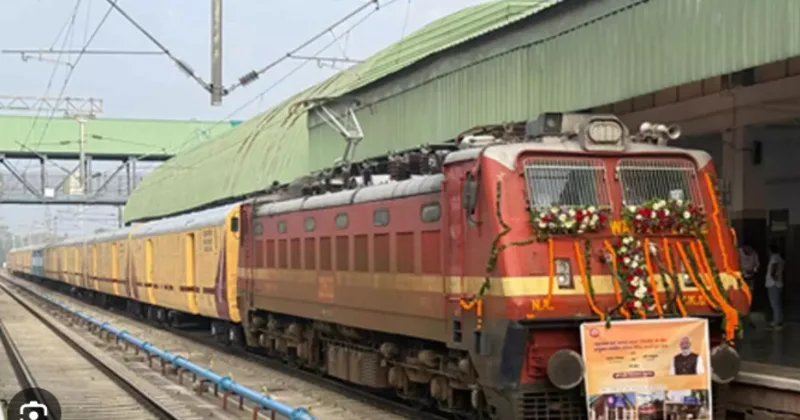
The closure of Jammu-Srinagar National Highway for the past many days due to heavy rains triggering landslides has impacted transport to the Kashmir Valley. It has affected the transportation of fruits like apples and pears from Sopore, Shopian and other mandis to Jammu, Delhi and beyond. To get around this problem, the Union government has introduced a daily parcel service from Nowgam (Budgam) to Adarsh Nagar in Delhi for carrying of fruits.
The disruption of the road link connecting Kashmir to other parts of the country has also created another problem, disrupting supplies to the Army. Incidentally, Advance Winter Stocking (AWS) is a process which is used to keep stocks of rations, fuel like diesel, petrol and cooking gas for use by the Army during winters. For the Army, it is vital that AWS goes on through all summer months so that the troops face no paucity of any goods during the harsh winters.
The challenge of supplying goods needed for AWS and transporting fruits to destinations outside the Valley are now being handled in a very innovative way by the Indian Railways. For carrying fruits, empty wagons are needed in the Kashmir valley. What the railways have done now is that they have, in coordination with Army, used these wagons to carry goods from Bari Brahmana station near Jammu to the Valley for building winter stocks. On the return journey, these wagons were loaded with fruits from the Valley to reach Delhi.
The parcel freight trains are thus serving dual purpose of building up winter stocks for the Army and carrying out perishable fruits from the Valley to other destinations. In this significant initiative, which marked a major step forward in improving logistics for fruit growers, Lieutenant Governor Manoj Sinha flagged off the first daily parcel train service from Nowgam Railway Station on Monday.
The move aimed at supporting Kashmir’s horticulture sector is expected to ease transportation hurdles caused by the frequent closure of the Srinagar-Jammu National Highway. It is unlikely to transport bulk of fruit produced in the Valley to destinations outside. However, it is set to become a cheaper, faster and more reliable transportation method in the months and years to come.
Speaking to reporters at the launch, Sinha said: “The start of a daily time-table train carrying horticulture produce to the National Capital is a major relief for fruit growers. I thank the Indian Railways for this timely initiative.” He added that Kashmir’s economy, which is heavily reliant on horticulture, has suffered significant losses in recent years due to highway disruptions caused by landslides and adverse weather.
“This train service is a leap towards minimizing those losses and ensuring perishable goods like apples and walnuts reach markets in time,” Sinha said. He expressed gratitude to Prime Minister Narendra Modi for ushering a new era of trade and business for apple growers and traders of the Valley. “It will significantly reduce transit time and increase income opportunities for thousands of farmers and boost the agricultural economy of the region,” he said.
Sinha also congratulated the Indian Railways for dedicated freight train service between Budgam and Adarsh Nagar in Delhi. “The new freight train service is a big step for the apple growers of the Union Territory (UT) of Jammu & Kashmir to transport their produce to different parts of the country. This will provide a faster and more economical transportation mode, strengthen market linkages and bring improvement in the lives and livelihoods of farmers,” he said.
He said the disruption of movement at National Highways, due to topography and heavy rains, causes losses to fruit growers. “The freight train service starting from today will transport apples and other perishable goods every day,” he said. The new parcel service, a Joint Parcel Product-Rapid Cargo initiative by Indian Railways, will run between Budgam and Adarsh Nagar, Delhi, with an important stop at Bari Brahmana in Jammu. The first train comprised eight parcel coaches, each with a capacity of 23 tons, and carried fruit consignments worth Rs 2.5 crore, which have reached Delhi in under 24 hours.
Railway officials said that the train will initially focus on transporting apples and walnuts, two of Kashmir’s primary horticulture products. A similar 15-coach train is also expected to operate soon from Anantnag, further strengthening the Valley’s cold chain and supply network. “This is not just a proud moment for Kashmir but for the entire Union Territory (UT) and the Indian Railways,” officials noted, highlighting the potential of this service to transform how Kashmiri produce reaches national markets.
On their journey to Kashmir valley, the wagons supplied by the Northern Railways ferried 753 metric tonnes of advance winter stocking (AWS) loads for Indian Army units and formations in Kashmir, marking a decisive turn in the mode of transporting supplies. This unprecedented step is in tune with modernisation and upgradation of transportation needs of the armed forces.
The Indian Army’s first exclusive freight train on the Jammu-Baramulla line, particularly the Udhampur-Srinagar-Baramulla Rail Link (USBRL), marks a breakthrough in AWS mode and civil-military fusion, according to PRO Defence Jammu Lt Col Suneel Bartwal. Till recently, the Army had to use trucks to stock up on supplies for its troops in the difficult terrain of the Himalayas.
“The USBRL witnessed a historic milestone with the successful run of the freight train, the first exclusive freight train of the Indian Army, from BD Bari to Anantnag on September 12-13,” Lt Col Bartwal said. In a unique demonstration of dual-use logistics and military-civil fusion, the return rake of the freight train transported Kashmiri apples and other fruits to markets in the rest of India.
“This step not only strengthens the Army’s winter preparedness but also provides direct benefits to local communities,” he said. Farmers, who in the past suffered heavy losses due to road blockages caused by landslides and floods, will now be able to transport their produce seamlessly, ensuring both economic relief and livelihood security, he added.















Comments