





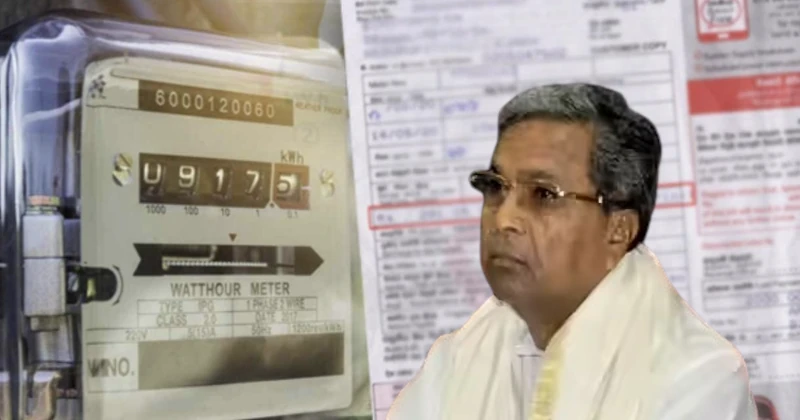
At a time when the Union government has eased the burden on businesses and consumers by reducing GST rates, the Congress-led Karnataka government is facing severe criticism for attempting to impose an additional load on industries and commercial establishments through a proposed hike in electricity tariffs.
The Karnataka Electricity Regulatory Commission (KERC) has proposed an increase in electricity rates for industrial and commercial consumers. A public notification has been issued, inviting objections and suggestions within a month. The proposal, if implemented, is likely to nullify the benefits expected from the GST rate cuts announced by the Union government, say trade bodies and industrialists.
The Union, aiming to make goods and services more affordable, has recently rationalised GST slabs to 5 per cent and 18 per cent in many categories. Entrepreneurs and consumer groups widely welcomed this move, as it directly helped in reducing costs across the supply chain.
However, Karnataka’s regulatory decision, backed by the state government, has triggered outrage. By hiking power tariffs on industries and commercial units by 10 paise to Rs 1 per unit, KERC argues it will offset a deficit in the state’s electricity subsidy burden. However, critics argue that the move is merely an anti-industry policy that undermines national efforts to stimulate growth.
“On the one hand, the Union government is reducing GST to promote affordability. On the other hand, the state government is planning to push industries into a corner by hiking electricity costs. This will wipe out any relief we might have passed on to consumers,” said Wilfred Krasta, a member of the Federation of Karnataka Chambers of Commerce and Industry (FKCCI).
The proposal comes against the backdrop of a serious fiscal mismatch. The state government has allocated only Rs 16,021 crore for the power sector in its budget. Even with additional resources worth Rs 2,36,247 crore, the state is facing a deficit of Rs 1,214.12 crore. To address this gap, the Commission has recommended increasing tariffs for industrial and commercial consumers.
Currently, power is supplied to industries at relatively competitive rates: Rs 5.20 per unit for LT industries, Rs 6.70 for HT2A, and Rs 6.90 for HT2B. Commercial LT consumers pay Rs 10 per unit. Agriculture pump sets, heavily subsidised, are charged only Rs 1.50 per unit for 10-horsepower connections.
However, with 17.56 per cent of the state’s electricity being used by industries, any hike will significantly increase operational costs. Business groups have already submitted memorandums urging the Commission not to penalise industries for fiscal mismanagement by the government.
Karnataka currently holds the top spot nationally in attracting foreign direct investment (FDI). Industry leaders warn that this standing could be jeopardised if tariffs rise. Higher electricity costs will not only discourage new investors from choosing Karnataka, but also deter existing ones from doing so. Still, they may also prompt existing units to scale down production or relocate to neighbouring states with more favourable policies.
“Electricity is a fundamental input cost. If the state increases tariffs, production costs will rise, directly impacting competitiveness. Why would investors come here when other states are offering better incentives?” asked B Muniraju, an industrialist from Peenya.
The irony, many argue, is that Karnataka is generating power at one of the lowest costs in the country. Each day, 56 million units of hydroelectricity and 72 million units of solar and wind power are generated, which are among the cheapest sources of energy.
















Comments