





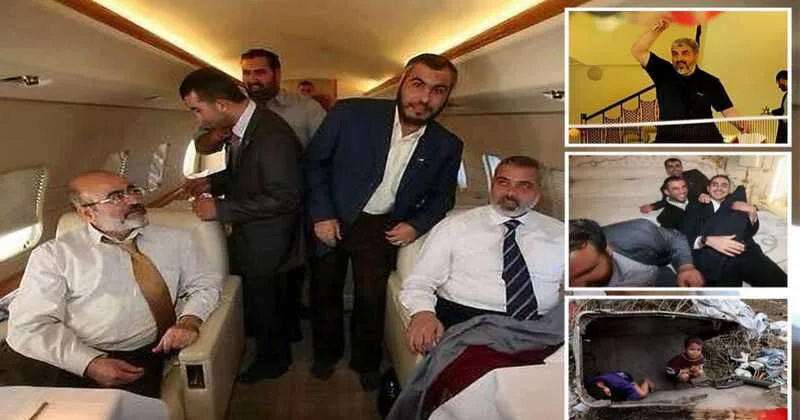
Israel has confirmed that it targeted Khalil al-Hayya, head of Hamas’s negotiating team, in an airstrike on Qatar carried out the previous day. Other senior figures believed to be in Qatar at the time include Khalid Mashal, Sahar Jabarin, Muhammad Ismail Darwish, Musa Abu Marzouk, Hussam Badran, Tahir al-Nunu, and Nisar Awadallah. Reports from media suggest that these Hamas leaders have been living a life of luxury in Qatar, even as the situation in the Gaza Strip continues to deteriorate after more than 700 days of conflict.
Media outlets, including the Daily Mail, have published detailed accounts of the lavish lifestyles enjoyed by senior Hamas figures. These reports depict Hamas leaders as amassing wealth while their own population suffers. Khalid Mashal, who heads Hamas’ political bureau abroad alongside Musa Abu Marzouk, is estimated to be worth over $26 billion according to information from the Israeli embassy in the United States. Meanwhile, the World Health Organization reported last July that nearly 12,000 children under five in Gaza are suffering from severe malnutrition.
Hamas wealth amid Gaza’s humanitarian crisis
Even prior to the outbreak of war following Hamas’s terrorist attack on Israel on October 7, half of Gaza’s population relied on food assistance provided by the United Nations. Since the conflict began, the situation has worsened significantly. Reports indicate that Hamas operatives have been diverting essential supplies, including food and medicine, for sale on the black market, further aggravating the humanitarian crisis. Meanwhile, some Hamas leaders continue to live in mansions and high-end hotels, underscoring the stark contrast between their wealth and the plight of ordinary Gazans. Israeli authorities estimate Hamas generates an annual turnover of approximately $1 billion, with leaders benefiting financially from ongoing suffering in Gaza.
Among the prominent figures, Ismail Haniyeh, formerly Hamas leader and assassinated by Israel, was reportedly a billionaire. A father of thirteen, Haniyeh spent much of his life in hiding but maintained a luxurious lifestyle, often residing in high-end hotels in Qatar and Turkey, and traveling by private jet. Photographs have surfaced showing his children enjoying life in opulent settings. Other leaders are also leading a indulgent lifestyles, including alcohol consumption, and have amassed significant wealth. Many senior Hamas figures are believed to have built extensive business empires, siphoning off international aid while providing little to nothing to the struggling population of Gaza.
The attack on Qatar has also raised concerns over Israel’s international standing as the move may further isolate Israel globally. The fact that the United States was reportedly aware of the strike in advance could undermine American credibility among Gulf nations. The attack may encourage more countries to formally recognize Palestine as a state. President Donald Trump, during his first official state visit to Saudi Arabia and Qatar, reportedly returned from Qatar after receiving a Boeing jumbo plane as a gift. Notably, Trump did not intervene to prevent Israel’s strike, signaling a complex regional dynamic.
The airstrike also sends a cautionary message to nations involved in or considering the Abraham Accords on the one side and supporting terror activities of Hamas on the other. The unfolding scenario has already prompted Britain and France, previously aligned with Israeli positions, to move closer toward recognizing Palestine for Gulf crude. However, as tensions rise, the stark contrast between Hamas leaders’ wealth and the crisis in Gaza underscores the ongoing challenges faced by the civilian population.















Comments