





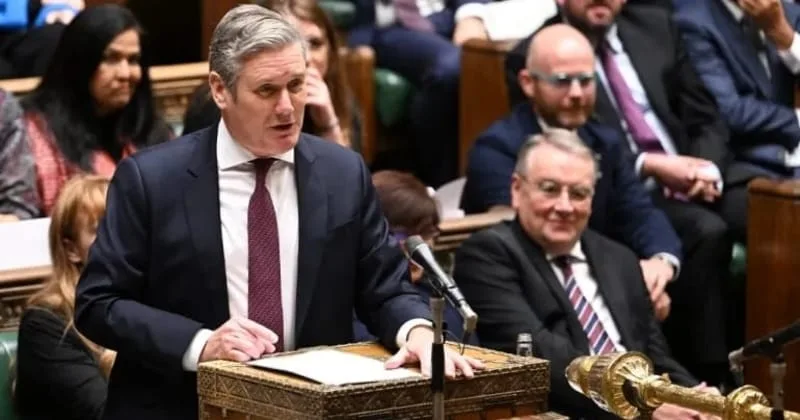
The world is watching closely to see whether the political instability gripping Britain will shift course. Calls are growing for Nigel Farage and Boris Johnson to join forces in order to prevent the Labour Party from securing power in the next general election. The demand has been voiced by Nadine Dorries, who last week defected from the Conservative Party to join Reform UK. She and her supporters argue that two of the most influential figures in modern British politics should unite to bring down what they describe as Sir Keir Starmer’s incompetent government. If there is genuine concern for making people’s lives easier, they say, personal rivalries must be set aside and a common front forged for the good of the country.
Nigel Farage reiterated this position during an appearance on the Mail’s Alas Vine and Hitchens podcast, following the close of the party conference. Addressing his supporters, he urged them to prepare for a looming election. He stressed that political differences should be put aside in favour of discipline and unity to provide strong leadership for the people. Meanwhile, Prime Minister Keir Starmer is grappling with an internal crisis sparked by the unexpected resignation of Deputy Prime Minister Angela Rayner last week, following allegations of tax fraud.
Amid the fallout, Conservative leader Kemi Badenoch has intensified her criticism of the government, asserting that Starmer has no moral authority to raise taxes in the November budget in the wake of Rayner’s resignation. Writing in the Mail, Badenoch pointed to Rayner’s leaked letter to the Treasury calling for an increase in stamp duty, denouncing it as blatant hypocrisy. The controversy has been compounded by Starmer’s subsequent cabinet reshuffle, which has stirred fresh debate.
Mahmood and Cooper’s appointments spark backlash over Pakistani roots and Islamophobia row
Among the most contentious appointments is that of Shabana Mahmood as the new Home Secretary. Of Pakistani origin, Mahmood’s promotion has drawn criticism from several Jewish leaders, who accuse her of being pro-Palestinian and encouraging mass protests. Further unease has arisen over Yvette Cooper’s selection as Foreign Secretary, with critics highlighting her previous accusations of Islamophobia and xenophobia directed at US President Donald Trump. Adding to Starmer’s woes, the Labour Party must now elect a new deputy leader following Rayner’s departure. Party insiders suggest the left wing is poised to nominate a senior figure for the role, potentially deepening Starmer’s internal troubles.
Reports emerging late last night suggest Rayner may even resign as Member of Parliament for the Ashton-under-Lyne constituency, a move that would present an additional challenge for the Labour leadership. If she does step down, the party’s left faction is keen to see Greater Manchester Mayor Andy Burnham resign his post to contest the resulting by-election. In the meantime, Nadine Dorries continues to press for a united right-wing front, warning that without such cooperation, Rayner could return to influence through an “unholy alliance” with Jeremy Corbyn and the Green Party.
Farage rejects vaccine-cancer claims as reform UK faces conference controversy
While these political battles rage, Nigel Farage has distanced himself from controversy sparked at the Reform UK party conference. He repudiated remarks made by Dr Aseem Malhotra, an anti-vaccine cardiologist, who suggested that the recent cancer diagnoses of King Charles and Princess Kate might be linked to the Covid-19 vaccine. Speaking in Birmingham on Saturday, Malhotra launched an attack on the pharmaceutical industry, politicians, and the World Health Organization, alleging collusion and cover-ups.
Malhotra, who claims to be a close associate of Robert F. Kennedy Jr, the controversial US Health Secretary known for his anti-vaccine stance, argued that mRNA vaccines may interact with genes in a way that increases cancer risk. He said he had discussed the matter with senior oncologist Angus Dalgliesh and cited several studies he claimed pointed to dangers associated with the vaccines. Nevertheless, cancer research bodies have firmly dismissed such claims, stressing that there is no evidence linking Covid-19 vaccines to cancer.
Farage was quick to distance himself from Malhotra’s assertions, making clear that such views do not reflect Reform UK’s position. The incident has underscored the delicate balancing act faced by Farage as he attempts to broaden the party’s appeal while containing fringe voices within its ranks.
With Labour mired in crisis, the Conservatives struggling to redefine their leadership, and Reform UK grappling with its own controversies, Britain’s political landscape is entering an uncertain phase.














Comments