





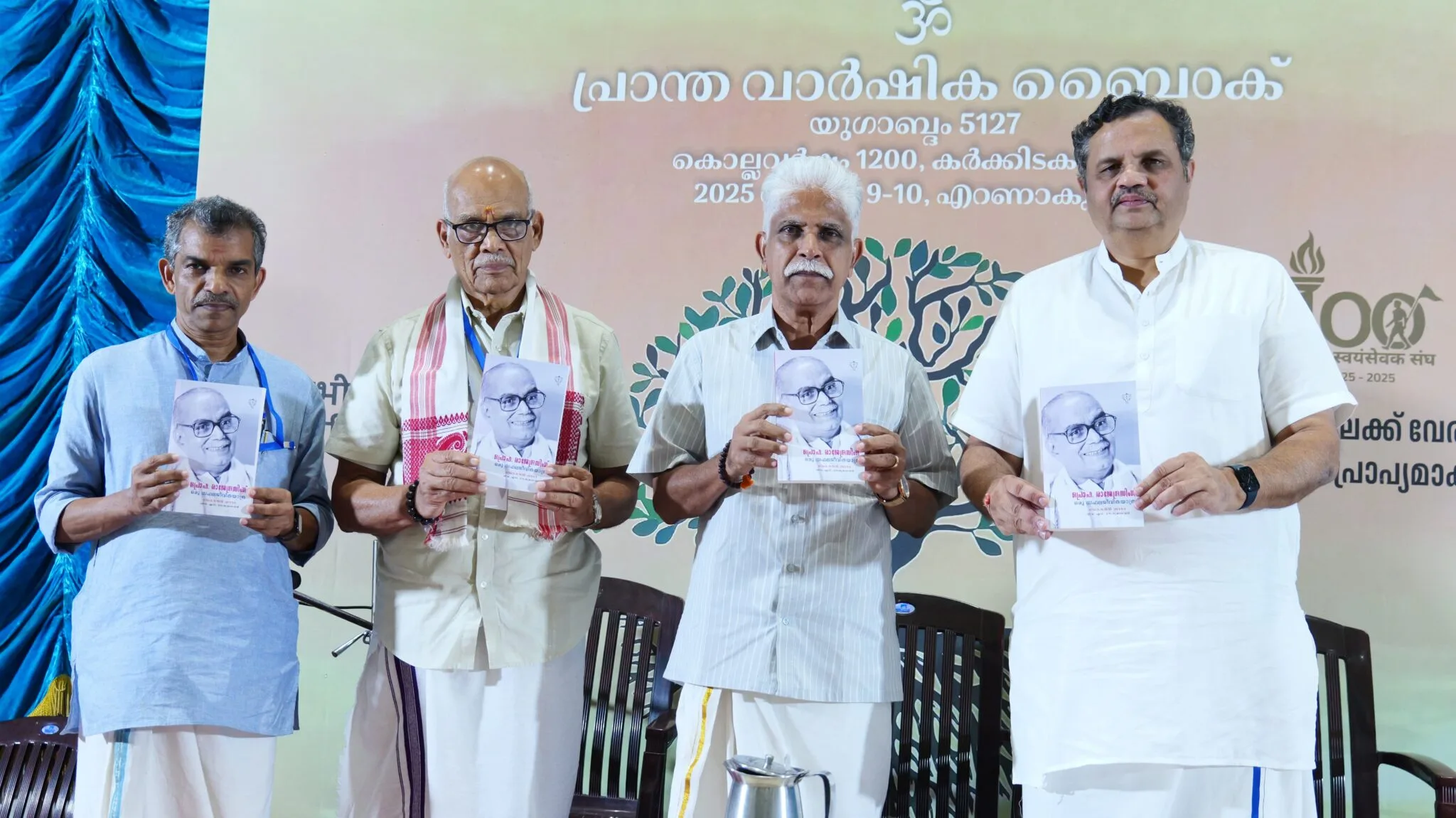
The Malayalam edition of ‘Prof. Rajendra Singh: Ek Safal Jeevan Yatra’ was launched in Kerala, with RSS Sah Sarkaryavah C.R. Mukunda handing over the first copy to Dakshin Kerala Prant Sanghchalak Prof. M.S. Ramesan. The book has been published by Kurukshetra Prakashan.
Authored originally in Hindi by noted writer Dr. Ratan Sharda, the biography narrates the life and vision of former RSS Sarsanghchalak Prof. Rajendra Singh, popularly known as Rajju Bhaiya. The Malayalam translation has been carried out by senior RSS pracharak S. Sethumadhavan.
The release comes at a significant juncture as the Rashtriya Swayamsevak Sangh (RSS) steps into its centenary celebrations, urging swayamsevaks to expand the organisation’s presence to more villages across Bharat. The life story of Rajju Bhaiya is expected to serve as a guide and inspiration for swayamsevaks, particularly in Kerala.
Kerala is known to be among the states with the highest number of RSS shakhas. One chapter of the book focuses on methods to revitalize the shakha system and to attract more people into the RSS fold. It also discusses how dedicated workers can be prepared for the larger goal of national reconstruction. The timing of this translation, coinciding with the centenary, underlines the Sangh’s emphasis on extending its reach to untouched regions.
Rajju Bhaiya often stressed five key principles for effective shakha functioning –
Strength in Numbers – Morning and evening shakhas should have at least 25 participants. Increasing attendance must be a constant effort.
Organized Leadership Groups (Sanch/Toli) – Each shakha should have a structured core of at least 10 karyakartas, with designated roles such as shakha karyavah, mukhya shikshak, gan shikshak, gatnayak, etc. Regular meetings to discuss growth and leadership development were considered essential.
Sanskar (Values and Discipline) – Programs must be designed for shishu, bala, tarun and others to cultivate discipline, patriotism, and selflessness through games, songs, exercises, amrit vachan, subhashitas, and diverse, engaging activities.
Sampark (Outreach) – Active contact with families, youth, and community units is vital. Every home within a shakha’s reach must be visited, ensuring continuous and personal engagement.
Sneha (Bond of Affection) – The foundation of RSS activity rests on pure, selfless love. Festivals, shibirs, and celebrations should nurture a feeling of belonging and unity among swayamsevaks.
Senior karyakartas were urged to periodically self-review these five areas to ensure improvement of shakha activities and the emergence of capable leaders.
Addressing global challenges, he warned that multinational corporations often interfere in the economic and political systems of nations where they gain a foothold. He argued that Indian industrialists must ensure quality and fair pricing to prevent foreign dominance, with the people standing firmly behind them.
He encouraged swayamsevaks to express independent opinions and to be respected for their views, fostering a transparent and open culture within the Sangh.
During the Emergency, current Sarsanghchalak Dr Mohan Bhagwat Ji was entrusted with managing Rajju Bhaiya’s travels and related responsibilities. Bhagwat Ji has shared his experiences of those years in this book.
Rajju Bhaiya was also the first Sarsanghchalak to travel abroad. Unlike his three predecessors, he undertook extensive visits – covering about 40 countries – to connect with organizations working for overseas Indians. His final foreign trip to Japan aimed at strengthening the bonds between Hindu and Buddhist traditions, underscoring their potential global significance in a rapidly changing world order.
The book thus stands as a directional marker, offering clarity on the role Bharat is destined to play in the evolving international scenario.














Comments