





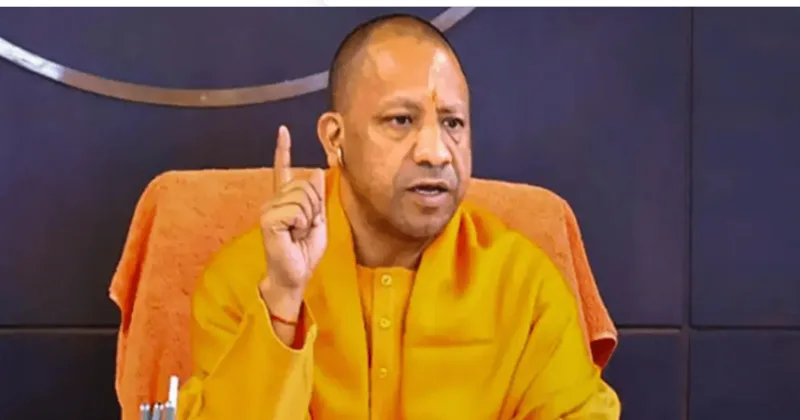
The Yogi Adityanath government has initiated a major reform to transform Uttar Pradesh’s employment system and export sector. In its latest cabinet meeting, chaired by Chief Minister Yogi Adityanath, the state cleared 15 proposals, with two major reforms standing out the establishment of Uttar Pradesh Outsource Service Corporation Limited to protect outsourced employees’ rights, and the approval of the Export Promotion Policy 2025-30 to boost the state’s global trade potential.
The outsourcing sector in Uttar Pradesh, like in many other Indian states, has long been ruined by irregularities. Workers frequently complained of incomplete salaries, delayed payments, and non-receipt of statutory benefits such as Employees’ Provident Fund (EPF) and Employees’ State Insurance (ESI). Many agencies, functioning without stringent oversight, often diverted funds meant for employees, leaving workers vulnerable and insecure.
By establishing the Outsource Service Corporation under Section-8 of the Companies Act, 2013, the government wants to end this pattern. Unlike conventional corporations that worked for profit, this will be a non-profit public limited entity which is designed specifically to ensure fairness and accountability at all levels.
One of the most significant changes lies in how outsourcing agencies will now be selected. Rather than individual departments handpicking agencies, the corporation will empanel them through the GeM (Government e-Marketplace) portal. This digitized system is expected to reduce favoritism, curb corruption, and bring every agency under uniform scrutiny.
For thousands of outsourced employees across Uttar Pradesh, the reform signals the start of more predictable and secure employment. Salaries, ranging between Rs 16,000 and Rs 20,000 depending on roles, will now be transferred directly to workers’ bank accounts between the first and fifth of every month. The new system will transfer salaries directly, removing middlemen and giving workers the assurance of regular payments.
From now on, agencies must provide EPF and ESI contributions without fail. This will make sure workers get their salaries on time and also receive financial and health security in the long run. If any irregularities are found, employees can be removed immediately, which will force agencies to follow the rules and increase accountability.
The reform also supports social justice. By giving reservation to SC, ST, OBC, EWS, Divyangjan, ex-servicemen, and women, the government has made sure the outsourced workforce is more diverse and inclusive. Additional welfare measures have been introduced to provide safety to dignity and family well-being of the employees. Women workers will be entitled to maternity leave. Families of workers who die in service will receive funeral assistance of Rs 15,000, offering a modest but meaningful relief during such a crisis.
The system will also focus on skill development, with regular training programs to keep workers updated and improve their job prospects. Recruitment will now be done through written tests and interviews. This will ensure fair and quality hiring based on merit.
Experts believe this corporation could become a model for other states facing problems in outsourcing. By focusing on transparency, the CM Yogi government is trying to combine efficient administration with social justice. Outsourcing is often criticized for treating workers as disposable assets. Thus, the new framework attempts to reverse that narrative by adding rights, reservations, and benefits into the system.
Export Promotion Policy 2025-30: A Global Vision
Along with labor reforms, the Cabinet approved the Export Promotion Policy 2025-30, showing Uttar Pradesh’s aim to become a global trade hub. The state has a wide range of industries, from handicrafts and textiles to electronics and agriculture, and its export share has been growing in the market. Still, challenges like weak infrastructure, limited financial support, and low global reach have slowed its full growth potential.
The upgraded policy is designed to address these bottlenecks. It lays special focus on:
Digital technology adoption: Encouraging exporters to leverage digital tools for marketing, logistics, and supply chain management
Infrastructure development: Building integrated export hubs, logistics parks, and better connectivity to ports
Financial assistance: Expanding credit and insurance facilities to reduce risk for small and medium exporters
Market expansion: Identifying new markets beyond traditional buyers to diversify export destinations
Capacity building: Training exporters, particularly in rural districts, to meet global standards of quality and packaging
The government has set a clear target to increase the number of registered exporters by 50% by 2030. Significantly, the policy also emphasizes “One District, One Product” (ODOP) by linking all districts with export activities, ensuring that regional economies also benefit from global trade opportunities.
Balancing Local and Global Aspirations
The twin decisions of protecting workers and promoting exports may appear different, but together they show the Yogi government’s approach of combining local welfare with global ambition. On one hand, outsourced employees, who form a silent yet essential workforce across departments, will now receive dignity, rights, and financial protection. On the other, the state is positioning itself to compete in international markets by supporting exporters and industries. For Uttar Pradesh, this dual focus could mean not just more stable jobs but also greater economic opportunities.
Economically, the export policy is expected to enhance Uttar Pradesh’s contribution to India’s ambitious $2 trillion export target by 2030. By promoting ODOP and linking rural districts to exports, the policy could reduce regional imbalances and ensure equitable growth.
















Comments