





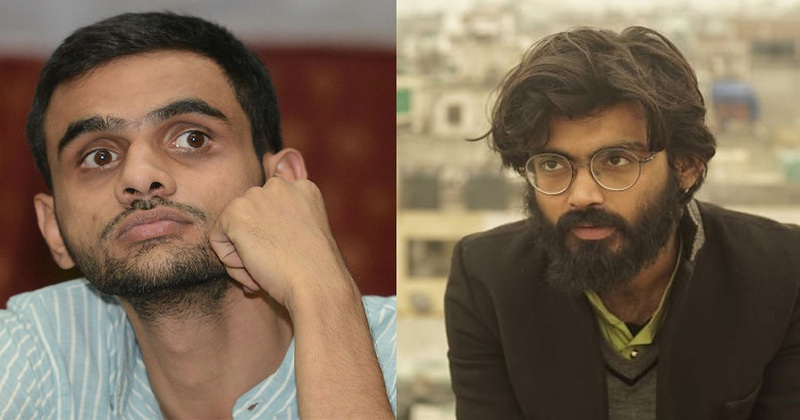
On September 2, the Delhi High Court delivered its long-awaited verdict in Sharjeel Imam vs State and connected matters, dismissing the bail applications of nine accused, Umar Khalid, Sharjeel Imam, Mohd. Saleem Khan, Shifa-ur-Rehman, Athar Khan, Khalid Saifi, Gulfisha Fatima, Meeran Haider, and Shadab Ahmed.
“All the appeals are dismissed,” the Bench said. A detailed judgment would follow.
The ruling came after the Court had reserved its verdict on July 9, 2025, following arguments from the prosecution, represented by Solicitor General Tushar Mehta and Special Public Prosecutor Amit Prasad, and counter-submissions from defence counsels.
Solicitor General Tushar Mehta opened his submissions by stressing the seriousness of the case.
“This is not a question of bail, just bail, as in any other case,” Mehta argued. “We are dealing with well-organised and orchestrated riots that began in the capital at a particular time and day. Even though prolonged incarceration is generally a ground for bail, it cannot apply when one is hell-bent on bleeding the nation and breaking it into two parts.”
Accusing the appellants of attempting to defame India internationally, he said: “Imam and Khalid used this particular day (of the riots) to defame India on a global level… The well determined and well orchestrated mechanisms will show deviations which lead to no ground of bail.”
The Solicitor General called the probe “one of the finest investigations” he had seen: “To satisfy conscience of the court, there are 58 statements recorded under section 164 (of the CrPC).”
Reading aloud portions of Imam’s speeches, Mehta alleged that his words were designed to incite violence.
“Sharjeel Imam has made it clear through his speech that he wanted to break the nation, through a particular religion that he played. He said ‘Chicken neck musalmano ka hai’. He wanted to incite people. This is not an ordinary speech,” Mehta told the Bench.
The SG further warned against romanticising the accused as political prisoners: “The narrative of ‘intellectuals in jail’ must be brought to its knees, because it was apparent as to what these ‘intellectuals’ were really doing.”
The prosecution relied heavily on WhatsApp chats, protest meetings, and timing of the violence.
Citing Imam’s January 23, 2020 speech, the SG argued: “Humare paas 4 hafte hain, agle sunwayi tak, sarkar toh chhodo, court ko uski nani yaad ajaye… Clear, unambiguous intention to put India to shame, when President of a nation was to visit our country. They say in a chat, ‘Trump will be in Delhi on 24th-25th February. Can we do something that will affect Delhi?’ On 23rd February, the riots in Delhi broke. That was their intention, that the global media would take note and India would be defamed.”
Prosecution also emphasised that Umar Khalid’s speech in Amravati on February 17, 2020, urging protests on February 24, coinciding with then U.S. President Donald Trump’s visit was “deliberately timed” to spark international attention.
Counsel for Imam argued that his speeches did not contain calls to violence and that he was “uniquely disconnected” from other accused. “He had no relation to the place and time of the alleged conspiracy,” the defence submitted, claiming his client was exercising his democratic right to dissent.
Khalid’s counsel similarly insisted that the case against him was based only on vague witness statements, WhatsApp group membership, and phone calls after violence had already broken out. “None of this proves conspiracy,” they argued.
The Bench pressed the prosecution to clarify the link between protest planning and UAPA charges. Justice Navin Chawla asked: “Is it your case that only setting up a protest site is enough for UAPA, or those protest sites resulted in violence? The most important thing is intent under UAPA which has to be established.”
The Court also discussed the WhatsApp group evidence: “To cut down conspiracy, the conspiracy is that there are WhatsApp groups. In the WhatsApp groups, there are instigations, ‘let’s do this,’ a planning of a chakka jam. There is also a hint of violence, and violence actually happens. Till then, if they are involved, you may say UAPA is attracted. But when you draw attention to something like a JACT (WhatsApp group), and your own argument is that they were organising protest sites, is that good enough?”
In its written remarks, the Bench later noted: “That calling for a chakka jam logically entails incitement to violence and riots; that membership of WhatsApp groups is indicative of participation in a conspiracy; that a flurry of calls after a riot has started… is indicative of a conspiracy.”
On Khalid, the Bench said: “Appellant Umar Khalid also delivered speeches in Amravati on 17.02.2020… deliberately timed to cause violent riots on 23/24.02.2020 to garner international attention. The above role cannot be lightly brushed aside.”
On Imam, the Court reiterated that his speeches prima facie indicated intent to provoke communal violence.
The Bench also noted: “Further, the interest and safety of the society at large, apart from the victims and their families, is also a factor to be taken into consideration by the Courts while adjudicating bail applications.”
Rejecting arguments about prolonged incarceration, the judges said: “A hurried trial would be detrimental to the rights of both the appellants and the State.”
On the wider question of protest and violence, the Court observed: “If the exercise of an unfettered right to protest were permitted, it would damage the constitutional framework and impinge upon the law-and-order situation in the country. Any conspiratorial violence under the garb of protests or demonstrations cannot be permitted. Such actions must be regulated and checked by the State machinery, as they do not fall within the ambit of the Freedom of Speech, Expression, and Association.”
The case arises out of FIR 59/2020 registered by the Delhi Police Special Cell after the February 2020 riots in Northeast Delhi during protests against the Citizenship Amendment Act (CAA). The violence led to 53 deaths and injuries to hundreds, amid widespread arson and stone-pelting.
The accused have been booked under the Unlawful Activities (Prevention) Act (UAPA) and sections of the IPC relating to conspiracy, promoting enmity, rioting, and murder.
The trial court continues to hear arguments on charge in the wider conspiracy case involving nearly 17 accused.
By rejecting the bail pleas of Khalid, Imam, and others, the Delhi High Court reaffirmed its earlier stance that the allegations against them are prima facie true and grave in nature. The verdict highlights that dissent cannot be equated with conspiratorial violence, and that bail jurisprudence under UAPA requires higher scrutiny when public safety and national security are at stake.










Comments