




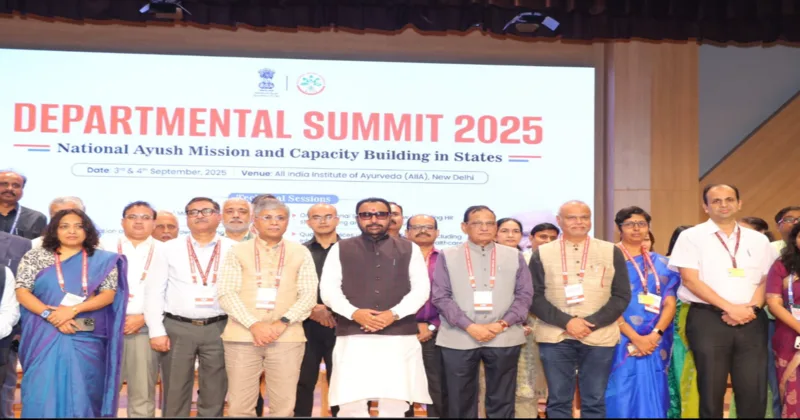
New Delhi: The Union Government has reaffirmed its commitment to strengthening the integration of Ayush into the national healthcare system, with a focus on state-specific frameworks and standard operating procedures (SOPs). Union Minister of State (Independent Charge) for Ayush, Prataprao Jadhav, inaugurated the Departmental Summit on National Ayush Mission and Capacity Building in States at the All India Institute of Ayurveda (AIIA), Sarita Vihar, New Delhi, in the presence of NITI Aayog Member Dr. V. K. Paul and Ayush Secretary Vaidya Rajesh Kotecha on September 3.
The two-day summit brought together senior state officials, Ayush experts, and policymakers to deliberate on the role of traditional medicine in achieving national health goals, improving healthcare delivery, and building robust state-level systems under the National Ayush Mission (NAM).
Union Minister Shri @mpprataprao inaugurates Departmental Summit on 'National Ayush Mission and Capacity Building in States' at AIIA, New Delhi
More :https://t.co/FH3QG170Yo pic.twitter.com/Xj5vnVmPMX
— PIB in Manipur (@PIBImphal) September 3, 2025
While addressing the gathering Jadhav emphasised that the government’s priority is to build resilient, inclusive, and state-specific healthcare frameworks that integrate Ayush with modern medicine. He underlined that comprehensive SOPs will be developed to ensure better service delivery, improved infrastructure, and quality healthcare access.
“Our aim is to create state-specific frameworks, develop comprehensive SOPs to build better health infrastructure, provide quality services to the people, and ensure the integration of Ayush with modern health systems,” the minister said.
🌿 "Govt is committed to developing state-specific frameworks and SOPs to strengthen AYUSH integration," said Shri @mpprataprao at the inaugural session of the 'National AYUSH Mission and Capacity Building in States' summit at AIIA, New Delhi.
🔗:https://t.co/Y7UpSAYUcw pic.twitter.com/6zYXHXUf5m
— PIB Ayush (@PIBAYUSH) September 3, 2025
Highlighting the achievements of NAM since its launch in 2014, Jadhav noted that Ayush services have expanded significantly, with the establishment of 12,500 Ayushman Arogya Mandirs across the country. These facilities mark a shift from conventional OPD-based services to a holistic, preventive, and promotive healthcare model.
The minister also pointed to the launch of the Indian Public Health Standards (IPHS) for Ayush facilities in March 2024. These standards, developed in consultation with NITI Aayog and the Directorate General of Health Services (DGHS), cover infrastructure, medicines, human resources, clinical protocols, branding, and quality assurance.
“This is a milestone in creating uniformity in Ayush healthcare and ensuring patients across India have access to reliable, standardized services,” Jadhav observed.
In a major announcement, Jadhav declared that Ayurveda Day will now be celebrated every year on September 23, with this year’s 10th anniversary being observed under the theme “Ayurveda for People and Planet.” The theme emphasizes Ayurveda’s dual role in individual well-being and ecological sustainability.
The minister urged all states and Union Territories to actively celebrate Ayurveda Day and contribute to making it a global health movement.
He further announced the operationalisation of a Project Management Unit (PMU) at AIIA, designed to assist stakeholders on Ayush-related insurance matters. The PMU will work as a dedicated interface between Ayush practitioners, insurers, and patients, enabling greater inclusion of traditional medicine in health insurance packages.
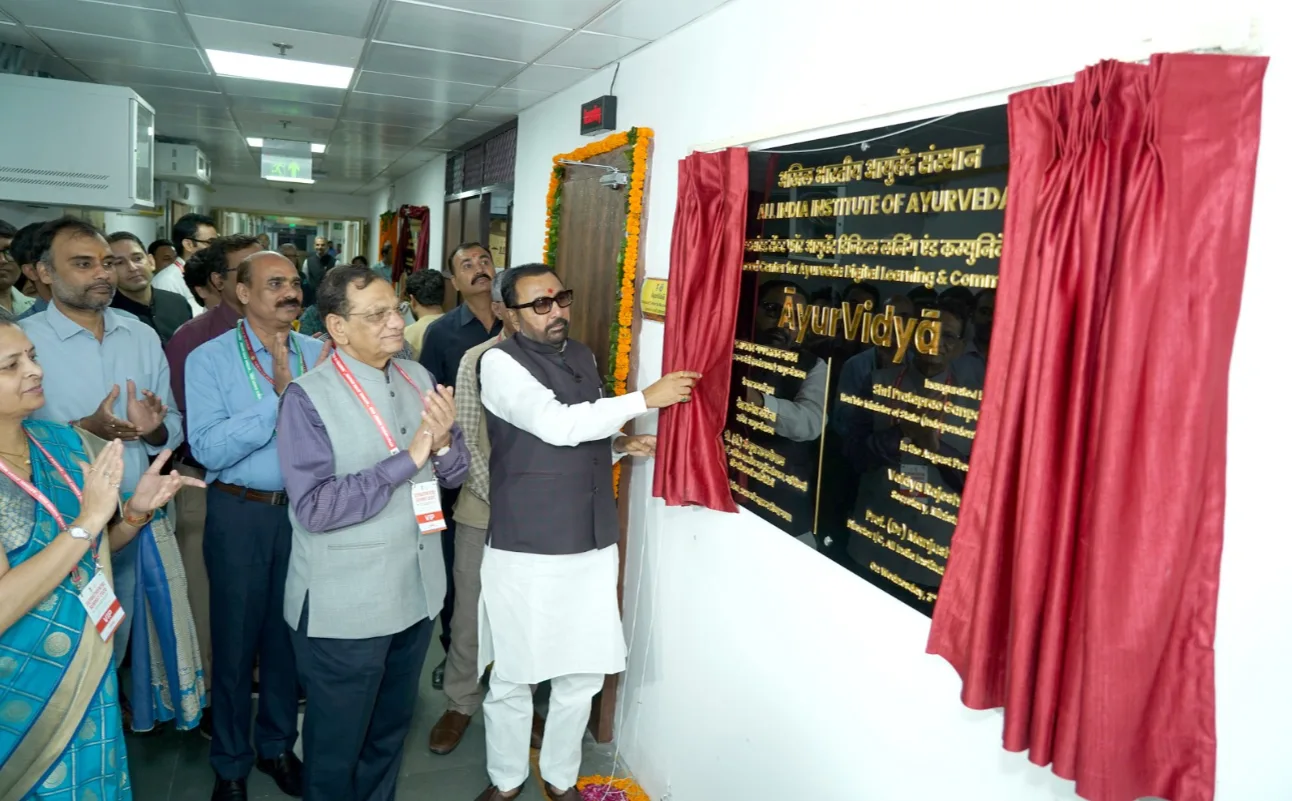
Additionally, Jadhav inaugurated the ‘Ayurvidya Advanced Centre’, a digital platform aimed at democratising Ayurveda education through expert-led courses, webinars, and interactive sessions. This initiative is expected to bolster capacity building and foster innovation in the sector.
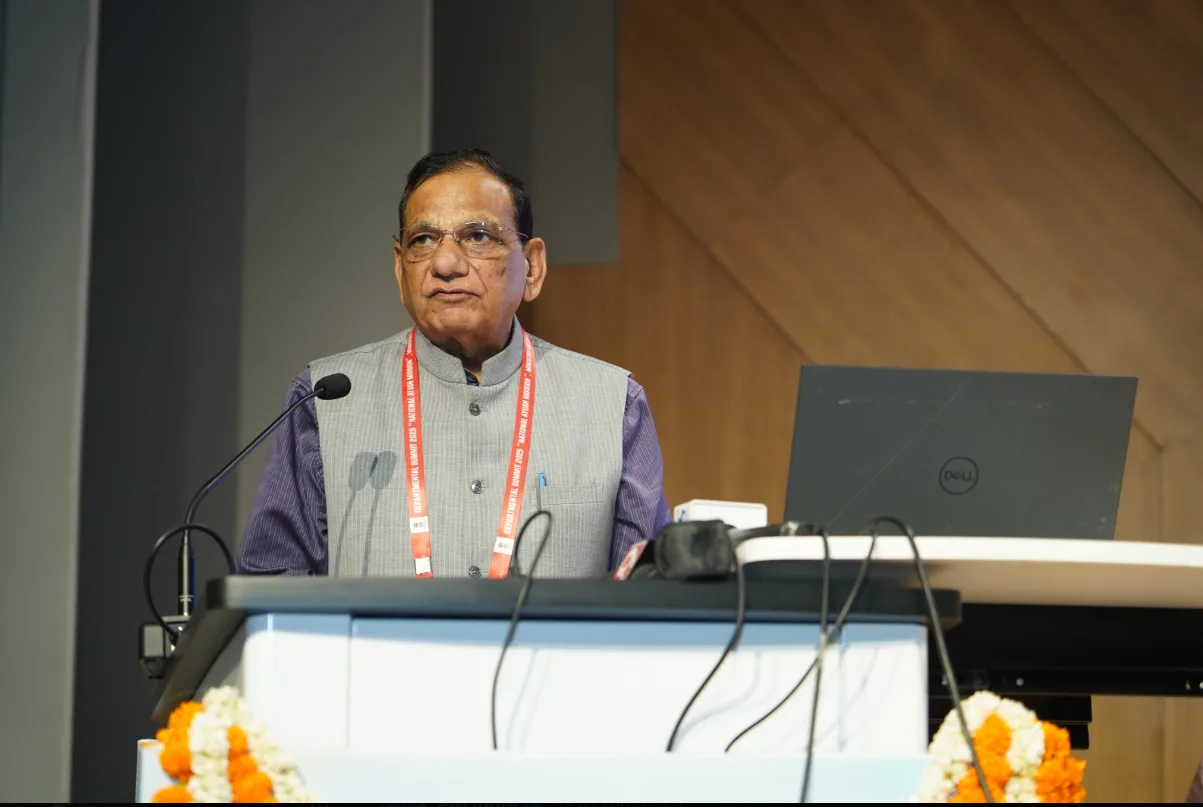
Speaking at the summit, Dr. Vinod Kumar Paul Member (Health), NITI Aayog, underlined that a healthy population is central to achieving the vision of Viksit Bharat @2047. “Health is both an enabler and a milestone for national development,” he said, stressing that the Ayush sector has a vital role to play in building a Swasth Bharat.
Dr Paul noted India’s achievements in combating acute diseases such as Tuberculosis, Leprosy, Measles, Kala Azar, and Rubella, while highlighting the government’s target of eliminating several of these by 2030. He added that efforts must also focus on increasing India’s life expectancy from 71 years to 85 years through a comprehensive healthcare approach that combines modern and traditional systems.
Key action points identified by Dr. Paul included:
- Strengthening Ayush medical education infrastructure.
- Mainstreaming Ayush in the National Ayush Mission.
- Expanding wellness and medical value tourism.
- Encouraging private sector participation.
- Training a robust Ayush workforce.
Ayush Secretary Vaidya Rajesh Kotecha underscored the importance of scaling up the ‘Har Ghar Ayuryog’ initiative, which blends yoga and Ayurveda practices for household-level adoption. He stressed that behavioral change campaigns will be key in embedding Ayush into daily life.
“The initiative plays a vital role in creating a healthier nation. Taking Har Ghar Ayuryog to every household will contribute significantly to preventive care and reduce the disease burden,” he remarked.
The Secretary also highlighted that the summit’s six sub-themes and state-specific notes were designed to ensure grassroots-level perspectives are incorporated into NAM’s future implementation strategy.
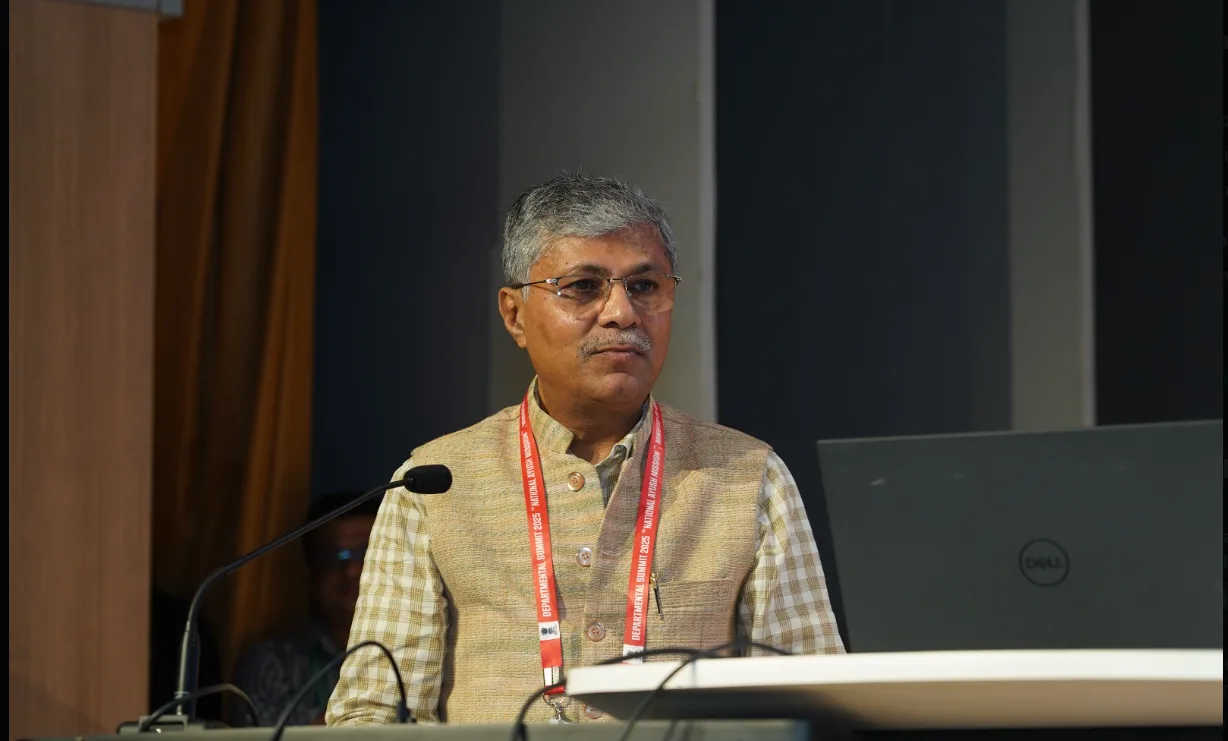
The summit witnessed participation from senior bureaucrats and health officials from various States and Union Territories. Each delegation presented state-specific challenges, feedback, and proposals for improving Ayush delivery. Inputs from grassroots stakeholders, collected in advance, were also integrated into the discussions.
Officials emphasised the importance of regional customisation, given India’s diverse healthcare needs. For example, certain states proposed greater investment in herbal cultivation, while others sought enhanced training facilities for Ayurveda and Unani practitioners.
The National Ayush Mission, since its inception, has aimed at mainstreaming Ayurveda, Yoga & Naturopathy, Unani, Siddha, Sowa Rigpa, and Homeopathy (AYUSH) into the public health system. With India increasingly recognized as a global hub for wellness and traditional medicine, the summit signals the government’s intent to align Ayush policies with long-term national health goals.
By pushing for state-specific frameworks, uniform standards, and innovative platforms, the government hopes to transform Ayush into a cornerstone of India’s healthcare model by 2047.










Comments