





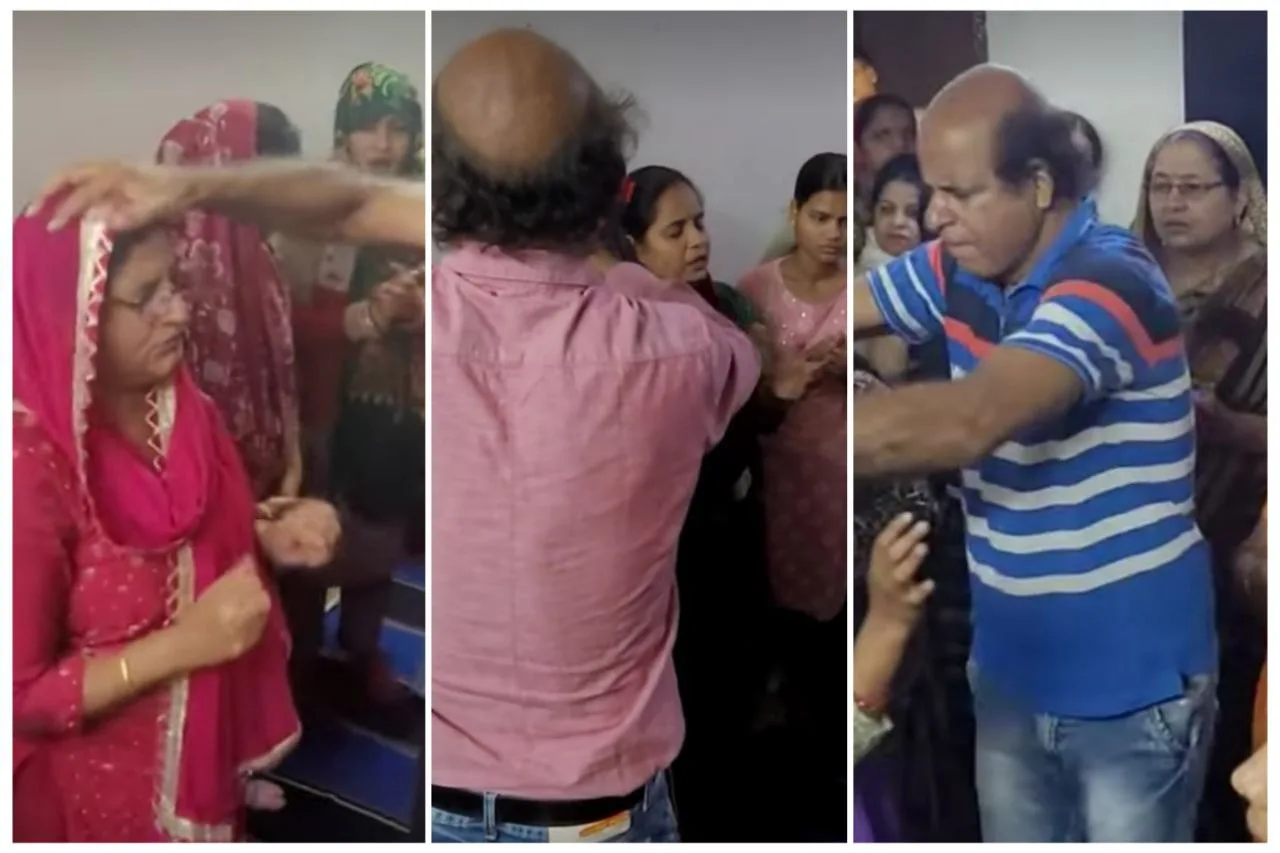
On September 2, a team from Shahganj police station in Agra raided the residence of Rajkumar Lalwani, a crypto-convert and the mastermind of a religious conversion racket in Kedarnagar. Acting on a tip-off, police discovered that Lalwani had been regularly holding Sunday prayers where people were persuaded to convert to Christianity under the guise of healing rituals and prayers.
During the raid, officials seized around 15 copies of the Bible and three hymn books that were allegedly being used for conversion activities. According to police, the racket had been operational for several years, targeting the poor, sick, and economically vulnerable sections of society.
Police confirmed that local residents had repeatedly confronted Lalwani, asking him to stop his activities.
However, he allegedly ignored their warnings and continued hosting weekly prayer meetings. Finally, based on formal complaints from locals, police registered a case under Section 112(2) (organised crime) of the Bharatiya Nyaya Sanhita (BNS) and Sections 3/5(1) of the Uttar Pradesh Prohibition of Unlawful Conversion of Religion Act.
DCP (City) Sonam Kumar told reporters that preliminary investigations revealed a well-organised racket with possible links beyond Uttar Pradesh. Lalwani, during questioning, admitted that he had converted from Hinduism to Christianity around four years ago in Ulhasnagar, Maharashtra. Since then, he had been inviting people, reading from the Bible, offering prayers, and charging them money with the promise of curing illnesses.
“The money collected was distributed among the group. Lalwani also admitted to using his female associates to persuade families into conversion. He not only operated physically but also created digital outreach through Google Meet, WhatsApp, and YouTube,” DCP Kumar said.
Investigations revealed that Lalwani was running an online network through a WhatsApp group named ‘Church of God Agra’, which had as many as 86 members. He also operated a YouTube channel under the same name, where recordings of Sunday meetings were uploaded for publicity and to attract more followers. Police said that this online presence helped him gain both profits and influence, strengthening the racket’s reach.
Apart from Lalwani, police arrested Anup Kumar, Kamal Kundlani, Jai Kumar, Arun Kumar, and three women, all residents of Agra. Officials said the women played an important role in influencing families, particularly targeting poor households by offering prayers and assurances of financial help.
Police sources indicated that Lalwani’s network may have connections with conversion modules operating outside Uttar Pradesh. Authorities are now investigating financial transactions, digital communications, and possible foreign links to ascertain the full scale of the racket.
DCP Sonam Kumar stated: “Preliminary probe revealed evidence of links to several others involved in conversion activities outside the state. Lalwani admitted to converting several people over the years. His group used both in-person inducements and online platforms to lure the vulnerable. Further investigation is underway.”
The bust in Agra comes amid a series of crackdowns in Uttar Pradesh under the Prohibition of Unlawful Conversion of Religion Act, which was enacted to prevent conversions carried out through fraud, coercion, or inducement. Over the past two years, police have uncovered multiple such rackets where vulnerable groups, especially the poor and sick, were promised miraculous cures or financial help in exchange for changing faith.
As investigations continue, police are examining whether the Agra racket was connected to larger missionary networks or international funding channels. The accused remain in custody, and further arrests are not being ruled out.














Comments