





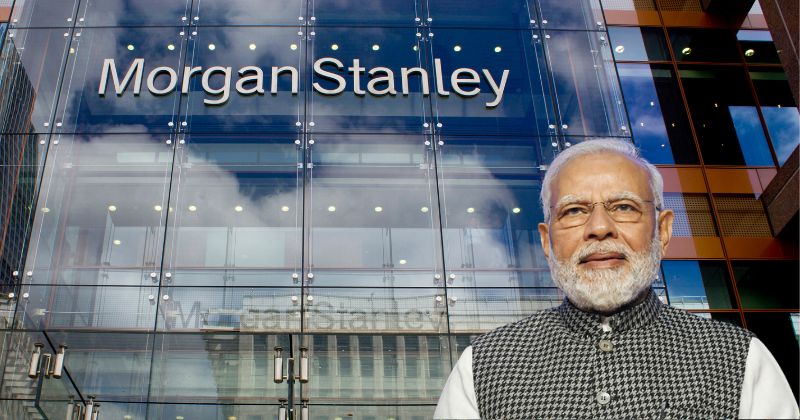
India’s economy recorded a robust 7.8 percent growth in the April-June quarter of FY26, driven by strong government and private consumption. According to Morgan Stanley, this momentum provides a solid base for the year ahead.
Government spending rose by 7.5 percent year-on-year, while private consumption climbed 7 percent, signaling confidence in household demand despite global headwinds. Gross fixed capital formation moderated to 7.8% but still remained healthy, showing continued strength in investment.
Morgan Stanley’s upgraded outlook rests significantly on impending GST reductions, which it expects to provide a major boost to domestic demand. The timing of the cuts, ahead of the festive season, is likely to encourage consumer spending across urban and rural India.
“While external demand weakness due to higher US tariffs could drag growth by around 50 basis points, GST cuts are expected to offset the impact by a similar magnitude,” the report noted.
The report highlighted that a favourable monsoon and strong kharif sowing indicate resilience in agriculture, which should further support rural demand. Rural markets, which had been under pressure in recent years, are expected to stage a stronger recovery in FY26.
On the external front, net exports turned into a drag as imports outpaced exports in Q1. Export growth saw a temporary uptick due to front-loading of shipments to the US before new tariffs kicked in, but exports to other markets slowed.
This imbalance shows the pressure India faces from weaker global demand and protectionist trade policies, even as domestic factors cushion the blow.
Despite global slowdown concerns, Morgan Stanley emphasised that India remains one of the fastest-growing major economies in the world, supported by strong domestic drivers. The balance between rural revival, festive-led consumption, and government spending puts the economy on a steady growth trajectory.
With its revised 6.7 percent GDP forecast for FY26, the agency sees India maintaining a strong growth narrative amid turbulent global conditions.















Comments