





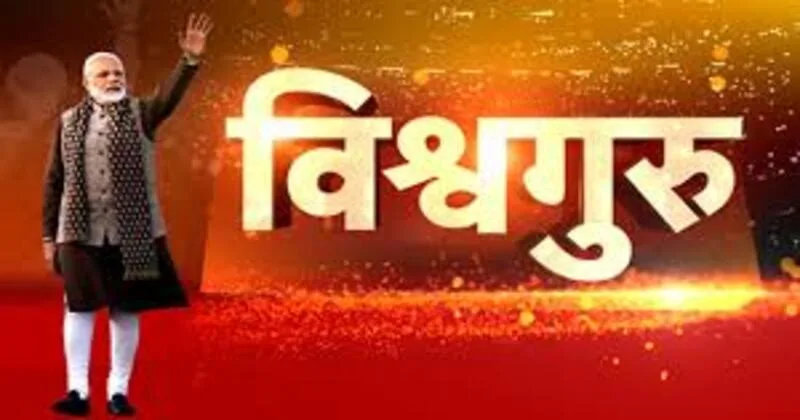
Let’s begin with some quick facts about the New India or rather the Awakened India before we delve deeper into how the Sleeping Giant is transforming itself over the past decade:
- 4th largest economy (surpassing Japan)
- World leader in digital payments (UPI)
- Defense budget: Among top 3 globally
- Space milestones: Chandrayaan-3, Aditya L1
- Youth power: 65 per cent of population is under the age of 35 years
A Civilizational legacy interrupted
For centuries, India – known to its people as Bharat – stood as one of the greatest civilizations on Earth. Long before the rise of European empires, the Indian subcontinent thrived as a beacon of learning, culture, commerce and spirituality. With universities like Nalanda, innovations in mathematics and astronomy and flourishing trade routes, India once commanded nearly 25 per cent of the world’s GDP.
But centuries of invasions and colonial exploitation dismantled this supremacy. By 1947, India emerged from British rule weakened and unjustly labeled as the “third world country”. For decades, the West continued to view India as dependent, unstable and also incapable of any leadership.
That narrative is now being rewritten. Under Prime Minister Narendra Modi, Bharat is no longer a passive participant in global affairs—it is a rising power, reclaiming its rightful place.
Rekindling confidence: Modi’s civilizational vision
At the heart of Modi’s governance is civilizational pride. His philosophy of “Sabka Saath, Sabka Vikas, and Sabka Vishwas” blends inclusivity with India’s age-old ethos. Unlike earlier regimes that leaned on foreign models, PM Narendra Modi has injected decisiveness and bold reforms: driving digitization, modern infrastructure, defense production and global diplomacy. More importantly, he has reignited cultural self-confidence among youth who are now prouder of their traditions and heritage.
Economic leap: From third world British colony to top five
In a symbolic twist of history, India surpassed UK in 2025 to become the 4th largest global economy. Today it stands alongside the US, China and Germany.
- Digital India: India leads the world in digital transactions via UPI
- Start-up Ecosystem: 100+ unicorns have emerged in less than a decade
- Manufacturing Push: “Make in India” is transforming India into a global factory
Once seen as a slow-moving elephant, India today is a young tiger—fast, confident, and hungry for growth. “India will engage and cooperate—but not at the cost of compromising its interests.”
Diplomacy rewritten: From rule-taker to agenda-setter
India has transformed from being a reluctant follower to an agenda-setter on global issues.
- G20 Presidency (2023): Hosted world leaders in Delhi, projecting confidence.
- BRICS & Quad: India plays balancing roles between West and the Global South.
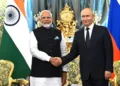
- Strategic Partnerships: Engages with the US, Russia and Middle East on equal footing.
No longer begging for global validation, New Delhi today commands respect at every global table.
USA’s grip weakens: No more arm-twisting
For decades, Washington believed it could dictate terms to India with sanctions and tariff threats. Whether restricting nuclear cooperation in the 1970s or pressuring India to cut oil imports from Iran and Russia, the US assumed India would bend. But under Modi, India has broken free of this pressure playbook:
- Russian oil imports (2022–23): Despite Western criticism, India bought discounted oil, citing national interest—and the West quietly adjusted.
- Tariff resilience: A diversified trade portfolio makes tariff threats less effective. Plus, India’s strategy to explore markets in other countries besides the USA
- Strategic autonomy: India negotiates with Washington as a partner, not a subordinate. No more dictating terms by America for trade deals.
Today, the United States can no longer arm-twist India into compliance. Instead, it can consider New Delhi as an indispensable partner in the Indo-Pacific.
Defense, technology, and vishwaguru aspirations
India’s military modernization—through Atmanirbhar Bharat in defense production— has fortified sovereignty. Meanwhile, space triumphs like Chandrayaan-3(moon mission) and Aditya L1(solar mission) showcases technological prowess of Bharat.
But Modi’s vision goes beyond material strength. His call for India as Vishwaguru (world teacher) positions the nation as a moral and cultural guide. From Yoga and Ayurveda to climate action, India offers solutions rooted in centuries old civilizational wisdom to a world in crisis.
Challenging global elites
Th resurgence of Bharat unsettles entrenched global powers. Financial dynasties like the Rothschilds, ideological voices like George Soros and even powerhouses such as Donald Trump’s “America First” camp, now faces a confident India unwilling to play by Western scripts.
India has the ability to:
- Bypass dollar dominance in energy trade
- Build indigenous tech ecosystems
- Lead Global South diplomacy
These are signals that the balance of power is shifting eastwards.
Mel Robbins’ perspective: A giant with determination
“The sleeping giant is not waking up angry, but determined. And that determination makes India unstoppable.” – Mel Robbins, American Author
American author Mel Robbins highlights that India’s revival is more than economic — it is psychological. The Indian youth, once dazzled by Western validation, are now rooted in heritage and innovation. Her words capture the spirit of a nation rediscovering its destiny.
Toward civilizational glory
India’s rise under Modi is not a temporary surge– it is a carefully crafted path to reclaim civilizational glory. If this trajectory continues, India may not only march towards being one among the top three global economies but could soon emerge as the world’s leading superpower.
What was once plundered and suppressed is now rewriting its history. The sleeping giant has awakened—this time as Vishwaguru, ready to guide and inspire the world.












Comments