





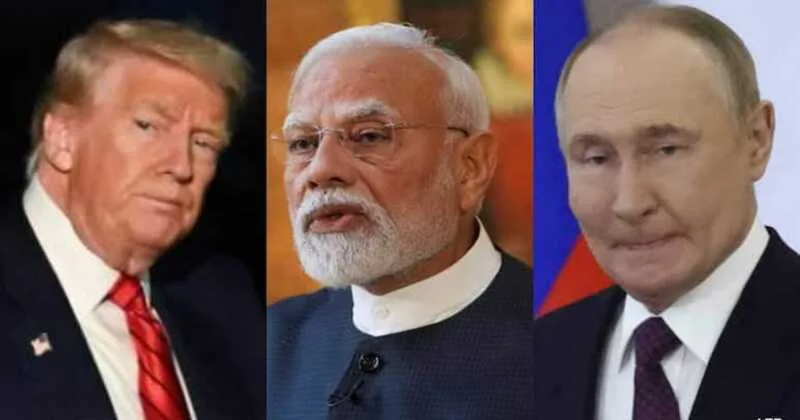
Washington’s latest move to impose steep tariffs on Indian goods has drawn global attention, not for its economic rationale but for what it reveals about America’s inability to resolve the ongoing war in Ukraine. US Vice President J.D. Vance has admitted openly that the 50 percent tariff on Indian imports is not merely an economic measure but a geopolitical tactic to force Russia to end its military operations in Ukraine.
According to Vance, President Donald Trump’s decision to raise tariffs on India aims to exercise “aggressive economic influence” on New Delhi. The logic offered is that by making it difficult for Russia to gain revenue through oil sales to India, Moscow will be pressured into halting the war. However, this approach raises serious questions about Washington’s priorities and effectiveness. Instead of engaging in direct diplomacy or pursuing credible peace initiatives, the US appears to be resorting to economic coercion against a longstanding partner, undermining trust between the world’s two largest democracies.
Vance assessed the tariff move as part of a secondary strategy to curb Russia’s financial strength. Yet, the fact remains that the US has failed to end the war despite its central role in global politics. After years of sanctions, military aid, and diplomatic rhetoric, the conflict remains unresolved. The imposition of tariffs on India does little to address the root causes of the war and instead risks fracturing vital alliances at a time of global uncertainty.
What makes the US stance even more questionable is its selective approach. While Washington pressures India over oil imports from Russia, it has refrained from taking a similarly aggressive posture toward China, a far larger buyer of Russian oil. This glaring inconsistency suggests that the tariffs are less about ending the war and more about exercising leverage over India’s independent foreign policy. Vance himself acknowledged that Trump’s message to Russia comes through the tariffs on India, yet such measures do nothing to stop the violence in Ukraine and instead penalize a sovereign country acting in its national interest.
India’s position has been clear and consistent that it will procure oil from sources that best serve its economic needs. Affordable energy is essential for sustaining growth in a developing economy, and New Delhi has maintained that its actions do not contravene any international obligations. By framing India’s trade decisions as a stumbling block to peace in Europe, Washington is not only misrepresenting reality but also shirking responsibility for its diplomatic shortcomings.
Meanwhile, former US Ambassador to the United Nations Nikki Haley has joined the chorus of warnings to India. She advised New Delhi to take the issue “seriously” and resolve differences with Washington at the earliest. Ironically, Haley herself admitted that relations between the two democracies are nearing a breaking point due to the Trump administration’s tariff war. She cautioned that restoring ties is vital for countering China, yet it is the US that is destabilizing this partnership through unilateral economic actions.
US Tariff Push Sparks Global Postal Suspension
In a post on X, Haley highlighted the “decades-long friendship” between India and the US as a foundation to overcome current challenges. However, her appeal for dialogue contrasts sharply with Washington’s punitive approach. Rather than strengthening cooperation to achieve shared strategic goals, the US has chosen confrontation, creating uncertainty for businesses and consumers on both sides.
The fallout from Trump’s Executive Order No. 14324 is already evident. By eliminating the duty-free exemption for products worth under $800 and imposing import duties on all postal items above $100, the US has triggered disruptions in global postal networks. India has temporarily suspended parcel services to the US starting August 25, citing a lack of clarity on the new procedures and inadequate cooperation from cargo airlines. Customers with pending shipments will receive refunds, but the disruption underscores how sudden and poorly coordinated policy shifts can strain international logistics.
Several European countries have followed suit, with Germany, Denmark, Sweden, and Italy halting most postal shipments to the US. France and Austria plan to suspend services on Monday, while the UK will do so on Tuesday. European authorities share similar concerns, insufficient notice, unclear implementation guidelines, and inadequate preparation time for customs procedures. Under the new trade framework, most products will attract a 15 percent tariff, adding another layer of complexity for exporters.
Even as these measures take effect, private couriers like DHL Express remain operational, highlighting the disproportionate impact on ordinary consumers and small businesses. Post Europe has warned that all European postal services could suspend US-bound shipments if clarity does not emerge before August 29.
By resorting to punitive tariffs and creating trade uncertainty, Washington and its allies are projecting weakness rather than leadership. Instead of crafting a coherent strategy to end the Ukraine war through diplomacy, they are imposing costs on partners who have acted within their sovereign rights. The unresolved conflict in Ukraine is a direct consequence of diplomatic failure, not India’s decision to secure affordable energy for its people.











Comments