





The crafted narrative that Sonia Gandhi, a “selfless” foreign-born leader of Christian origin, renounced the Prime Minister’s chair in 2004 to make way for Dr. Manmohan Singh, a Sikh economist, has long been hailed as an act of sacrifice by the Congress party. Yet, hard evidence and legal revelations challenge this celebrated tale as nothing more than a political cover-up for a constitutional crisis.
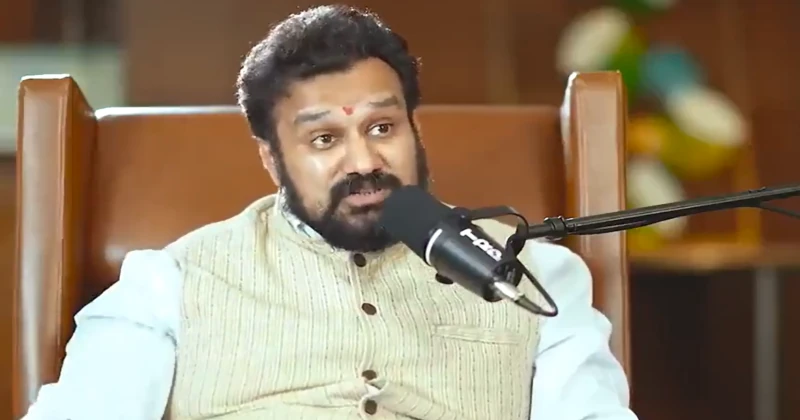
Advocate Vishnu Shankar Jain, in a blistering statement, has pulled back the curtain on how Sonia Gandhi’s citizenship status was legally challenged, judicially scrutinised, and deliberately suppressed first in 2000 and then again in 2004 by the Congress party to safeguard its dynastic ambitions.
The legal battle of 2000: Citizenship under the scanner
In 2000, well before the UPA’s rise to power, Sonia Gandhi’s citizenship became the subject of a legal battle. The central contention was that Sonia Gandhi was not a “Citizen of India” under the original constitutional framework, but an “Indian Citizen” granted naturalisation under Section 5(C) of the Citizenship Act, 1955, which permits foreign nationals to acquire Indian citizenship through marriage to an Indian citizen.
Jain and his colleagues argued that this mode of citizenship acquisition raised serious constitutional and security questions. By reducing the requirements to marital ties, the law had inadvertently created a loophole allowing foreign-born individuals to penetrate India’s democratic and constitutional framework without sufficient scrutiny of their allegiance.
“This is not a small matter of paperwork,” Jain said. “It goes to the very core of national security. Can someone born and raised in a foreign society, with foreign loyalties and connections, be allowed to participate in India’s highest democratic processes, even hold constitutional office? The Congress party buried this fundamental question.”
In 2000, we proved in the court that Sonia Gandhi is not a 'Citizen of India', she is an 'Indian Citizen' and on this basis she could not take the oath in 2004. pic.twitter.com/gu2GyBdhDe
— Vishnu Shankar Jain (@Vishnu_Jain1) August 18, 2025
The legal battle came to a head in 2004 when Sonia Gandhi staked claim to the Prime Ministership after the UPA’s electoral victory. However, President A.P.J. Abdul Kalam reportedly raised pointed questions about her citizenship status.
According to Jain, the Rashtrapati Bhavan demanded clarity: Had Sonia Gandhi truly renounced her Italian citizenship? What was the exact nature of her Indian citizenship? Without answers, President Kalam refused to administer the oath.
नागरिकता कानून में आप धारा 5(C) के तहत शादी के ज़रिए नागरिकता दे रहे हैं। अगर कोई विदेशी व्यक्ति किसी से शादी कर रहा है और आप उसे उस आधार पर नागरिकता दे रहे हैं, तो उस आधार को चुनौती दी गई। हम इस अवधारणा के ख़िलाफ़ हैं कि अगर इस देश की आंतरिक सुरक्षा और अखंडता को बनाए रखना है, तो… pic.twitter.com/gp7tpNu9Yx
— Vishnu Shankar Jain (@Vishnu_Jain1) August 19, 2025
It was at this juncture that Sonia Gandhi stepped back from the post of Prime Minister, not out of altruistic sacrifice, but because her legal and constitutional eligibility was under a dark cloud.
For two decades, Congress leaders and their ecosystem of intellectuals, journalists, and historians have propagated the idea that Sonia Gandhi renounced power for the greater good, choosing instead to install Dr. Manmohan Singh, a loyal economist and technocrat, as Prime Minister.
But Jain has debunked this narrative as outright falsehood.
“It is absolutely wrong,” he said. “There was no sacrifice. Sonia Gandhi simply could not have taken the oath as Prime Minister without answering the citizenship question. It was constitutional compulsion, not personal magnanimity. To brand this as sacrifice is fraud against the people of this country.”
The larger issue, Jain warns, is the precedent set by Sonia Gandhi’s case. Section 5(C) of the Citizenship Act allows foreign nationals to acquire Indian citizenship simply by marrying an Indian citizen. While this provision may have been designed with benign intentions, its implications are grave when it comes to participation in governance.
“You are opening the floodgates,” Jain cautioned. “Tomorrow, anyone can come to India, marry an Indian, acquire citizenship, contest elections, and rise to the top constitutional posts. This is not just a loophole it is a national security threat.”
He emphasised that Sonia Gandhi’s case exemplifies the danger: a foreign-born individual, who once held Italian citizenship, nearly became the Prime Minister of India, not through merit or deep connection to Bharat, but through the political machinery of Congress that prioritised dynasty over democracy.
According to Jain, the Congress party suppressed the citizenship matter twice once in 2000 during court proceedings, and again in 2004 during the political crisis of succession. Rather than allowing judicial adjudication and transparency, Congress chose to bury the case, control the narrative, and silence dissenting voices.
The party not only prevented the janjatis from reaching a logical conclusion but also created a political mythology—that Sonia Gandhi had made the ultimate sacrifice by “handing over” the Prime Ministership to Manmohan Singh.
This narrative served two purposes:
- It shielded Sonia Gandhi’s disqualification issue from public debate.
- It strengthened her image as a selfless leader, thereby consolidating her moral authority over the Congress and the UPA government.
What the Congress presented to the public as an act of nobility was, in reality, a cover-up of constitutional subversion. Sonia Gandhi could not have lawfully occupied the Prime Minister’s chair, and when the truth risked exploding in 2004, the party orchestrated a backroom arrangement Manmohan Singh as the nominal head, Sonia Gandhi as the real power centre.
The so-called “sacrifice” was therefore a deception, a narrative weapon to protect dynasty and secure power without accountability.













Comments