





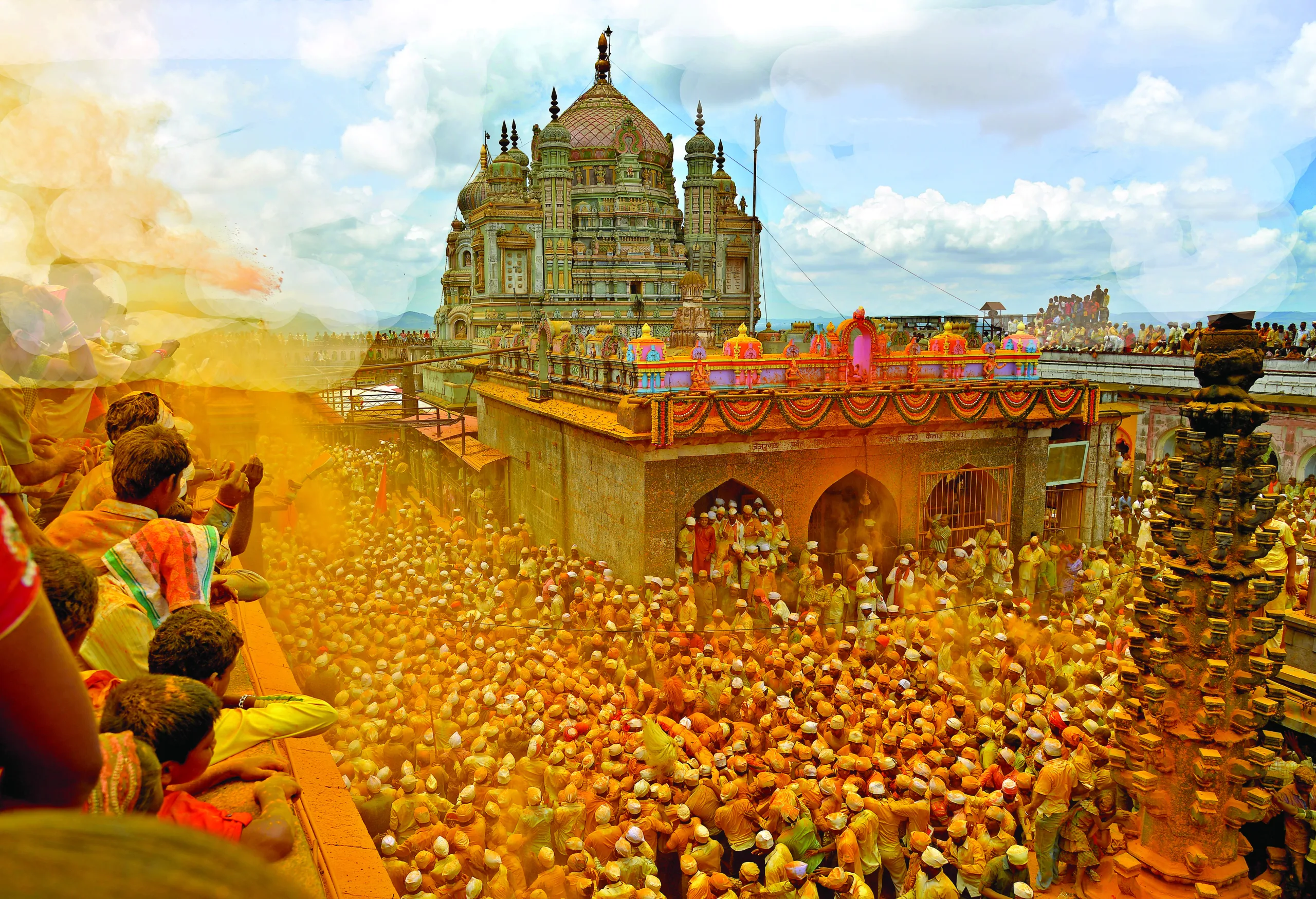
Perched atop a 758-metre-high hillock, the Khandoba Temple at Jejuri is more than just a pilgrimage site—it is a living example of sustainable sacred architecture rooted in nature and tradition. Located about 50 km from Pune, this revered temple, also called Jejuri-gad, is dedicated to Bhagwan Khandoba, an avatar of Shiva. For generations, He has been the kuladaivata of countless Maharashtrian families—farmers, priests, Dhangars, and warriors alike.
The temple is uniquely built using locally available lime from the hill itself—a natural, breathable material that also formed the base of iconic Maratha structures like Shaniwar Wada. The temple is assessed by climbing 200 steps. The steps have 18 arches, 350 deep sthambas and several shrines along its sides. The deity is worshiped even by Muslim community. The temple architecture has Mughal features. The structure blends seamlessly into the landscape, embodying an ecological harmony reminiscent of a Devrai—a sacred grove where nature and worship co-exist. With its seven stone arches, 63 verandahs, and fort-like design, the temple complex feels like a spiritual fortress, embracing both devotees and the environment.
Jejuri’s cultural vibrancy is most alive during the Bhandara festival, when nearly six lakh devotees ascend the hill, showering haldi (turmeric)—a symbol of healing and fertility. This gives rise to the phrase “Sonyachi Jejuri” or “Golden Jejuri,” where the temple turns into a saffron-gold spectacle under the Deccan sun.
The rituals associated with the sun, gold, turmeric, and healing echo sustainable and agrarian traditions, symbolically tying spirituality to nature’s rhythms. Much like the Devrai, Jejuri is not just a space of worship—it is a breathing, evolving ecosystem of community, conservation, and cultural continuity.
In today’s world, where sustainability and spirituality often seem distant, Jejuri’s Khandoba Temple reminds us that sacredness and sustainability can go hand in hand—rooted in land, ritual, and reverence.











Comments