





The world’s dynamics changed after Corona, when Bharat demonstrated compassion and sharing, as well as scientific and technological prowess by producing vaccines quickly and delivering them to the world. The military’s strength was demonstrated during Operation Sindoor, where accuracy, speed, and technological integration demonstrated the strength Bharat had developed over the previous ten years.
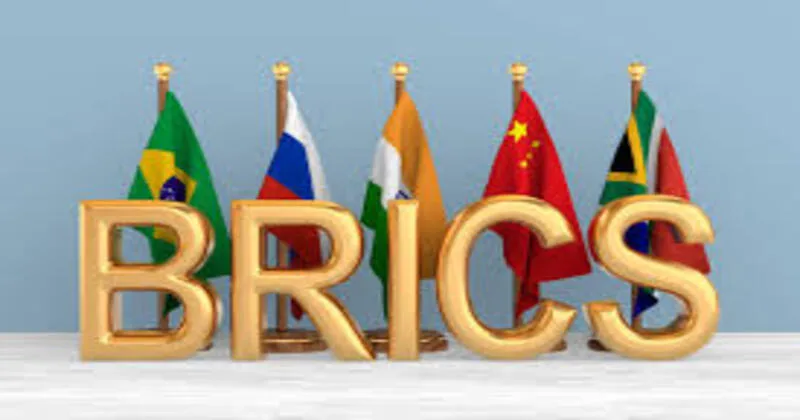
How are global dynamics being altered by BRICS?
Emerging economies are challenging the hegemony of existing powers, causing a significant shift in the global power dynamics of the twenty-first century. The world order is changing from unipolar to multipolar as a result of this change. China, India, Brazil, and South Africa are among the emerging economies that are demonstrating their power in the political, technological, and economic spheres. They play a crucial role in determining global governance, as evidenced by their rising GDP share, developing trade networks, and leadership in multilateral organizations like the G20 and BRICS. India will have to overcome a more complicated and dynamic geopolitical environment and make tough decisions regarding the evolving global order.
Take into consideration that in the early 2010s, China’s GDP, measured by purchasing power parity (PPP), exceeded that of the US. Take into account that, according to PPP, the BRICS countries’ proportion of the world GDP in 2018 exceeded that of the G7. The BRICS alliance has subsequently extended to include Egypt, Ethiopia, Iran, the United Arab Emirates, and Indonesia, with more expansion being considered. This is a significant turning point, and the divide between the BRICS and G7 nations has only widened. From 20% of the initial group, BRICS+ countries today account for 43% of the world’s oil production. Additionally, BRICS+ declared plans to create new development banks and other entities.
Why is the globe becoming more multipolar instead of unipolar?
American political scientist Joseph Nye Jr. is right to propose the idea of “smart power”—”the ability to combine hard and soft power into a successful strategy”—in his work. Since emerging from the caves thousands or perhaps millions of years ago, humanity is thought to have become more civilized in the twenty-first century, shedding most of our animal untamedness and relying on soft power rather than hard strength to deal with contemporary geopolitical situations. Joseph Nye argues that “soft power” is non-coercive and uses foreign policy, political values, and culture to bring about change.
But in actuality, after ruling the world for decades, if not a century, it is utterly disheartening and repugnant that the US-led cowboy wild west continues to use hard power to compel small, weak, and corrupted nations (mostly those that were previously colonized) to dominate and control the world for their own political agendas and self-interests. Because each country or region has its own history, culture, beliefs, characteristics, etc. based on its own situation, speed of development, education level, and upbringing of its own countrymen, the US must stop its haughty, aggressive, and hegemonic behaviors that use force to impose or coerce western political ideology into others.
The United States’ narrow-minded and few myopic leaders have put the country in a dangerous predicament. The United States today resembles an uncontrolled bull that is rushing through the terrain, destroying everything in its path, as a result of the second Gulf War and an unforeseen conflict in Afghanistan. Many developing countries have been able to assess the US’s strengths and flaws as a result of the US’s hurried exit from Afghanistan. Some countries in South America have realized that they can no longer be intimidated by the United States. Moreover, several emerging nations now think that the writ of the world’s most powerful nation can be challenged.
Along with the pre-existing global problems like terrorism, drug trafficking, money laundering, and pollution of the oceans and land, globalization brought with it new concerns like climate change, cyber security, and space security. The solutions to the aforementioned problems must be cooperative rather than competitive. If the current gap between the countries persists, it will be unable to address these issues. “New Global Dynamics” examines the ramifications of these changes and the fresh difficulties that institutions and decision-makers encounter on a national and international scale. It explores the changing dynamics in industry, trade, and finance and looks at how these changes are impacting the global economy, the future of globalization, international power structures, and market rivalry.
One of the main factors influencing shifts in the world order is still the emergence and decline of great powers. A growing China is demanding a larger say in global decisions and is defining its interests more broadly. Bharat is demonstrating her tenacity by increasing her military and economic power while also forging solid international ties with several nations. To maintain its place in the interstate order, the US, which is comparatively weaker, is pushing back. This back and forth is changing how different countries’ foreign policy are implemented and carried out. The United States has been forced into a precarious situation by its shortsighted and narrow-minded foreign officials.
Dr. S. Jaishankar, the minister of external affairs, said that certain nations and businesses were favored by the “old world order.” Indians like us don’t want that order. Rearranging those dynamics isn’t always a bad thing for New Delhi, which has benefited from the forces of economic globalization. India appears to be advocating for a more balanced approach as a new framework emerges, one in which the benefits are distributed within communities and between countries more fairly rather than only benefitting a select few.
How a group of nations with certain basic differences can stay united is still up in the air. However, these institutions might provide an intriguing counterbalance to the West if they develop and gain traction. Unfortunately, multilateralism as a concept and a practice has been weakened in recent years by increasingly unilateral actions and zero-sum transactional politics. This has consequently led to a growing lack of trust in multilateral organizations like the World Trade Organization. The world is changing from unipolar to multipolar once more. The international political landscape is seeing the emergence of numerous regional powers. Complex interdependence has replaced it, and as a result, former adversaries are now forming friendships and alliances.
The peaceful ascent of China, India, and other developing countries in various regions, the end of US hegemony, and the change from a unipolar to a multipolar power structure. Overall, the view of world political and economic affairs under the framework of the 21st century demonstrates that Asia has become the new hub of global power. The forecasts are confirmed by the economic recovery of nations like China, India, South Korea and Indonesia, that Asia will take center stage in world affairs. The rivalry between the US and China, particularly in the geopolitical and economic spheres, illustrates the fight to preserve the US dominance and China’s aspirations to become a significant Asian power. Despite the United States’ continued dominance, there are clear dynamics of shift. The rise of new powers, such as China and India’s growing economic might, signifies global politics’ intricacy and evolution. Over time, the query of whether America will continue to hold sway or if new forces will surface to challenge the global political landscape in the twenty-first century is becoming more and more pertinent and difficult.
Thus, a new paradigm for interpreting the balance of power and the future course of international relations is born as the dynamics of world politics in this era continue to evolve and new challenges arise. The US’s dominion appears to be waning for a number of reasons. The United States is more surrounded than ever by the current situation in South China Sea and Ukraine. The world has become multipolar, and the United States is no longer alone at the top, as China, Russia, and India have all shown.
Even if India’s current circumstances appear challenging, now is the ideal time for the country to make significant moves to fortify “Self Reliant India” and make more decisive choices in order to forge solid international ties and rapidly grow its economy. Our wonderful country’s citizens should avoid falling for the false narratives spread by opposition leaders in an attempt to undermine the administration and economy. To see a stronger and better India in the years to come, just stand together and support the current government.











Comments