





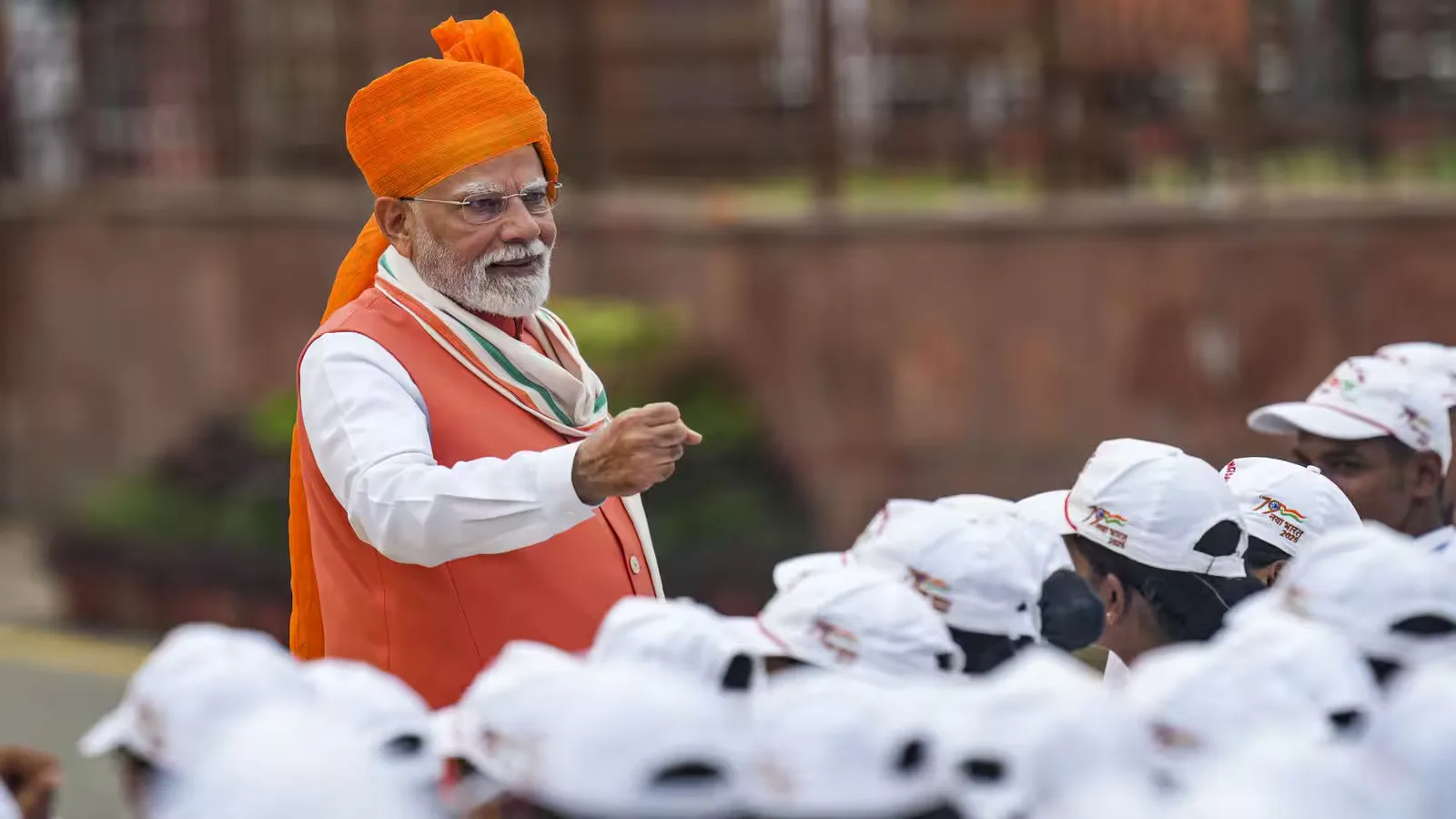
On August 15, 2025, Prime Minister Narendra Modi launched the Pradhan Mantri Viksit Bharat Rozgar Yojana (PMVBRY), a Rs 1 lakh crore scheme aimed at first-time employees, fresh graduates, and employers expanding their workforce. Delivered from the Red Fort on the occasion of the 79th Independence Day, PM Modi mentioned that the initiative seeks to bridge the employment gap for the youth, foster formal sector participation, and accelerate India’s journey toward becoming viksit by 2047.
The ambitious program is expected to create 3.5 crore jobs across sectors such as manufacturing, services, and technology. Simultaneously, the initiative aims to reduce the financial burden on employers during the hiring process, providing an environment conducive to sustainable employment growth.
Understanding the Viksit Bharat Rozgar Yojana
The PMVBRY is a time-bound initiative that will run until July 31, 2027, with the Employees’ Provident Fund Organisation (EPFO) acting as the nodal implementing agency. The scheme was originally proposed in the Union Budget 2024–25 as the Employment Linked Incentive (ELI) but was later rebranded as PMVBRY to reflect its alignment with the government’s Viksit Bharat vision. A total budget of Rs 99,446 crore has been earmarked for the program, underscoring the government’s commitment to youth empowerment and economic growth.
The scheme has two primary beneficiaries. First, it targets first-time job seekers entering the formal workforce, providing them with direct financial support. Second, it incentivises employers to expand their workforce by offering structured monetary benefits linked to hiring and retaining new employees.
Key benefits for employees
Under the employee-focused component, Part A of PMVBRY, first-time job seekers receive Rs 15,000 in financial support for entering the formal job market. This support is designed to be disbursed in two instalments, the first after six months and the second after twelve months of continuous service. The benefits apply to those earning up to Rs 1 lakh per year, with a portion of the amount credited to a savings or Provident Fund account to foster long-term financial security.
It is estimated that approximately 1.92 crore youth will benefit from this initiative, receiving immediate monetary assistance while also developing a culture of financial prudence through PF contributions. By linking incentives to formal employment and structured retention periods, the scheme ensures both financial stability for employees and reliable workforce availability for employers.
Incentives for employers
Employers are integral to the success of PMVBRY, and Part B of the scheme is dedicated to incentivising companies that hire new workers with salaries under Rs 1 lakh per annum. Eligible employers can receive up to Rs 3,000 per employee per month, depending on the salary bracket, for a duration of two years in most sectors and up to four years in the manufacturing sector.
Payments will be released in four tranches, after 6, 12, 18, and 24 months, through Direct Benefit Transfer (DBT) into PAN-linked bank accounts. This structure ensures timely and transparent disbursement while incentivising the retention of new employees.
Overall, this employer-focused component is expected to support over 1.5 crore new jobs in the country, particularly benefiting MSMEs and larger enterprises seeking to expand their workforce.
Eligibility criteria
For employees, eligibility requires first-time registration with EPFO, no prior association with EPFO or any Exempted Trust before August 1, 2025, a gross monthly salary not exceeding Rs 1 lakh, and a commitment to remain with the same employer for at least six months.
For employers, eligibility mandates EPFO registration between August 1, 2025, and July 31, 2027, with a minimum hiring requirement of two employees for firms with fewer than 50 workers and five employees for companies with 50 or more workers. New hires must also be retained for a minimum of six months to qualify for incentives.
The employer incentive structure is tiered based on employee salary bands. Workers earning up to Rs 10,000 per month generate Rs 1,000 per month for their employer; those earning between Rs 10,001 and Rs 20,000 generate Rs 2,000, and salaries between Rs 20,001 and Rs 1,00,000 attract Rs 3,000 per month. This ensures targeted support and encourages companies to hire more first-time employees without overburdening payrolls.
How the scheme functions
The operational mechanics of PMVBRY are comprehensive. For first-time employees, the process involves joining an EPFO-registered company, completing six months of continuous service, and receiving the first instalment of financial assistance proportionate to their salary.
After twelve months of employment and completion of a mandatory financial literacy program, the second instalment is disbursed, with a portion directed to the Provident Fund or savings account to encourage long-term savings.
For employers, the process requires hiring eligible employees, maintaining their employment for at least six months, and claiming DBT incentives at 6, 12, 18, and 24-month milestones. This ensures compliance with retention requirements and promotes accountability in fund utilisation.
How to avail the benefits
Accessing PMVBRY benefits is designed to be streamlined and transparent. Companies must obtain an EPFO Code through the Shram Suvidha Portal and create an account on the EPFO Employer Login Portal. They are required to hire new employees with salaries up to Rs 1 lakh, submit monthly PF contributions along with ECR returns, and maintain the workforce for at least six months.
Required documentation includes the employee’s EPFO UAN number, appointment letter, educational certificates, Aadhaar card, PAN-linked bank account details, mobile number, proof of residence, and passport-sized photograph. Once the employee is registered with EPFO and meets the eligibility criteria, financial support and employer incentives are disbursed automatically.
Disbursement and financial mechanism
The disbursement process is structured to ensure efficiency and transparency. Employees receive the first instalment after six months of employment and the second instalment after twelve months, contingent upon the completion of the financial literacy program. A portion of the funds is credited to the PF account to instil a culture of long-term savings among young workers.
Employers receive DBT directly into PAN-linked accounts via the Aadhaar-based Payment System, with payments released only after verification of employee retention. This dual mechanism safeguards the interests of both employees and employers while ensuring that the scheme achieves its desired socio-economic outcomes.
Significance of PMVBRY
India’s employment landscape faces the dual challenge of providing jobs to its growing youth population and strengthening formal sector participation. PMVBRY addresses both by encouraging first-time workforce participation, reducing hiring costs for MSMEs and large enterprises, and boosting EPFO-linked employment, which enhances worker rights and benefits. The program also fosters a savings culture through PF contributions, ensuring that young workers develop financial resilience alongside career opportunities.
Labour economists have praised the scheme’s dual-beneficiary model, highlighting that it represents a strategic shift from past employment programs that focused solely on job seekers. By incentivising both employees and employers, PMVBRY is poised to significantly enhance formal sector employment and economic productivity.
PM Modi’s vision for Viksit Bharat
During his Independence Day address, PM Modi reiterated that “India’s development must be job-led. Employment generation is at the heart of Atmanirbhar Bharat. PMVBRY is an opportunity for industries to empower our youth and fuel our journey to a Viksit Bharat by 2047.”
PM emphasised that employment generation must be integrated with education and skill development, ensuring that young people are not only employed but also positioned to contribute meaningfully to national productivity and economic competitiveness.
The launch of the Pradhan Mantri Viksit Bharat Rozgar Yojana signifies a decisive shift from generic employment programs toward performance-linked, targeted incentives. With a Rs 1 lakh crore budget, a dual-beneficiary approach, and focus on formal workforce integration, PMVBRY could become one of India’s most impactful post-independence employment initiatives. If implemented effectively, it has the potential to reshape the labour market, enhance industrial competitiveness, and place the nation firmly on the path to achieving its vision of becoming a developed nation by 2047.










Comments