




Prior to the First World War, the United States was a debtor nation (limited output, limited resources to buy them as well). However tables turned when the First World War started. During the war, the United States started supplying both sides of the war with arms, ammunition, war-related material, weaponry, food, agricultural produce, etc.
In return, the United States sought gold. European nations that were part of the war had plenty as they had plundered the same from their colonies. The situation continued till the Second World War, and the result was that the US emerged as the country with the largest gold reserves. That still holds good today with 8134 metric tons of gold, with Germany being the second largest with 3,360 metric tons of gold (less than half what the US holds).
Trump Tariffs
In the first term, Trump levied tariffs on various countries, mainly China, across a range of products including solar panels, washing machines, steel and aluminium. Tariffs were also levied on some of the closest allies of the United States, including Canada, Mexico and the European Union, which, after a year of negotiations, were removed.
However, Chinese tariffs persisted through Trump’s first term, and they clearly had an adverse impact on America’s middle-income and low-income people. In 2017 -18, Oxford Economics estimated that the incremental household cost for an average American household will jump by USD 500 to USD 1000, depending on the consumption, changes in tariffs over the years and reciprocal tariffs by the countries.
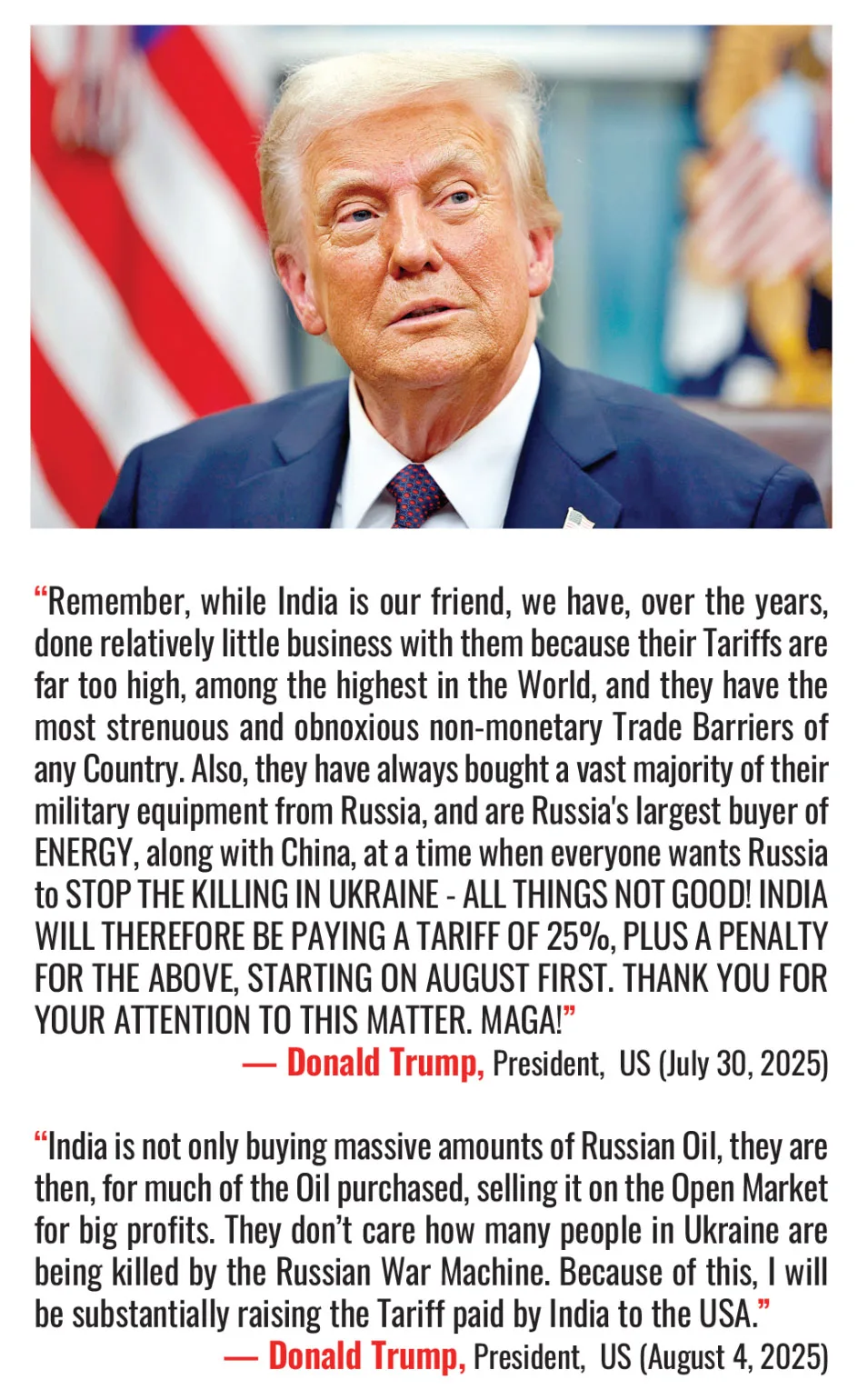
This is a 1.5 per cent to 2 per cent jump in their expenditure. One needs to remember that the average in 2019 had a personal debt, including credit card, personal loans, mortgage, and student debt stood at USD 90,640 when the median income for the US household was USD 61,937. The indebted average US household had to bear the further brunt of these tariffs.
For the low-income Americans, the United States’ levied tariffs were worse. In 2017, the Trump administration brought in tax cuts under the Tax Cuts and Jobs Act of 2017, which benefitted low-income households of America immensely. However, with the levy of tariffs, the cost for average low-income households went as much as twenty times as compared to the benefits that arose from the tax cuts.
The Profane Plan
Several journals and newspapers of the United States, including Bloomberg, stated that the American firms that donated to the Republican Party face less chance of tariff levies as compared to the ones that didn’t or who donated to the opponent Democratic Party.
Big oil companies donated and spent a whopping USD 445 million in the last United States Presidential Elections for Mr. Trump to get re-elected.
Similarly, defence companies have been amongst the top donors donating generously for elections through the decades. However, with the 2024 elections, bias was towards Trump’s re-election as he was seen as a pro-defence candidate and he placed more weight and emphasis on expanding the missile defence systems, whilst Biden and Kamala Harris were viewed as candidates who wanted Arms Control as their top priority.
However, the biggest donation to the Presidential Elections came from the World of Cryptocurrency, which contributed nearly one third of the total donations and of which two thirds went again to make Trump re-elected.
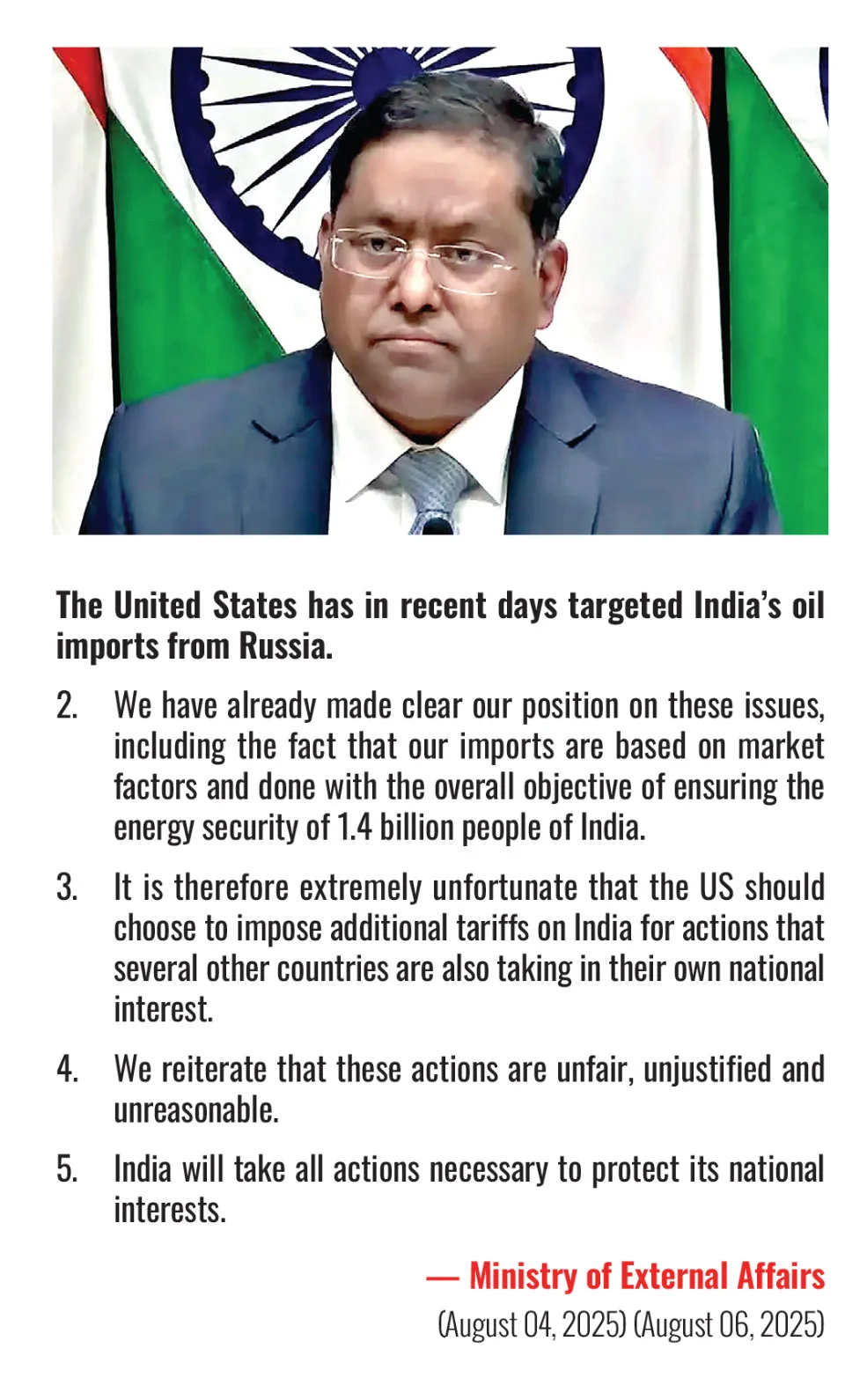
Trump has lived up to the crypto world by bringing formal legislation in favour of and the use of crypto. Sadly, it has been alleged that President Trump has a direct personal interest in Pakistan’s crypto council, which is looking to digitise public assets and public utility services. President Trump’s sons Eric, Donald Junior, and his son-in-law Jared Kushner, 60 per cent of the company that has signed a letter of intent with the recently formed Pakistan Crypto Council. All these developments happened just days before the Jammu and Kashmir’s Pahalgam attack, where innocent Hindu civilians were brutally killed after questioning their religion and seeking proof to verify the same.
Efficaciousness of Sanctions & Tariffs
On May 11, 1998, the world was taken by surprise when the then PM of Bharat Atal Behari Vajpayee Ji informed the world of successful tests of three thermonuclear devices, with one being conducted under nuclear fission. It was the moment of Bharat arriving strongly and decisively on the nuclear stage, repositioning itself as a strategic nuclear power.
US intelligence that tracks global nuclear activity like a hawk failed colossally to detect any activity before the tests or the preparedness that Bharat had before the tests were conducted.
Immediate reaction of these tests were sanctions and embargoes by the United States including termination of sale of any military items, military assistance, suspension of any foreign aid (not that Bharat has taken many times), prohibiting credit and guarantees by the US government agencies, stoppage of US banks to give loans to Bharat and her government owned institutions and a few others.
Not only did the US levy sanctions, but it quickly garnered support from allies G-8 countries, to extend any financial aid and financial assistance from international organisations that act as puppets in the hands of the US and the erstwhile G-8 (G8 itself is changing as their economies are collapsing).
Chapter 6, Verse 5 of Shreemad Bhagwad Geeta speaks of a Sanskrit word “उद्धरेदात्मनात्मानम्” which means “Elevate or raise yourself by yourself”.
When the Western world shut its doors and windows for Bharat, Bharat started looking internally and reinventing its inner self. Several marquee infrastructure projects were initiated to rebuild Bharat, including the Golden Quadrilateral under the National Highway Development Programme, building the Konkan Railway, turning around hydel, thermal and nuclear power generation and many more.
The result of which was, in FY 98 (March 31, 1998) prior to Pokhran II tests, where the real GDP growth of Bharat was at 5.0 per cent, the real GDP growth for FY 1999 swelled to a gigantic 8.8 per cent.
Eventually, the US realised that these sanctions could hurt the US’s economic interest more, as Bharat’s demographic dividend was strengthening. Bharat was coming out of the shadow of submissive politics, and the Bush administration started to normalise relations with Bharat in 2002.
Furthermore, 9/11 taught the US, if snakes are bred in the backyard, eventually they will come to bite the breeder itself. It’s better to have an ethical, value-oriented and morally strong foe than a morally corrupt, sly and slimy friend as stated earlier by
Acharya Chanakya.
The Current Context
Bharat has always worked for her own interest and in the interest of the weaker nations and in the interest of the world. Whether it was during COVID-19, when Bharat supported Global South with free vaccines, when the Western world was selling them, the financially challenged Global South at top buck or whether any country was struck with a natural calamity like Turkey’s earthquake, when Bharat sent its relief aid and force at lightening speed to save lives and reduces distress of people arising out of natural catastrophe.
When one throws a burning coal at someone, first it burns their hand. An example of it can be seen in the US tariffs. Pharmaceuticals, which are an essential part of the US system, will get hurt severely with these tariffs on Bharat. Four out of ten prescription drugs in the US are supplied by Bharat companies. Since Bharatiya drugs are efficient and cheaper, they save USD 220 billion annually for the US healthcare system. Furthermore, the United States President has stated that they have signed a deal with Pakistan to set up oil reserves and eventually believe that Bharat would buy oil from Pakistan one day.
It’s clear the US has not learnt its lessons from the past of 9/11 or several others it had from its history. Bharat will face some challenges initially for a short period due to these tariffs, but eventually it will rise as has happened in the past.













Comments