





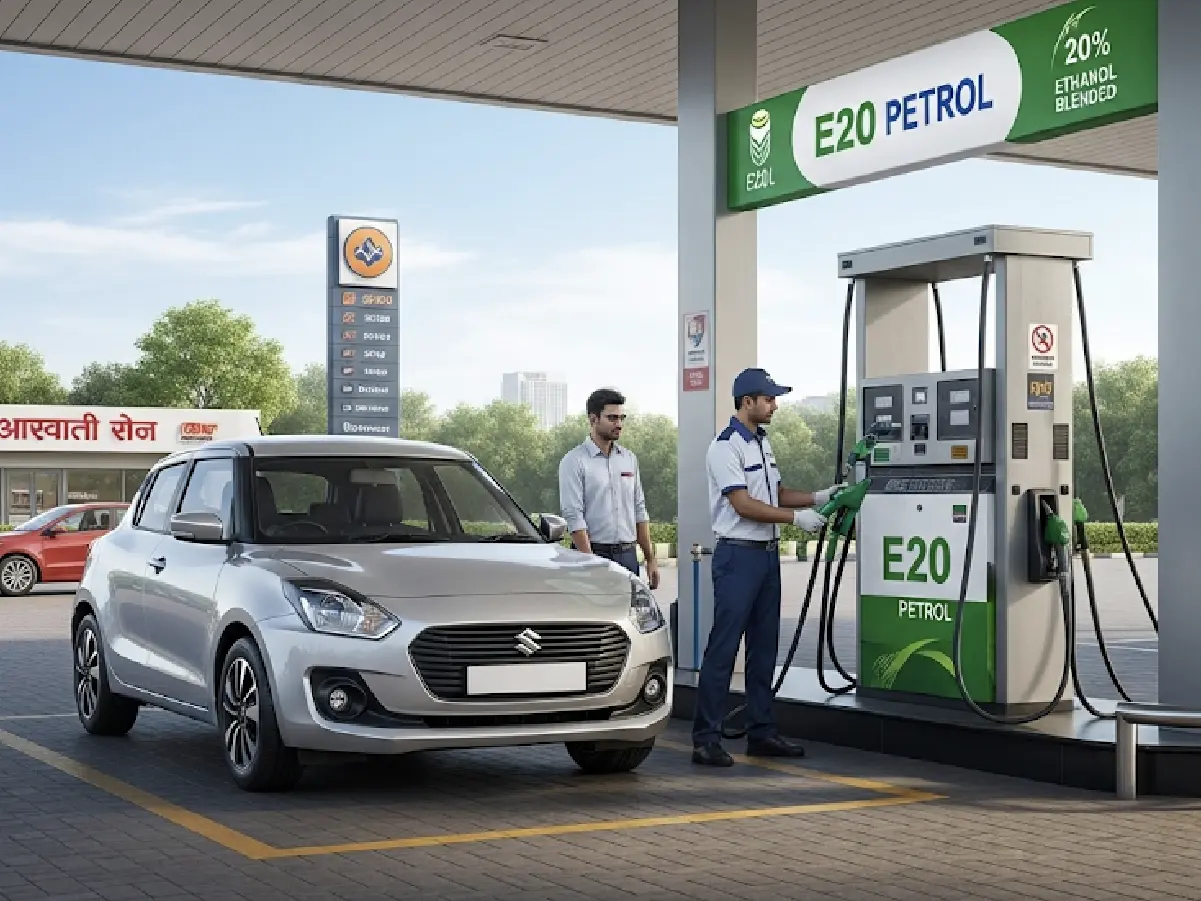
India’s ambitious ethanol blending programme is becoming a cornerstone in India’s battle against pollution while, at the same time, revolutionising livelihoods in rural India. The Ministry of Petroleum and Natural Gas has asserted once again that the transition to 20 percent ethanol-blended petrol (E20) not only reduces carbon emissions but also injects thousands of crores of rupees directly into farmers’ pockets.
Cleaner air, greener future
Greenhouse gas emissions from sugarcane ethanol are 65 percent lower than petrol, and maize ethanol emissions are reduced by 50 percent, as per a NITI Aayog study. The use of E20 curbs carbon dioxide emissions by about 30 percent over E10 fuel, which is the same as growing 30 crore trees in the past 10 years. Ethanol’s high-octane value enhances combustion efficiency, lowers harmful emissions, and gives better engine performance, going towards India’s commitment of reaching Net Zero emissions by 2070.
Proposed boost for farmers, lower oil imports
The scheme has renamed farmers as “Urjadaatas” (energy givers) in addition to being “Annadatas” (food givers). Ethanol blending over the last 11 years has saved a foreign exchange of more than Rs 1.44 lakh crore by replacing 245 lakh metric tonnes of crude oil. In 2025 alone, farmers will receive a total of nearly Rs 40,000 crore from ethanol supply, while India will save approximately Rs 43,000 crore worth of oil imports.
This has also helped settle outstanding sugarcane payment arrears and made maize production more feasible, lowering rural distress. In chronically drought-afflicted areas like Vidarbha, these income streams have helped reduce the incidence of farmer suicides as an issue.
Performance concerns addressed
Though some critics accuse E20 of impacting car mileage or lifespan, the ministry has made clear that any reduction in efficiency is minuscule and usually compensated by improved acceleration and ride. Research conducted by Indian Oil Corporation, Automotive Research Association of India, and SIAM indicates that newer cars, many of which have already been compatible with E20 since 2009, run well on the blend.
Global and national confidence
Brazil has been successfully operating on E27 for years without any serious problems, and top automobile manufacturers already have compatible cars coming out there and in India. The government has ensured that safety and quality requirements for E20 are firmly in place, and those minor component adaptations for older cars are cheap and easily done at the time of servicing.
Sustainable future
The current roadmap of the government is to continue with the E20 blending until October 2026 and decide any subsequent increase thereafter based on thorough stakeholder consultations. The programme is being positioned as a powerhouse for energy security, rural prosperity and environmental responsibility, hence a unique policy to deliver benefits both to the planet as well as people.















Comments