





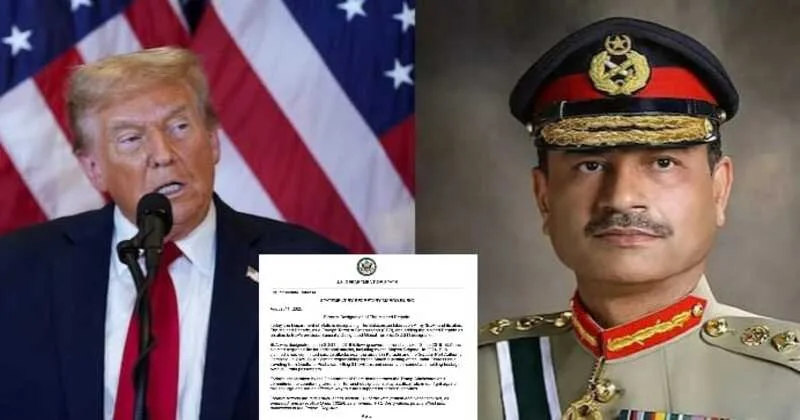
In a move that underscores a deepening alignment between Washington and Islamabad, the United States has designated the Balochistan Liberation Army (BLA) and its elite suicide unit, the Majeed Brigade, as a Foreign Terrorist Organization (FTO). The designation, announced by Secretary of State Marco Rubio, also adds the Majeed Brigade as an alias to BLA’s prior Specially Designated Global Terrorist (SDGT) status, first imposed in 2019.
The decision arrives as Pakistan Army Chief General Asim Munir is visiting the United States, a trip during which he publicly targeted India in his speeches, and amid Pakistan’s own history of military crackdowns and human rights violations in Balochistan. Islamabad has long branded the BLA a terrorist outfit and has conducted extensive military operations in the restive province, operations marked by allegations of enforced disappearances, extrajudicial killings, and suppression of political dissent.
Washington’s alignment with Pakistan comes as the US wages a tariff war against India and turns against Tehran’s nuclear energy program. By endorsing Islamabad’s position while exploiting economic pressure on New Delhi and ignoring its own strategic deadlock with Iran, Washington exposes a cynical geopolitical agenda that sacrifices the human rights of the Baloch people, rights it publicly claims to defend, in favour of short-term political gains.
The BLA allegedly active in its insurgency against the Pakistani state, claims to fight for Baloch self-determination and has targeted security forces and infrastructure. According to the US allegations in the statement, since its SDGT designation in 2019, the BLA has been linked to multiple deadly attacks, including suicide bombings near Karachi airport and the Gwadar Port Authority Complex in 2024. In March 2025, the group claimed responsibility for hijacking the Jaffar Express train from Quetta to Peshawar, killing 31 civilians and security personnel and taking over 300 passengers hostage.
Washington’s decision aligns it more closely with Islamabad’s self-declared counterinsurgency agenda at a time when Pakistan accuses neighboring Iran of sheltering BLA operatives that Tehran often denies. However, this cooperation comes against the backdrop of Pakistan’s own heavy-handed tactics in Balochistan, where security forces are accused of crushing local resistance with indiscriminate force, targeting civilian populations, and stifling free expression.
By echoing Islamabad’s policy without addressing these rights abuses, the US move risks being seen as tacit approval of the Pakistani military’s approach to the Baloch conflict. The Trump Administration has touted the designation as a demonstration of its commitment to fighting terrorism, but it avoids confronting the broader context of decades-long political repression and underdevelopment that fuel the unrest in Balochistan.
While the US Department of State’s announcement emphasizes the role of terrorist designations in cutting off support to violent actors, it also signals a strategic partnership that places security cooperation over human rights concerns. With General Munir’s visit underscoring military and intelligence coordination, the timing of the announcement reflects a political convergence, one that may further entrench the cycle of violence in Balochistan rather than address its root causes.
The new designation takes effect immediately upon publication in the Federal Register under section 219 of the Immigration and Nationality Act and Executive Order 13224.












Comments