





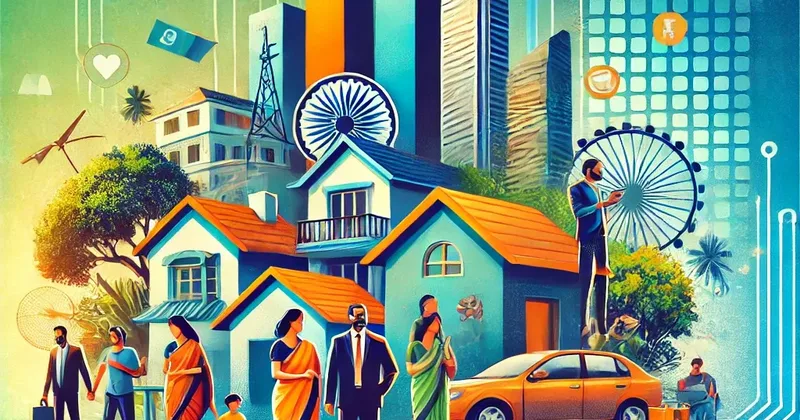
Countries like India have a strong and resilient middle class, which serves as the backbone of their society and economy. Recent studies and financial analyses have revealed a deeply concerning trend: a growing number of salaried individuals are spending far beyond their means, not on essential investments such as housing or education, but on lifestyle choices driven by peer pressure and social expectations. According to a new report published by the Economic Times, nearly 93 per cent of salaried Indians earning less than Rs 50,000 per month are now dependent on credit cards and other short-term financial instruments to fund their day-to-day expenses. This reliance is not necessarily because of emergency situations or sudden medical needs, but increasingly to support discretionary spending—on gadgets, branded clothing, luxury dining, travel, and more.
In our race to match societal standards, many individuals are now financing lifestyle desires with debt. This shift is visible in the very nature of personal loans being availed today. Traditionally, these loans were primarily used for home renovation, medical emergencies, or family obligations like marriage. However, a recent ‘Paisabazaar’ study shows that travel has now overtaken other needs as the top reason for taking personal loans. It is a telling sign of how luxury and leisure are now being prioritized, often without sound financial planning. The widespread use of “Buy Now, Pay Later” schemes and the ever-expanding lure of 0 per cent EMI offers have made it deceptively easy for consumers to commit to purchases they do not immediately need or cannot afford without credit. This has significantly blurred the lines between ‘wants’ and ‘needs,’ creating a culture of impulse-driven consumption, particularly among the younger working population.
What appears to be an affordable monthly EMI today often turns into a long-term financial burden. According to recent financial analyses, households are increasingly becoming over-leveraged. India’s household debt, as a percentage of GDP, has risen to around 23.9 per cent in 2025—up from 23.1 per cent just the year before. More alarming is the nature of this debt: over 30 per cent of it now stems from unsecured sources like credit cards, instant personal loans, and BNPL services. At the same time, India’s household financial savings have fallen to a historic low of just 5.3% of GDP. This drastic gap between borrowing and saving indicates a deep-rooted vulnerability in the economic lives of many middle-class Indians. What makes this trend more alarming is the rising dependence on unregulated fin-tech platforms and instant loan apps. These digital lending tools often come with hidden fees, high interest rates, and aggressive recovery practices. Many young professionals and low-income earners fall prey to these platforms in moments of urgency or peer-influenced desire. With little regulatory oversight and often misleading advertising, these services create debt traps from which escape becomes difficult without serious financial damage. Furthermore, reports suggest that the EMI burden for many households has reached unsustainable levels. For some families, up to 33 percent of their monthly income is consumed by EMIs, and in higher-income urban homes, this figure can go as high as 45 percent. This leaves little room for emergency savings, insurance, or investments in long-term goals.
The cultural and psychological shift toward debt-driven consumption is perhaps the most worrying aspect of this phenomenon. Increasingly, social validation is tied to material possessions—be it the latest smartphone, a foreign vacation, or designer apparel. The pursuit of status and comparison with peers on social media platforms has only intensified this pressure. The societal acceptance of credit-fueled spending is gradually eroding the traditional Indian value of living within one’s means. Even financial experts are sounding the alarm. The middle-class lifestyle in today’s India is no longer supported by income alone—it is increasingly being propped up by debt.
The culture of regular savings, once the hallmark of middle-class prudence, is being replaced by monthly EMIs and instant gratification. This concern is reinforced by recent Reserve Bank data, which shows that outstanding credit card debt in India has nearly doubled from Rs 1.4 lakh crore in 2020 to nearly Rs 3 lakh crore by mid-2024. Credit card delinquencies have also risen sharply, suggesting that many borrowers are struggling to meet even their minimum payment obligations. This pattern of spending may appear manageable at first, especially for those with stable jobs and predictable incomes. But the long-term consequences are dire. A financial emergency, job loss, or even a minor health crisis can push families over the edge into financial distress. Moreover, rising interest rates and tightening loan conditions could further exacerbate the burden on those already living paycheck to paycheck. The emotional and mental toll of sustained debt can also not be ignored, as financial stress remains one of the leading causes of anxiety and depression among working professionals today.
It is time we reflect on our financial behaviour and take proactive steps to address this hidden crisis. A high salary or easy EMI approval is not a license for reckless spending. Financial literacy, awareness, and a return to simpler lifestyles are the need of the hour. Schools, colleges, and workplaces must initiate discussions on responsible financial practices. The government and financial regulators must also ensure stricter oversight on digital lending platforms and greater transparency in consumer loan terms. The rising lifestyle debt of India’s middle class is a ticking time bomb. Unless we acknowledge its seriousness and work toward building healthier financial habits, we risk undermining the economic stability of a vast section of our society. I urge media houses, policymakers, educators, and individuals alike to recognize and highlight this growing issue—especially among the youth who are most vulnerable. Our focus must shift from glamourizing consumption to promoting financial resilience.















Comments