






In a significant archaeological find that has stirred local emotions and academic curiosity, ancient Hindu idols and Shivlings were unearthed in the Salia area of Aishmuqam in Anantnag district during a spring restoration project. The site, Karkoot Nag, already holds cultural significance for Kashmiri Pandits and is believed to have historical ties to the Karkota dynasty, which ruled Kashmir between 625 and 855 CE.
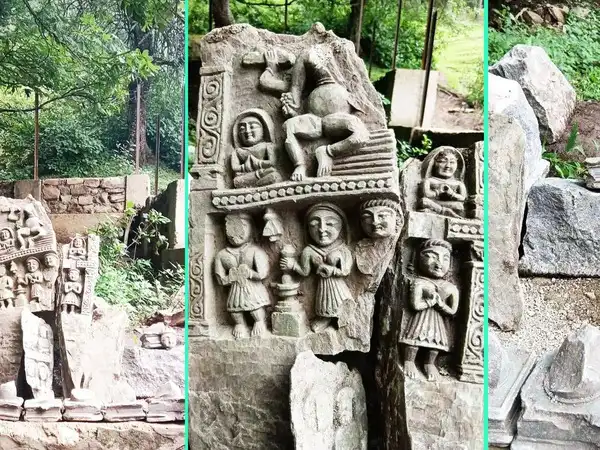
The discovery was made during excavation work conducted by the Public Works Department (PWD). Labourers digging around a spring stumbled upon stone sculptures buried beneath the surface, including multiple Shivlings and a pillar fragment bearing carved figures of deities, suggesting the remnants of a temple.
Ancient Hindu Idols Found in Kashmir.
Local labourers have unearthed ancient Hindu idols, including 11 Shivlings, during the renovation of a spring at Karkoot Nag in the Salia area of Anantnag district’s Aishmuqam in South Kashmir. The discovery was made during clearing a… pic.twitter.com/Jco7s72w7h
— Aditya Raj Kaul (@AdityaRajKaul) August 2, 2025
Link to Kashmir’s glorious Hindu past
Preliminary observations by archaeologists from the Department of Archives, Archaeology and Museums, Jammu & Kashmir, point to the possibility that the relics date back to the early medieval period of the Karkota dynasty, a time when Hindu temple architecture and Shaivism flourished in Kashmir.
A local Kashmiri Pandit stated, “There has been an impact of the Karkota dynasty in this area. It is likely that a temple once stood here, or perhaps these idols were hidden intentionally during turbulent times.”
The site is approximately 16 km from Anantnag town, and has historically been a place of pilgrimage. The new findings have intensified its religious and historical relevance, especially for the displaced Kashmiri Pandit community, many of whom trace their roots back to this region.
Preservation, research and emotional appeal
Following the discovery, officials confirmed that the relics, including Shivlings, deity sculptures, and carved stone artefacts, will be moved to the Shri Pratap Singh (SPS) Museum in Srinagar for carbon dating and detailed analysis by research scholars.
“We will shift the items to the SPS Museum, where they will be studied by experts and preserved under government protection,” an official from the Archaeology Department confirmed.
The find has prompted calls from the local Hindu community and heritage activists to construct a new temple at the site to house the relics and mark the location’s sanctity.
“This is not just a historical find, it is a cultural and emotional resurrection,” said another local, requesting that Karkoot Nag be officially recognised and protected as a heritage site.
Possible temple ruins and buried legacy
Among the recovered artefacts is a damaged temple pillar, carved with images of multiple Hindu deities, which experts suggest could have once been part of a larger temple structure. Some believe these idols were buried deliberately during past invasions or religious conflicts to save them from desecration.
With further excavations and studies planned, archaeologists hope to uncover more about the extent of the ancient temple complex, the religious practices of the era, and the socio-political environment of the Karkota dynasty’s rule in Kashmir.
The discovery highlights the rich and often-overlooked Hindu heritage of Kashmir, particularly in the wake of cultural displacement over recent decades. It also reignites the conversation around preserving ancient religious sites in conflict-prone or politically sensitive regions.
The coming weeks will be crucial as the artefacts are dated, catalogued, and preserved, potentially opening a new chapter in the documentation of Kashmir’s ancient civilisational legacy.










Comments